Identification: Know Your Enemy
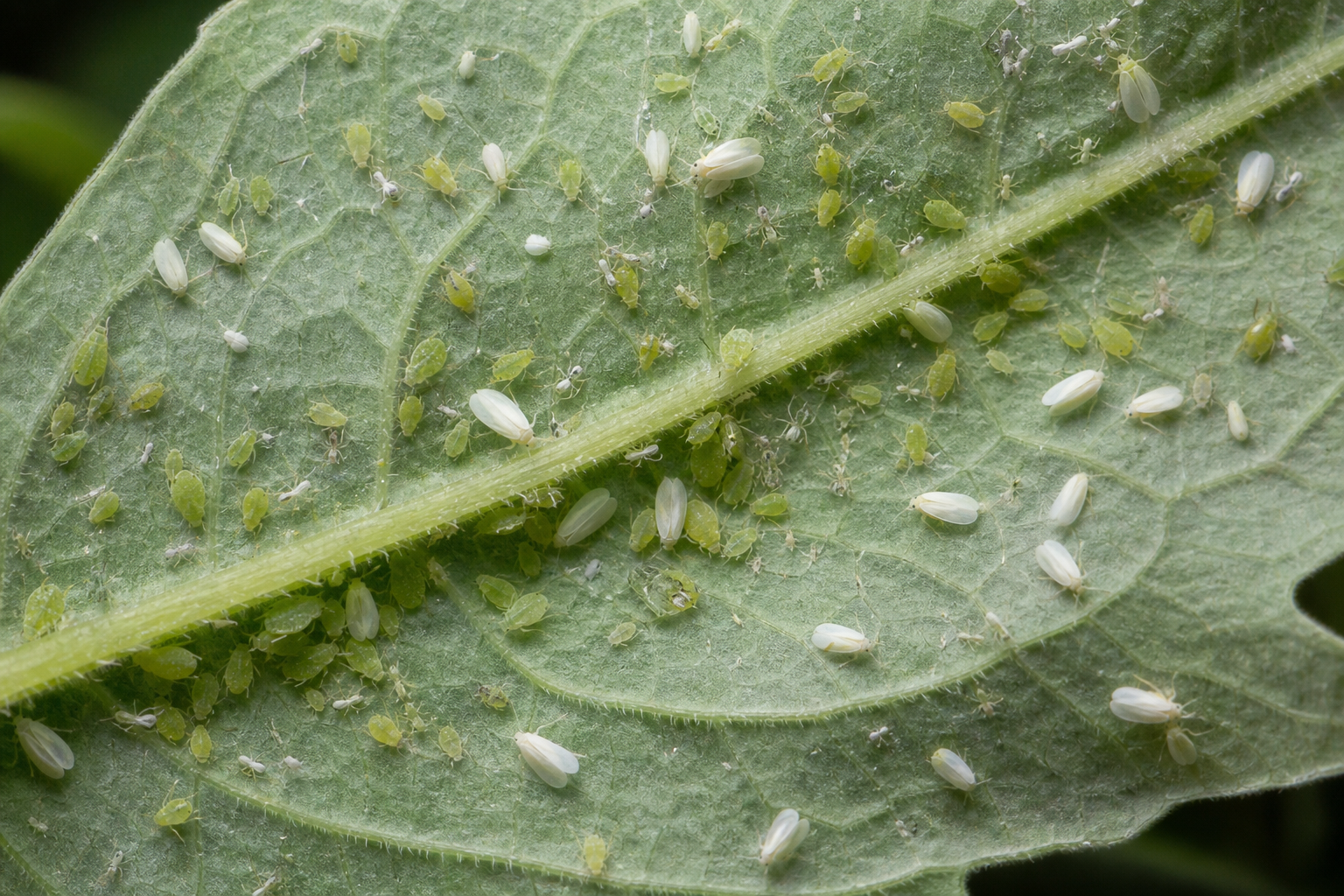
Aphids are soft-bodied, pear-shaped insects about 1–3 mm long. They cluster on new growth, undersides of leaves, and flower buds. Color varies by species: green, black, yellow, gray, or woolly white. Look for:
- Curled, distorted, or yellowing new leaves
- Sticky honeydew residue on leaves (feels like varnish)
- Sooty mold (black fungus that grows on the honeydew)
- Ants farming aphids — ants protect them from predators in exchange for honeydew
Whiteflies look like tiny white moths (1–2 mm). They fly up in a cloud when you disturb the plant. Check leaf undersides for their tiny white eggs and pale nymphs, which are stationary and easy to miss. They favor tomatoes, squash, beans, and ornamental flowers.
Step 1: The Hose
Your first tool is free. A strong stream of water from a hose knocks aphids and whitefly nymphs off foliage. They can rarely crawl back. Do this in the morning so foliage dries before nightfall (wet leaves overnight invite fungal disease). Repeat every 2–3 days for two weeks.
Step 2: Insecticidal Soap
Insecticidal soap (potassium salts of fatty acids) is the next step up. It damages the soft bodies of both aphids and whiteflies on contact but breaks down within hours, leaving no residue harmful to people, pets, or pollinators.
- Mix 1–2 teaspoons of pure castile soap per quart of water, or use a commercial product like Safer Brand.
- Spray undersides of leaves thoroughly — contact is required for effectiveness.
- Apply in the evening or early morning to avoid leaf burn in direct sun.
- Repeat every 4–7 days for 3 applications.
Step 3: Neem Oil
Neem oil (cold-pressed from the neem tree) adds a third mode of action: it disrupts insect hormone systems, reducing feeding and reproduction. It's effective on aphids, whiteflies, spider mites, and scale.
- Mix with a small amount of dish soap as an emulsifier and dilute to a 1–2% solution.
- Apply every 7–14 days as both a treatment and preventive.
- Do not apply when pollinators are foraging (midday on flowering plants). Apply in early morning or evening.
Prevention: Make Your Garden Uninviting
- Encourage natural predators: Ladybugs, lacewings, and parasitic wasps are relentless aphid predators. Avoid broad-spectrum insecticides that kill them.
- Reflective mulch: Silver or white mulch beneath plants confuses and deters whiteflies.
- Yellow sticky traps: Catch adult whiteflies before they lay eggs. Replace when covered.
- Avoid over-fertilizing with nitrogen: Lush, sappy new growth is aphid paradise. Use slow-release fertilizers.
- Inspect new plants: Check before bringing any new plants into your garden — aphids hitchhike easily.
When to Call a Professional
If infestations persist through three rounds of treatment, if you're seeing damage on large established trees or shrubs, or if sooty mold is covering significant leaf area, it's time for a professional assessment. Some populations develop resistance to home treatments, and the underlying cause (stressed plant, drainage issue, microclimate) may need addressing.
Persistent pest problems are often a sign of larger landscape health issues. Gardens of Gold offers full landscape assessments and integrated pest management for San Diego homeowners. Schedule a consultation.