Know Your Enemy: Tomato Hornworms
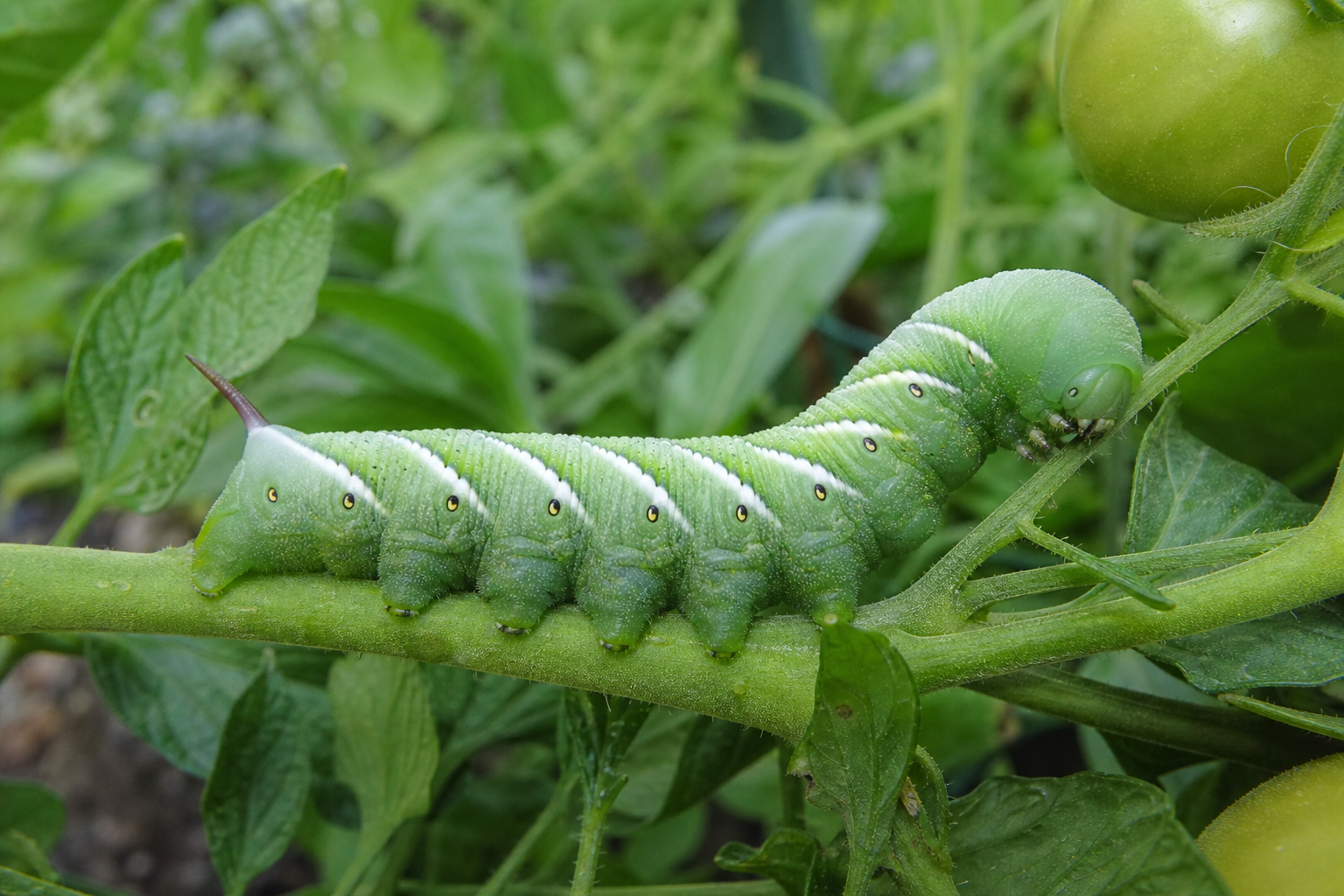
The tomato hornworm (Manduca quinquemaculata) is the most dramatic caterpillar pest in San Diego vegetable gardens. At up to 4 inches long, it's one of the largest caterpillars you'll encounter — and it's remarkably well camouflaged against green tomato foliage.

Tomato hornworms are the larvae of the Five-spotted Hawk Moth. They arrive in June–September, feed voraciously for 3–4 weeks, then pupate in the soil. A single hornworm can strip an entire branch in 24 hours.
Scouting: Find Them Before They Find All Your Leaves
Hornworms are masters of camouflage. Scout by looking for their calling cards rather than the worms themselves:
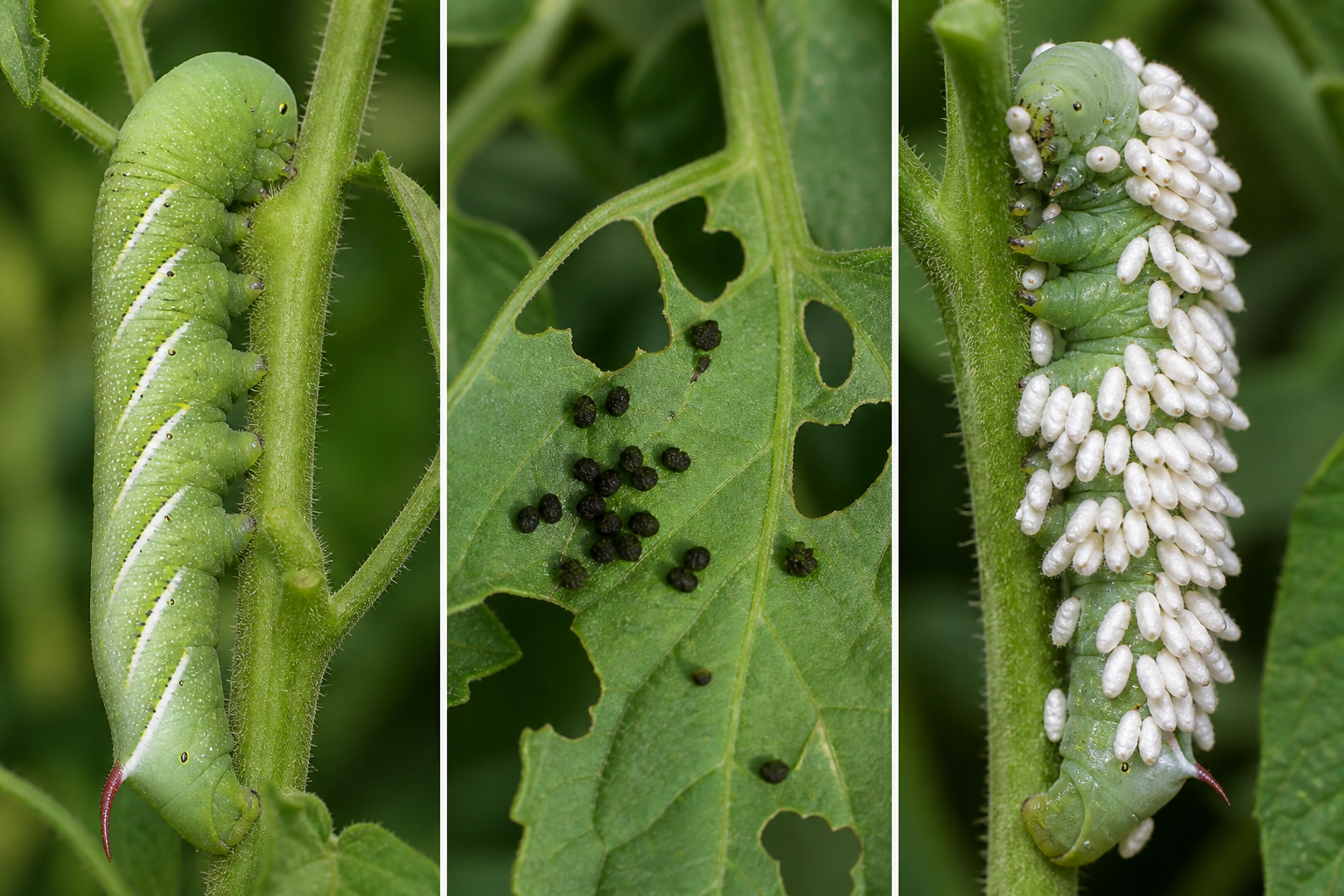
- Frass (droppings): Dark green, pellet-shaped droppings the size of mouse droppings on leaves below the feeding area. The bigger the frass, the bigger the caterpillar.
- Defoliated stems: Bare stems with no leaves, as if stripped suddenly.
- Entry wounds on fruit: Large, gouged holes in green or ripening tomatoes.
- UV flashlight trick: Hornworms glow bright green under UV light after dark. A $10 UV flashlight makes night-scouting much easier.
Check plants every 2–3 days during July and August. Early detection means you're dealing with 1–2 small caterpillars rather than a colony of 6-inch giants.
Step 1: Handpicking
Handpicking is the most effective method for small numbers. Drop hornworms into a bucket of soapy water, or — if you can stand it — snip them with scissors. Wear gloves; they will bite lightly.
Important exception: If you find a hornworm covered in white rice-grain-shaped structures on its back, leave it. Those are the egg sacs of Cotesia congregatus, a parasitic wasp that will hatch, consume the hornworm from inside, and then go on to parasitize more hornworms in your garden. That's free, sustainable pest control. Don't kill it.
Step 2: Bacillus thuringiensis (Bt)
Bacillus thuringiensis var. kurstaki (sold as Thuricide, Dipel, or other brands) is a naturally occurring soil bacterium that produces proteins toxic to caterpillar larvae. When a hornworm eats sprayed foliage, it stops eating within hours and dies in days.
- Bt is completely harmless to humans, pets, birds, bees, and beneficial insects — it only affects lepidopteran larvae (caterpillars).
- Mix and spray according to label directions. Coverage of both top and bottom leaf surfaces is important.
- Apply in the evening when caterpillars are most active and feeding; UV light degrades Bt in direct sun.
- Reapply after rain or after 5–7 days.
Step 3: Encourage Parasitic Wasps
Parasitic wasps like Cotesia and Trichogramma species are hornworm population regulators that work silently in the background. Encourage them by:
- Planting dill, fennel, parsley, and sweet alyssum nearby — their small flowers feed adult wasps.
- Avoiding broad-spectrum insecticides (pyrethroids, organophosphates) that kill beneficial insects.
- Leaving undisturbed mulch and soil near your beds where parasitic wasps pupate.
Other Caterpillars to Watch For
- Cabbage loopers: Pale green, inch-worm movement. Attack brassicas (broccoli, cabbage, kale). Treat with Bt.
- Corn earworm/tomato fruitworm: Enters fruit through the stem end. Reduce damage by keeping fruit harvested promptly and applying Bt to early flower clusters.
- Armyworms: Brown/gray, often feeding in groups. Bt effective on young larvae; spinosad for older ones.
Recurring pest pressure often signals a deeper landscape health issue. Gardens of Gold offers full pest assessments and landscape management plans for San Diego homeowners. Book a consultation today.