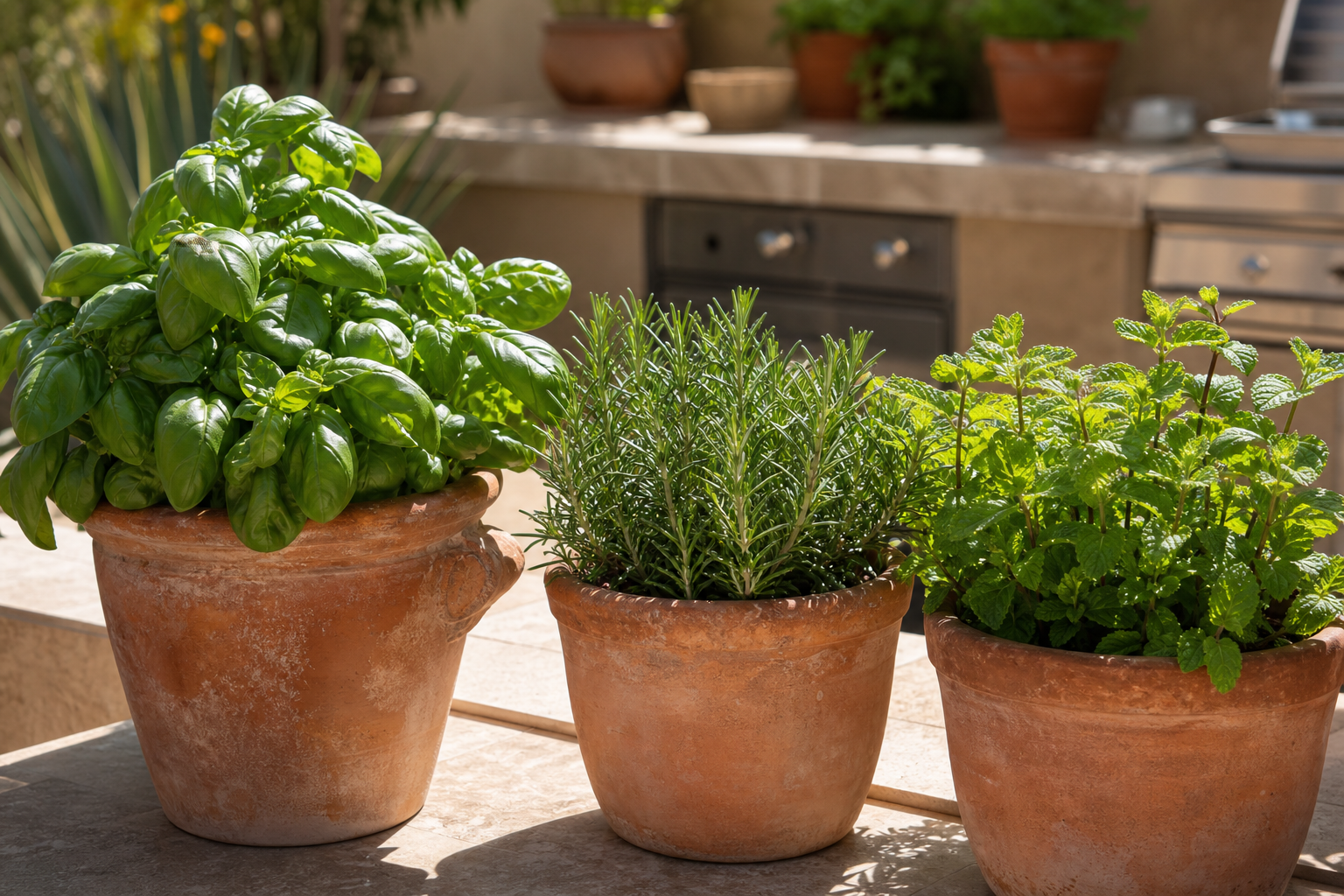
Why San Diego Is an Herb Garden's Best Friend
Most culinary herbs come from the Mediterranean or subtropical regions — climates that look a lot like ours. Mild winters, hot dry summers, and well-draining sandy-loam soil suit them perfectly. The trick is choosing the right herbs for each microseason and giving them the drainage they crave.
1. Rosemary — The Set-It-and-Forget-It Herb
Rosemary is practically a native of San Diego. Once established, it needs almost no water and laughs at our hottest August days. Plant a 1-gallon start in full sun, water it deeply once a week the first summer, then taper off to twice a month. After year one, rainfall alone sustains most coastal plants.
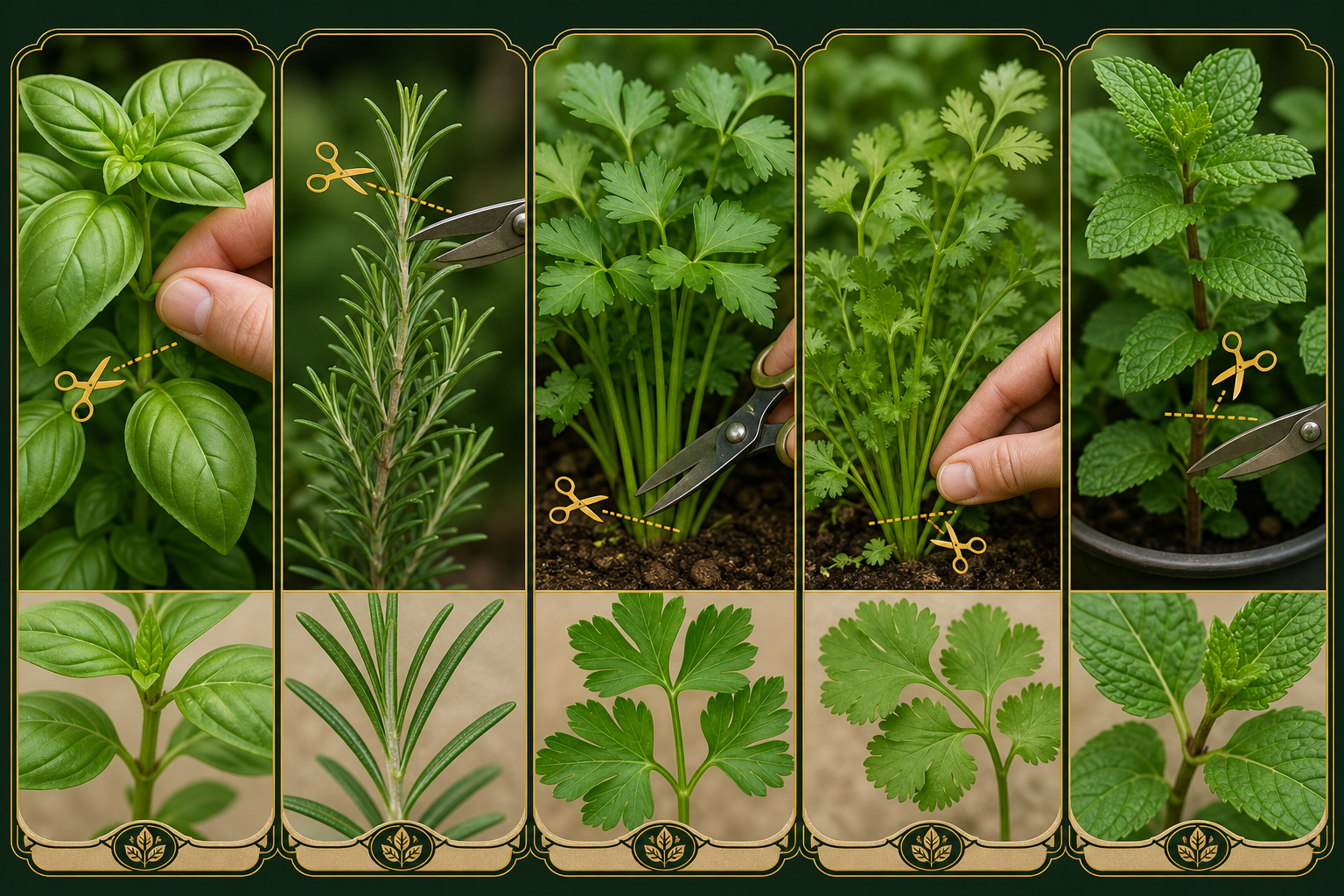
- Harvest tip: Snip 4–6 inches of new growth from stem tips. Never cut into old woody growth — it won't regenerate well.
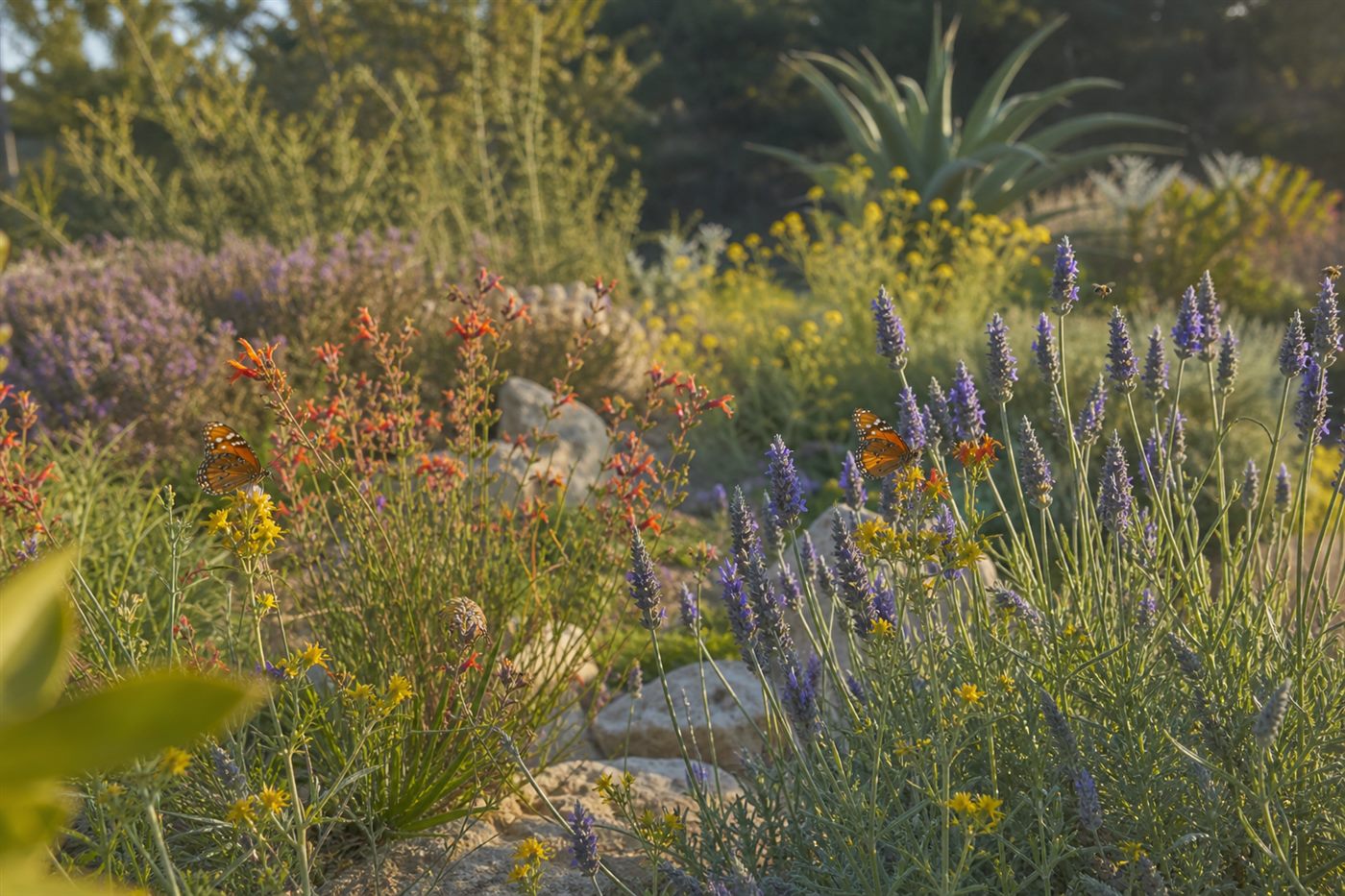
- Bonus: Mature rosemary doubles as a low hedge or border plant and pollinators love its blue flowers.
2. Basil — Summer's Star, Container-Friendly
Basil is a heat lover that thrives April through October in San Diego. It sulks in temperatures below 50 °F, so skip it in winter or bring containers indoors.
- Direct-sow seeds or transplant starts in full sun after the last cool night (usually late March inland, mid-February coastal).
- Pinch flower spikes as soon as they appear to keep leaves large and flavorful.
- Water consistently — basil wilts dramatically but recovers quickly if you catch it in time.
Container tip: A 10-inch pot on a south-facing patio produces more basil than most families can use. Plant Genovese for pesto, Thai basil for stir-fries, and Purple Opal for visual drama.
3. Mint — Grow It in a Container (Seriously)
Mint grows year-round in San Diego but spreads aggressively underground. Always plant it in a buried container or a dedicated raised bed with a root barrier. A 12-inch plastic pot sunk into the ground keeps it contained while allowing the top to spill naturally.
- Best varieties: Spearmint (cocktails, teas), peppermint (strongest menthol), and apple mint (mild, great for kids).
- Mint prefers partial shade in our hottest inland zones — full morning sun, afternoon shade.
- Harvest liberally; the more you cut, the bushier it gets.
4. Oregano & Thyme — Mediterranean Twins
Both thrive in our climate with minimal fuss. Plant in sandy, well-draining soil in full sun. They tolerate drought once established and pair well together in the same raised bed or container.
- Greek oregano has the most intense flavor — avoid the tasteless ornamental varieties at big-box stores.
- Thyme makes an attractive ground cover between stepping stones and sheds pleasant fragrance when brushed.
- Trim both back by one-third after flowering to maintain compact, bushy growth.
5. Cilantro — The Quick-Cycle Herb
Cilantro is the outlier — it prefers cool weather. San Diego's prime windows are October through April, when temperatures stay between 50–75 °F. In summer it bolts (flowers and seeds out) within weeks.
- Direct-sow seeds every 2–3 weeks from October to March for a continuous harvest.
- When it bolts, let the seeds (coriander) mature and self-sow for the next crop.
- Partial afternoon shade extends its season by a week or two in spring.
Container Tips for Any Space
No in-ground space? No problem. A 24-inch window box can hold rosemary, thyme, and oregano. Basil and mint do beautifully in individual 10–12 inch pots. Place them on a south- or west-facing porch, water when the top inch of soil is dry, and feed monthly with a balanced liquid fertilizer.
Want a permanent herb garden built right? Gardens of Gold designs and installs raised bed systems with custom irrigation so your herbs thrive with minimal maintenance. Request a free estimate.
Hablamos Español — reach us any time with your garden questions.