Timing Beats Fancy Cuts
Dormant pruning invigorates remaining buds. Summer cuts mainly control size after harvest. Wrong timing on apricot/cherry invites wood disease (Eutypa).
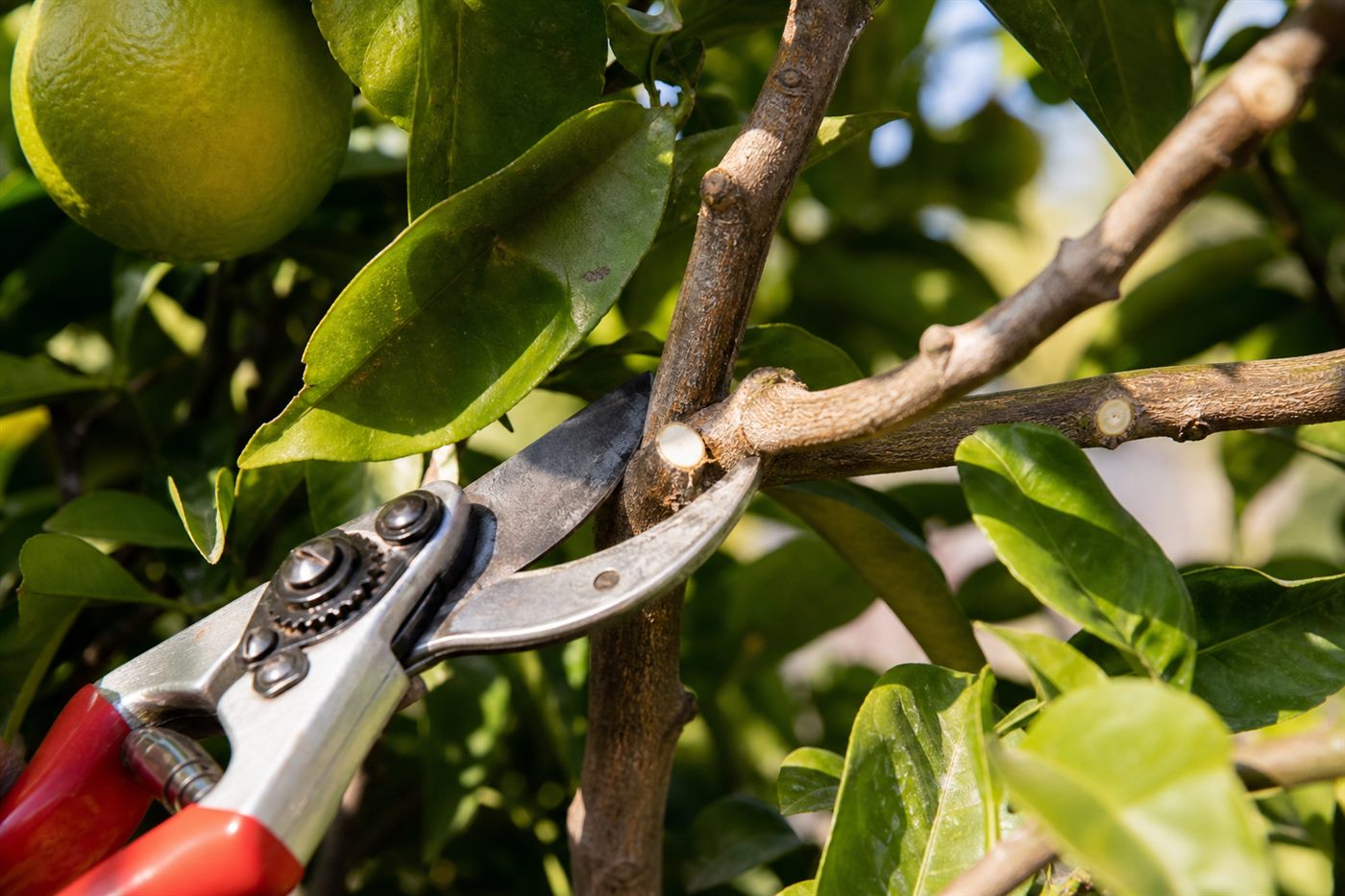
Materials Required
- Bypass pruners, loppers, pruning saw
- Disinfectant for disease concerns
- Ladder + spotter
- Optional diluted white latex for sun-exposed bark
Step by Step
-
Know your species calendar
Prune most deciduous fruit in dormancy (often January). Apricot and cherry: prune in summer after harvest.
-
Remove the 3 Ds first
Dead, damaged, diseased wood, then rubbing uprights. Clean cuts; no stubs.
-
Match severity to crop
Peach/nectarine often need heavier thinning of last year’s wood; apple/pear/plum usually lighter.
-
Summer-prune for size, not sunburn
After harvest, shorten vigorous shoots but leave dappled canopy inland.
-
Protect trunks and clean up
Paint exposed trunks where sunburn is a risk. Sanitize tools between diseased trees.
San Diego Tips
- Citrus needs less structural pruning; wait until frost risk passes for big cuts.
- Remove suckers below the graft union on citrus.
Want help getting this done right? Gardens of Gold designs and installs water-smart landscapes across San Diego County. Get a quote.