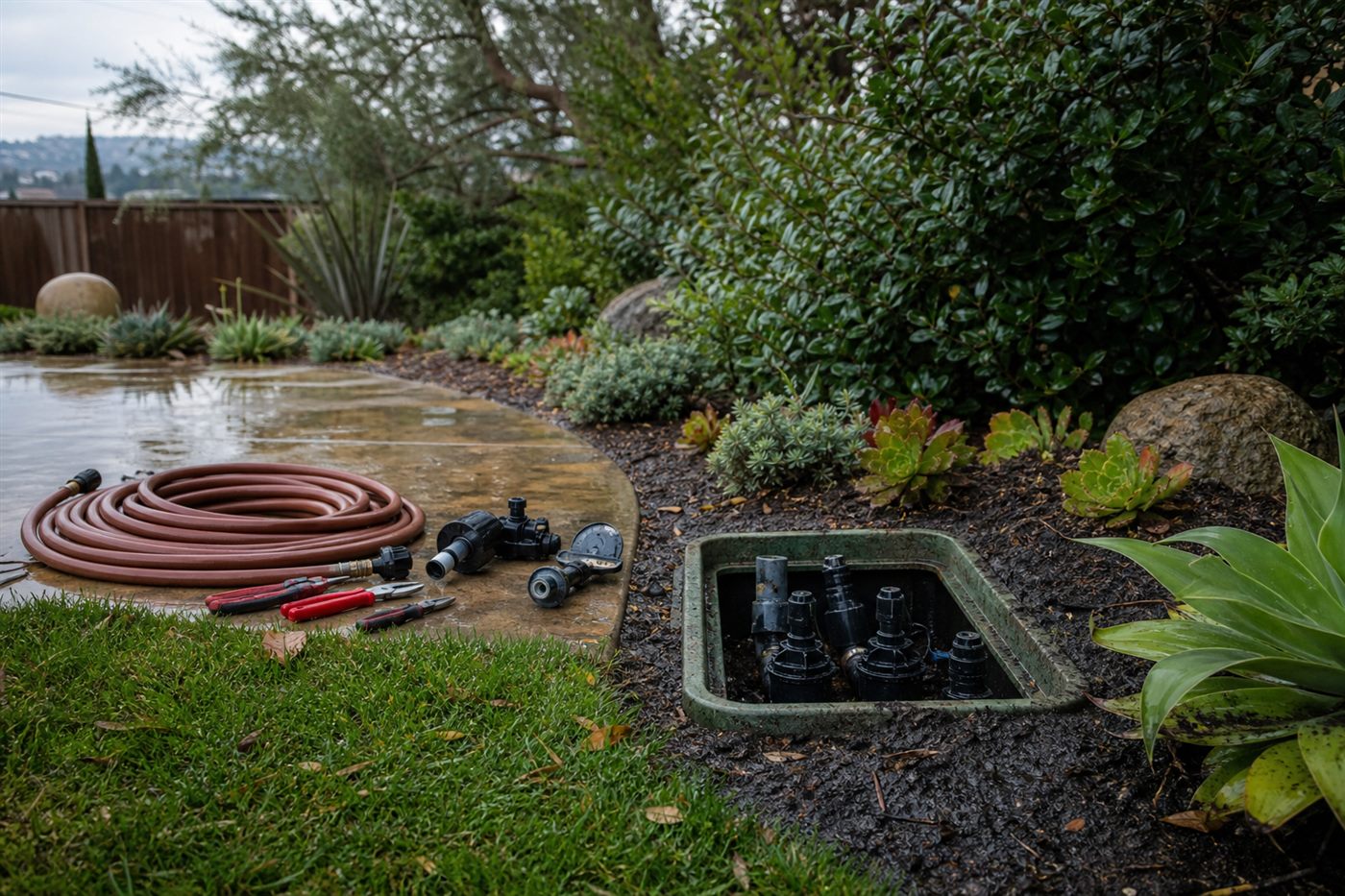
Cut or pause irrigation when storms arrive.
California guidance often means shutting irrigation during the rainy season, not freeze-climate compressor blowouts.
Test a rain shutoff, flush drip, store hose-bib timers dry.
Kit
- Controller access / app
- Rain shutoff sensor (retrofit if missing)
- Filter wrench / spare screens for drip
- Tool oil, sharpening stone, dry storage
Do this
-
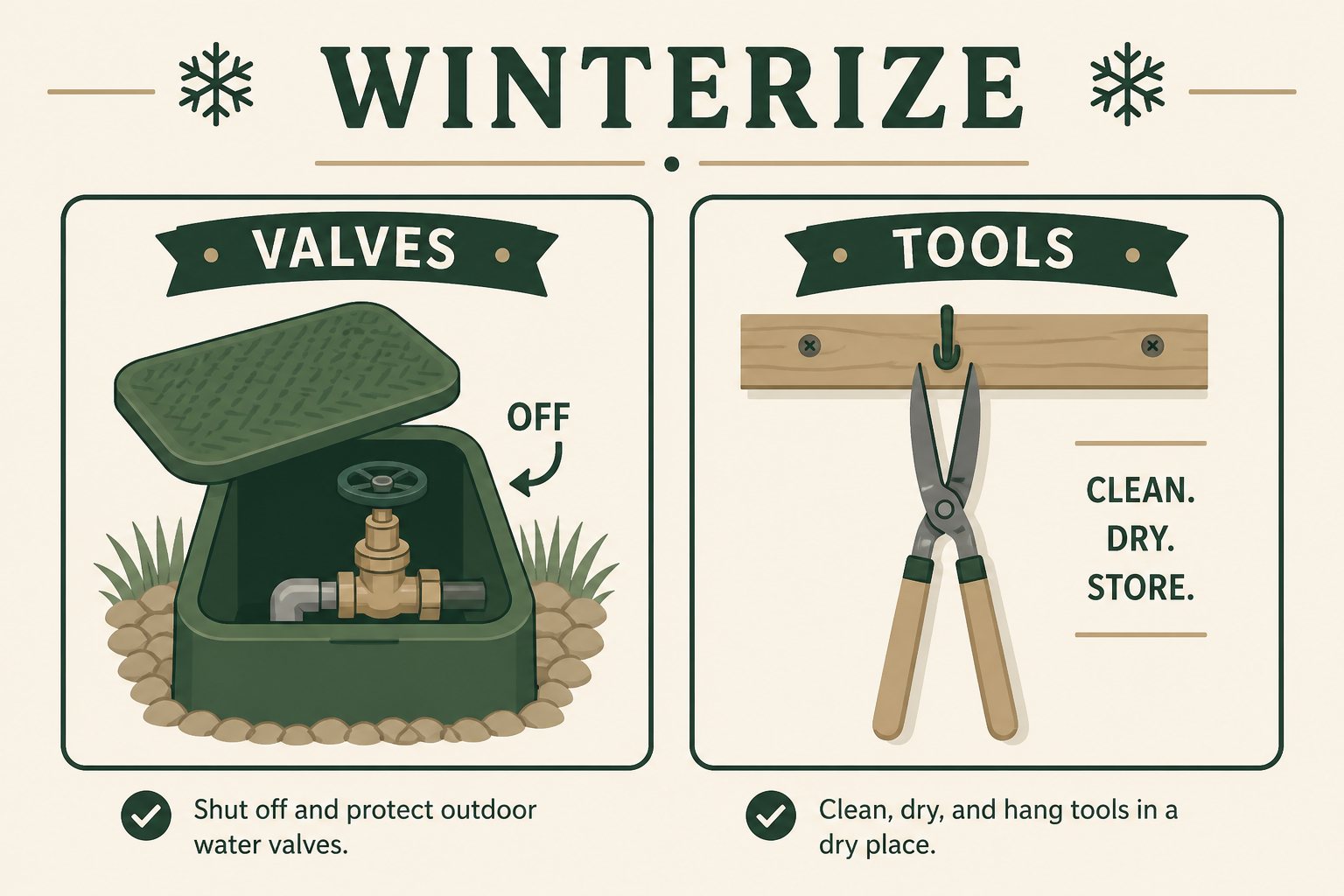
Cut or pause irrigation for rains
Turn controllers off or sharply reduce runtimes when storms arrive. Manually test each valve before you walk away for weeks.
UC.
-
Install or test a rain shutoff
A rain sensor stops scheduled runs after rainfall on most systems.
UC.
-
Service drip filters and ends
Clean filters, flush line ends, and map zones so spring repairs are faster.
UC.
-
Store hose-bib timers indoors
Remove batteries from hose-end timers and keep them dry between seasons.
UC.
-
Clean and oil tools
Brush soil off, sharpen blades, oil pivots, and hang in a dry spot. Sandy coastal air still corrodes.
UC.
Want irrigation paused and checked before the rains? Gardens of Gold installs and repairs irrigation in San Diego County. Get a quote.