Growing Food With Less Water — The Smart San Diego Approach
Southern California's periodic droughts and tiered water pricing make traditional thirsty vegetable gardens increasingly expensive. Native and Mediterranean-adapted edibles flip that equation: they evolved in conditions similar to ours and produce abundantly on minimal irrigation once established.

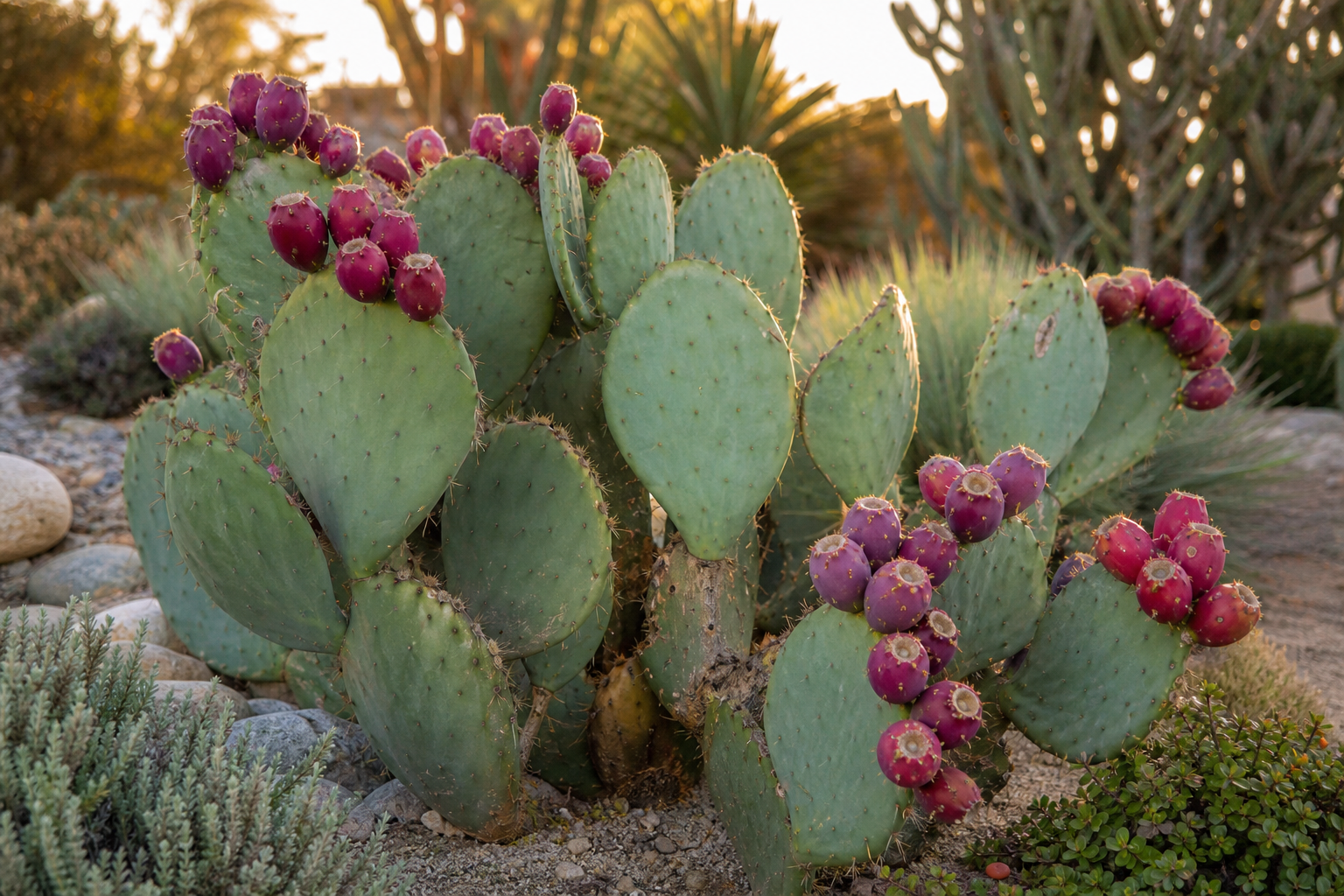
Prickly Pear Cactus (Opuntia ficus-indica) — Nopales & Tunas
The humble nopal is arguably San Diego's most productive edible plant per gallon of water used. It's beautiful, drought-tolerant, and gives you two crops:
- Nopales (pads): Harvest young pads 4–6 inches long in spring. Remove spines, dice, and saute with onion and egg or use in tacos.
- Tunas (fruit): Ripe from August to October. Deep magenta varieties are the sweetest. Use gloves and tongs — the tiny invisible glochids (hairlike spines) are worse than the big ones.
Plant in full sun with fast-draining soil. Established plants need no supplemental irrigation on the coast and very little inland. Space pads 6–8 feet apart; they spread wide over time.
Pomegranate — A Stunning Ornamental Edible
Pomegranates are one of the best-adapted fruit trees for San Diego. They tolerate alkaline soil, coastal salt spray, and significant drought once established (years 2–3+). Varieties to try:
- Wonderful — The commercial standard. Large, deep red, tart-sweet arils. Ripens September–November.
- Eversweet — Lower acidity, pink juice (won't stain). Excellent fresh eating.
- Angel Red — Very sweet, soft seeds, reliably heavy producer.
Water deeply once a week the first two summers. After that, 1–2 deep waterings per month through the dry season is enough. They're happy in a 25-gallon container too.
Fig — Ancient, Reliable, Delicious
Mission and Brown Turkey figs have been thriving in San Diego backyards for over a century. They need almost no care once established and produce two crops per year: a small breba crop on last year's wood in June and a main crop in August–September.
- Plant in the sunniest spot in your yard; figs in partial shade produce much less fruit.
- Water every 7–10 days in summer; let them dry out slightly in winter.
- A mature fig tree can yield 50–100 pounds of fruit — far more than most families can eat fresh. Learn to dry and jam the excess.
Pineapple Guava (Feijoa) — The Underrated Gem
Feijoa is criminally underused in San Diego landscapes. It's a medium evergreen shrub (or small tree) that produces golf-ball-sized fruit with a pineapple-guava flavor in fall. It's also stunning: silvery-green leaves and exotic red-and-white flowers that are themselves edible and taste like sweet jasmine.
- Tolerates coast, inland heat, mild frost, and alkaline soil.
- Plant two varieties for cross-pollination (Coolidge is self-fruitful but yields more with a partner).
- Drip irrigate monthly through summer; very little care needed.
Designing by Hydrozone: Grouping Plants by Water Needs
The secret to a thriving, low-water edible landscape is hydrozoning — placing plants with similar water needs together so each irrigation zone can be tailored precisely:
- Zone 1 (no supplemental water after year 2): Prickly pear, established rosemary, native sage.
- Zone 2 (deep watering 2x/month): Pomegranate, fig, feijoa, olive.
- Zone 3 (weekly deep watering): Citrus, tomatoes (seasonal), herbs in containers.
Gardens of Gold specializes in water-smart edible landscapes for San Diego County — from native plantings to drip-irrigated fruit tree guilds. Get a free design consultation.
A well-designed edible landscape is both beautiful and productive from every angle. Hablamos Español!