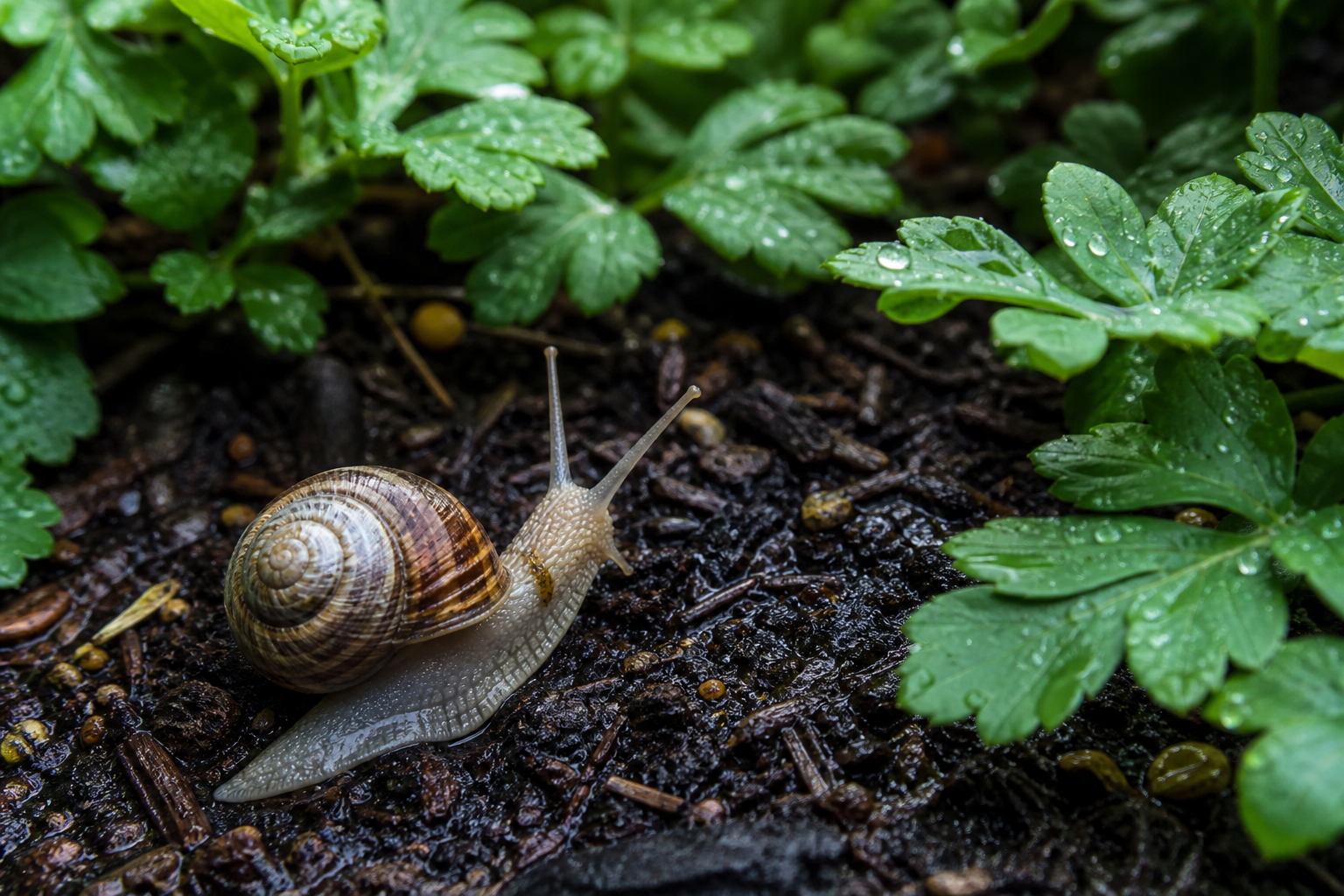
The Rain Effect: Why Populations Explode
San Diego's Mediterranean climate means we go months without rain, then get deluged. During dry periods, snails and slugs aestivate (dry-season dormancy) under mulch, boards, and leaf debris. One good rain wakes thousands simultaneously. Earwigs similarly shelter in damp crevices and emerge en masse when moisture arrives.
All three pests are most active at night and on overcast days. By the time you notice damage — ragged holes in seedlings, shredded lettuce leaves, decapitated transplants — they've already been feeding for hours.
Identifying the Damage
- Snails & slugs: Irregular holes in leaves with a silvery slime trail nearby. Seedlings often disappear entirely — cut off at the base. Prefer soft-leafed plants: lettuce, basil, cabbage, strawberries, and dahlias.
- Earwigs: Jagged, ragged holes with no slime trail. They also feed on decaying organic matter, which makes them somewhat beneficial — but not when they're eating your seedlings. Look for them hiding under rocks and pots during the day.
Quick Fix 1: Handpicking at Night
Low-tech but highly effective. Go out with a flashlight 1–2 hours after sunset and handpick snails and slugs into a bucket of soapy water. Even 15 minutes of this on two consecutive nights can dramatically reduce the population. For earwigs, flip boards, pots, and debris and drop them in soapy water.
Quick Fix 2: Iron Phosphate Bait (Safe for Pets & Wildlife)
Iron phosphate products (Sluggo, Escar-Go) are the gold standard for safe molluscicide use. When snails or slugs eat the bait, they stop feeding and die within days. The bait itself breaks down into iron and phosphate — harmless plant nutrients.
- Sprinkle lightly around susceptible plants — you don't need heavy coverage.
- Safe around pets, children, birds, and beneficial insects.
- Reapply after heavy rain washes it away.
Avoid metaldehyde baits — they're highly toxic to dogs and wildlife and there are safer alternatives.
Quick Fix 3: Habitat Reduction & Cleanup
Remove the hiding spots and the population crashes on its own:
- Clear debris, boards, and leaf piles where snails and earwigs shelter during the day.
- Raise containers off the ground on pot feet so snails can't shelter underneath.
- Pull mulch 2 inches away from plant stems.
- Copper tape around raised beds creates a mild electrical barrier that deters snails and slugs.
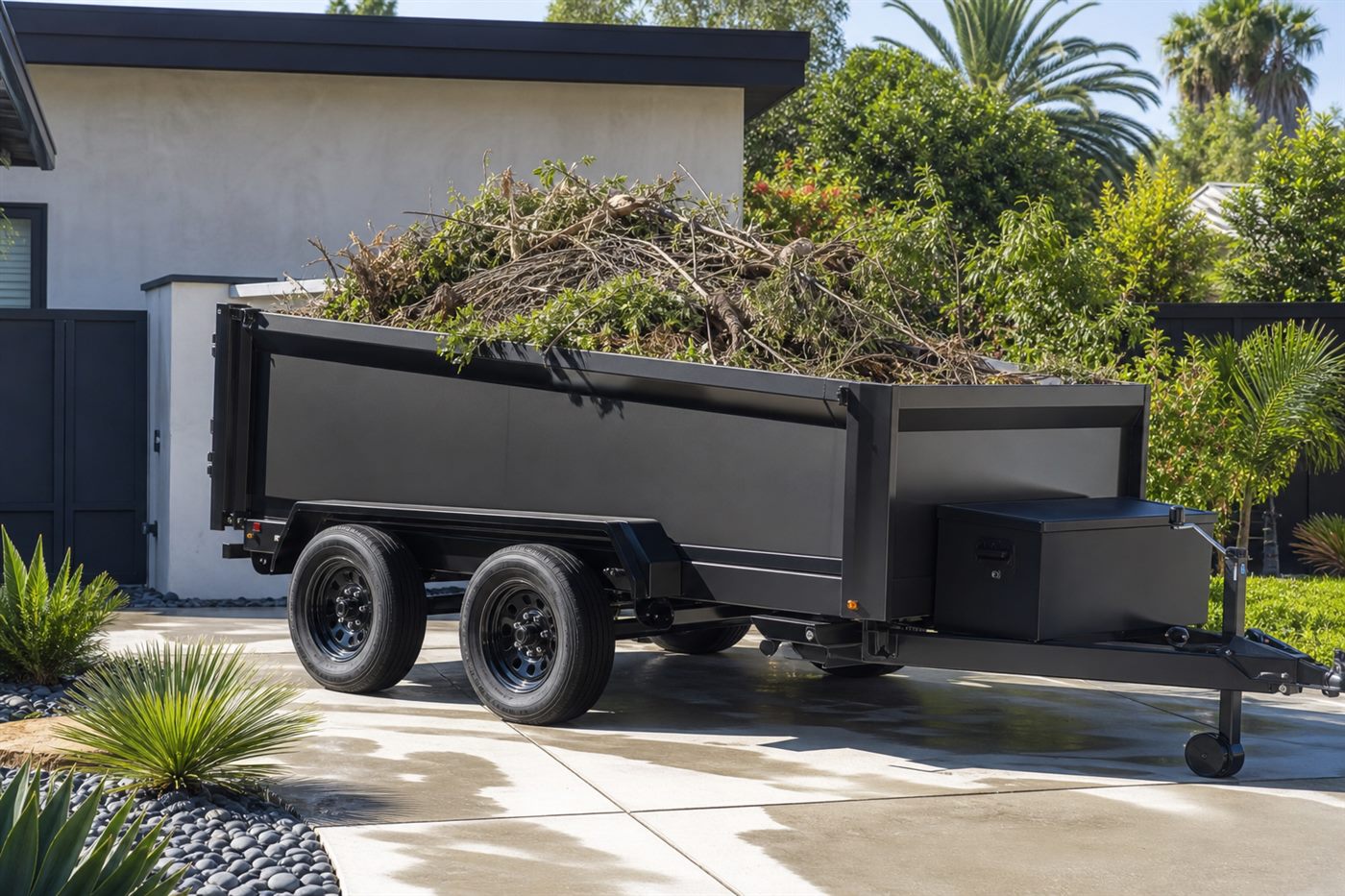
Post-rain debris is one of the biggest snail harbors. A seasonal cleanup — removing leaf piles, old mulch, and overgrown edges — dramatically reduces pest pressure. Gardens of Gold handles seasonal cleanups efficiently, including load-out with our electric dump trailer. Learn about trailer rental or book a cleanup service.
For Earwigs Specifically
Earwigs are more nuisance than catastrophe in most gardens, but they can devastate seedling beds. A DIY trap works well: roll up damp newspaper or fill a short section of PVC pipe with damp newspaper and leave it near affected beds. In the morning, shake the hiding earwigs into soapy water. Repeat nightly for a week.
Timing Is Everything
The window to act is the first 2–3 days after a rain event. After that, populations spread and the effort required to catch up multiplies. Set out iron phosphate bait before predicted rain events during our winter rainy season (November–March) and you'll stay ahead of the cycle.
Questions about your specific garden? Reach out to Gardens of Gold any time. Hablamos Español.