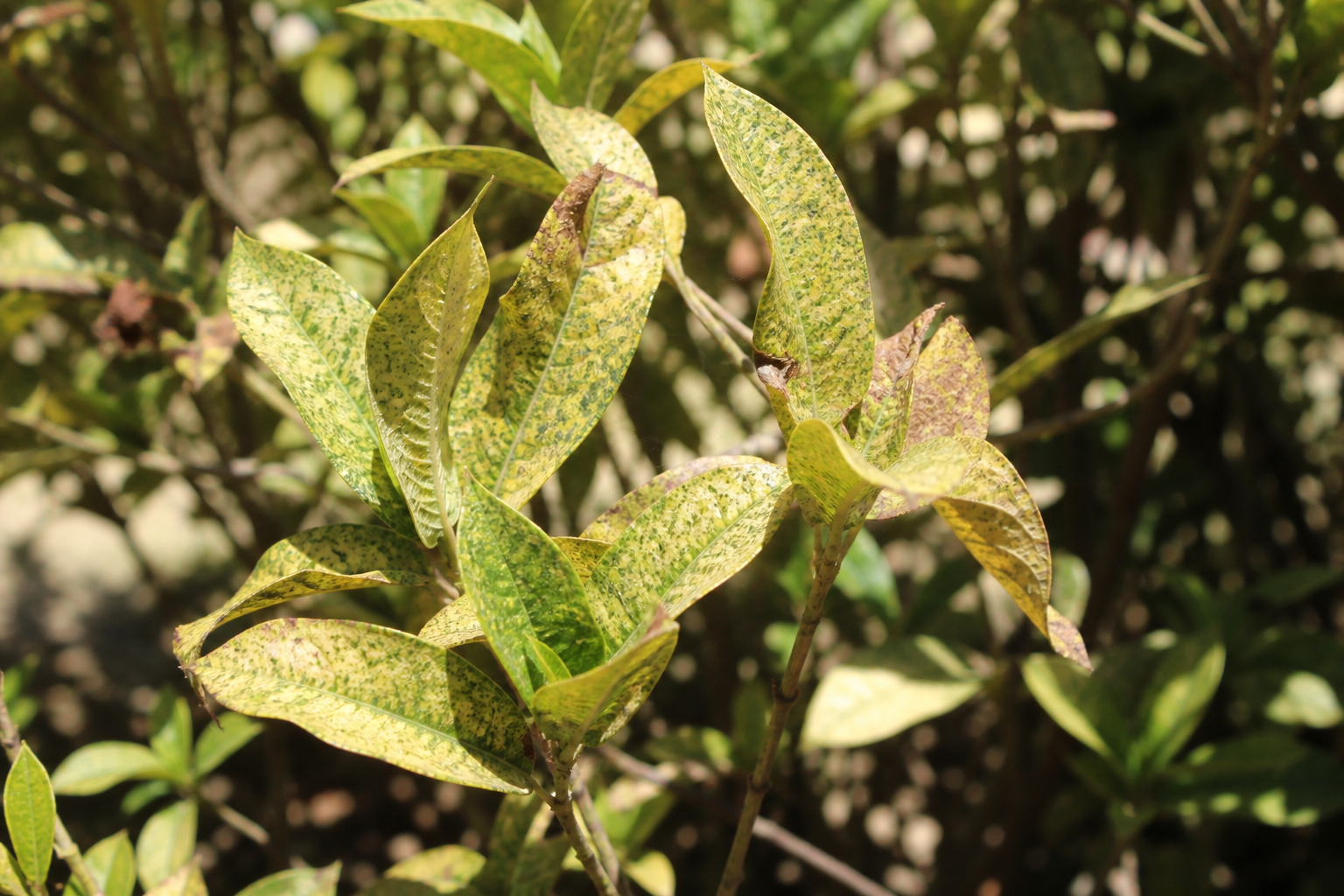
Why Summer Is Spider Mite Season
Spider mites (Tetranychus urticae, the two-spotted variety, is most common here) reproduce explosively in hot, dry conditions. A female can lay 200 eggs in her short lifetime, and at 90 °F those eggs hatch in 3 days. A population can double every week in August. Cool, moist conditions slow them — which is exactly what we don't have inland in summer.

Drought-stressed plants are the most vulnerable. When plants don't get consistent water, their cell walls weaken — precisely the condition spider mites prefer. This is why addressing drought stress and spider mite prevention go hand in hand.
How to Identify Spider Mites
Spider mites are about 0.5 mm — barely visible to the naked eye as moving dots. Identification is usually by their damage:
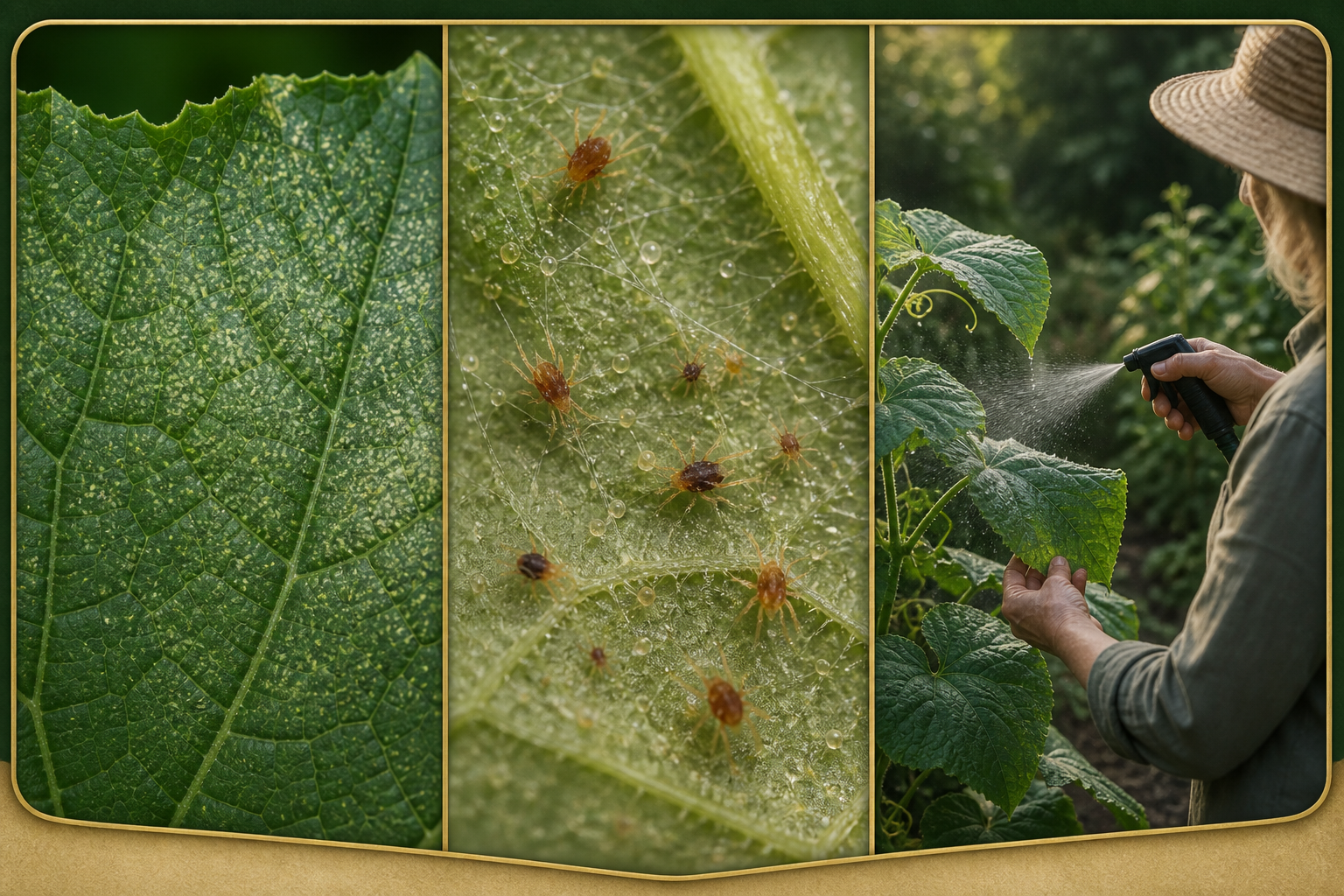
- Stippling: Hundreds of tiny pale dots on the upper leaf surface where mites have punctured cells from the underside.
- Bronzing or silvering: As stippling intensifies, leaves take on a dull, bronze or silver appearance.
- Fine webbing: In heavier infestations, fine silky webbing appears on leaf undersides, along stems, and between branches. Mites move through these webs.
- Paper test: Hold a white sheet of paper under a branch and tap it sharply. If you see tiny dots moving across the paper, you have mites.
Mites favor tomatoes, beans, cucumbers, squash, roses, and stressed trees. Check these plants weekly in July and August.
Treatment Step 1: Water — Immediately
Spider mites hate moisture. Your first action:
- Hose down leaf undersides forcefully with water. This physically removes mites, eggs, and webbing.
- Do this daily for 5–7 days on affected plants.
- Water the plant thoroughly at the root zone — a stressed plant is more vulnerable.
Treatment Step 2: Insecticidal Soap or Neem Oil
- Insecticidal soap (potassium salts) kills mites on contact. Spray all surfaces, especially leaf undersides, every 3–5 days for three applications.
- Neem oil (azadirachtin) disrupts mite reproduction and adds a residual effect. Combine with a few drops of castile soap as emulsifier. Apply weekly.
- Horticultural oil (summer weight) smothers eggs and nymphs effectively. Follow label dilution rates carefully to avoid leaf burn in high heat — apply in early morning.
Treatment Step 3: Miticide for Severe Infestations
If the population is heavy (visible webbing covering multiple branches, significant leaf bronzing), a dedicated miticide may be needed. Spinosad, hexythiazox, or bifenazate are effective and less harmful to beneficial insects than broad-spectrum choices. Rotate products to prevent resistance.
Prevention: Keep Them Away Next Summer
- Consistent irrigation: Drought-stressed plants are spider mite magnets. A drip system that waters on schedule is your best long-term prevention tool.
- Avoid over-applying nitrogen: It produces lush, succulent growth that mites love.
- Encourage predatory mites: Phytoseiulus persimilis is available from garden suppliers and devours spider mites. Avoid broad-spectrum insecticides that kill them.
- Mulch heavily: Keeps soil cool and moist, reducing plant stress during heat waves.
Consistent irrigation is the #1 spider mite deterrent. Gardens of Gold designs and installs smart drip systems that keep your plants stress-free all summer long. Get an irrigation quote.