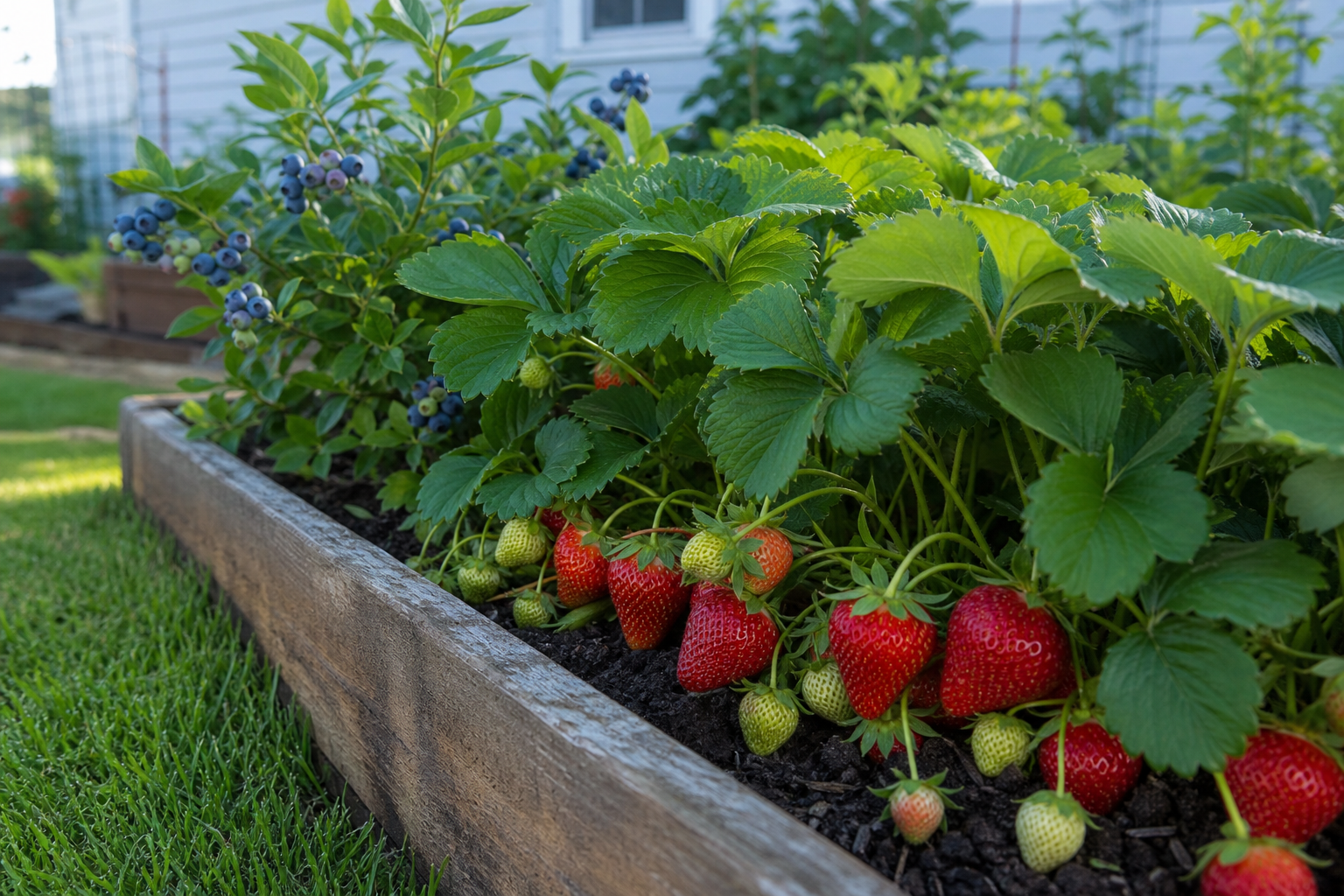
Strawberries: San Diego's Most Accessible Berry
San Diego is actually one of the top strawberry-growing regions in the world — Carlsbad and Oxnard lead commercial production. That same climate works in your backyard. The keys are choosing the right variety and managing water carefully.
Best Strawberry Varieties for Home Gardens
- Seascape: A day-neutral variety developed for California. Produces all season (April–November) and handles coastal and inland conditions equally well.
- Albion: Firm, very sweet berries with excellent flavor. Popular with home gardeners for its long production window.
- Chandler: Large, gorgeous berries. Peaks in spring but tapers off in summer heat — great for a bumper jam crop.
- Eversweet: Excellent heat tolerance, perfect for inland valleys.
Containers, Vertical Planters & Raised Beds
Strawberries produce well in almost any container that offers 6–8 inches of root depth:
- Vertical tower planters: Stack 20–30 plants in 2 square feet of floor space. Ideal for patios, balconies, or tiny yards.
- Strawberry jars: Classic clay pots with side pockets. Rustic, beautiful, and functional.
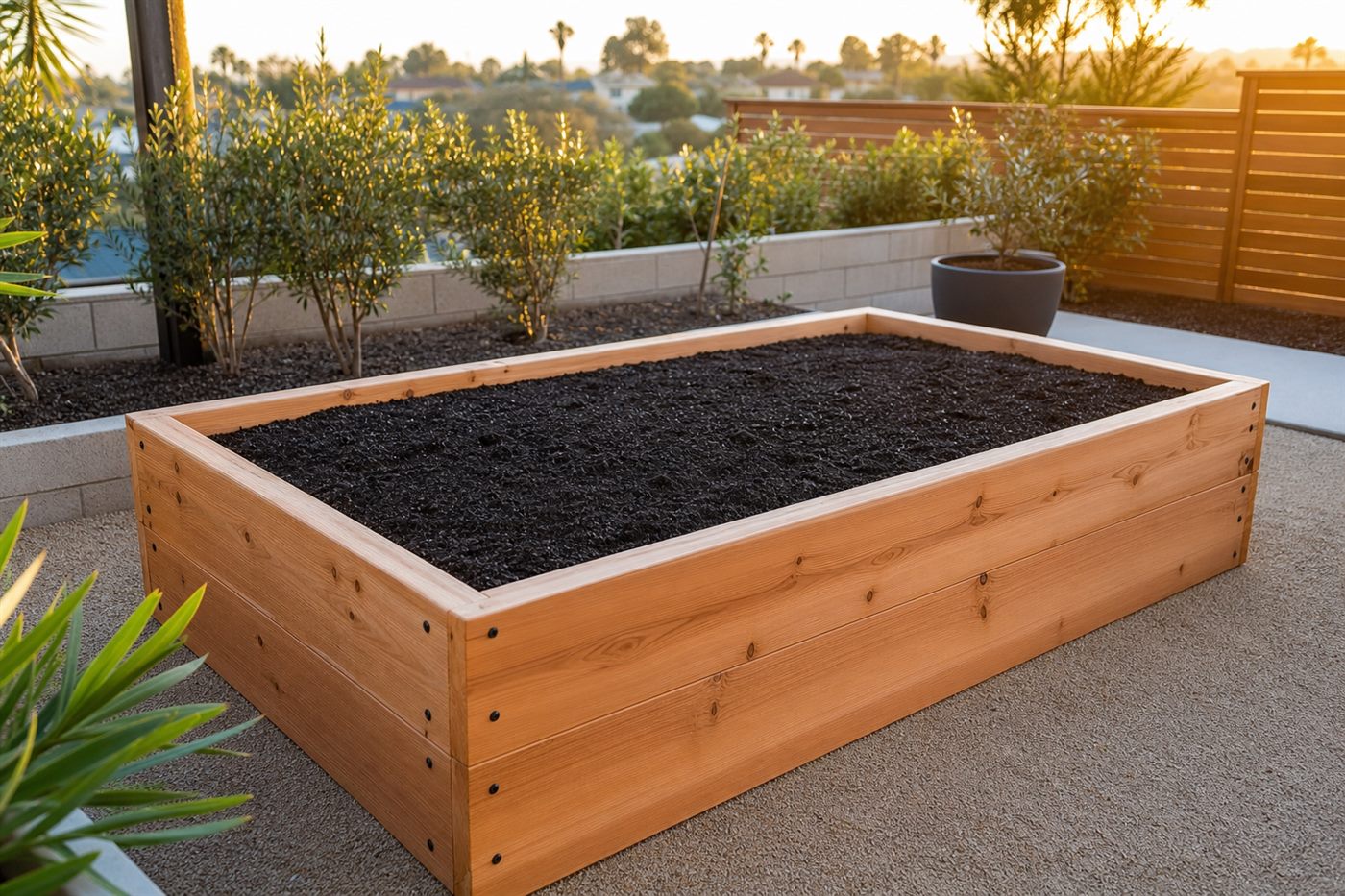
- Raised beds: A 4x4-foot bed holds 16 plants and yields enough berries for fresh eating and small-batch jam.
The advantage of containers: you control the soil mix entirely. Use a high-quality potting mix amended with perlite for drainage and slightly acidified with sulfur or peat moss (target pH 5.5–6.5).
Blueberries: The Acid-Soil Challenge
Blueberries are trickier in San Diego because they demand acidic soil (pH 4.5–5.5) and our native soil tends toward alkaline (pH 7–8). But with the right approach, they produce beautifully.
- Southern Highbush varieties: O'Neal, Sunshine Blue, and Misty are bred for low-chill conditions (San Diego rarely gets the 1,000+ chill hours Northern varieties need). These require only 150–300 chill hours.
- Acidify the soil: Mix sulfur pellets into your planting hole (follow label rates), add sphagnum peat moss at 50% of the soil volume, and mulch with pine bark or pine needles.
- Use acid fertilizer: Azalea/camellia fertilizers or products labeled for acid-loving plants keep pH in the right range over time.
- Water with collected rain or filtered water when possible — our tap water is alkaline (pH 7.5–8.5) and slowly raises soil pH over seasons.
Drip Irrigation for Berries
Both strawberries and blueberries have shallow roots and suffer from inconsistent moisture. A low-flow drip system (0.5–1 gallon per hour emitters) running daily or every other day is ideal:
- Keeps moisture consistent, which prevents small and cracked fruit.
- Delivers water to the root zone without wetting leaves (which invites botrytis gray mold).
- Pairs beautifully with a timer so you never forget to water during vacation.
Want a berry-ready raised bed with drip irrigation installed? Gardens of Gold builds custom raised beds and irrigation systems throughout San Diego County. Get a free estimate.
Quick Tips for a Better Harvest
- Remove runners (long stolons) from strawberries during the first season to focus energy on root establishment and fruit production.
- Net your blueberries — birds will eat every berry before you get to them.
- Refresh strawberry plants every 2–3 years; production drops after that. Use runners from your best plants to start the next generation.
- Plant two or more blueberry varieties for cross-pollination — it dramatically increases yield and berry size.