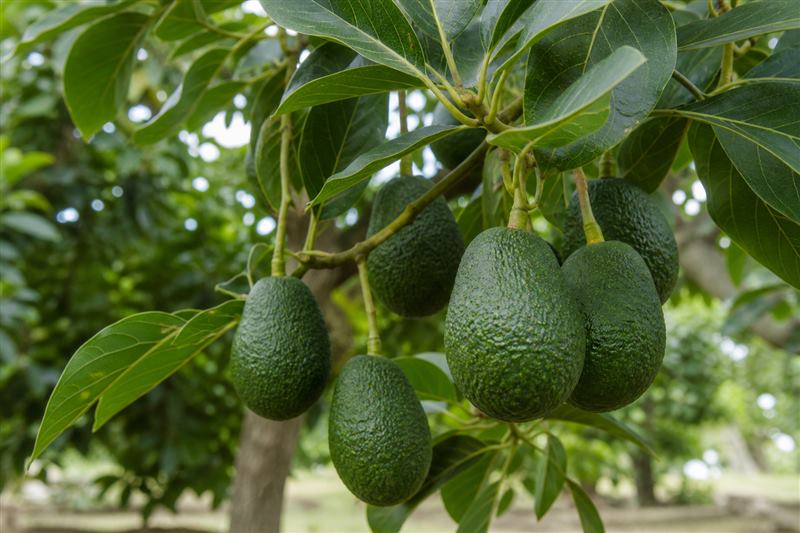
This is Persea americana, a Lauraceae tree. Kew maps Central Mexico to Costa Rica. This page does not use a Nahuatl folk etymology the fetched sources do not print.
How it was found
Kew maps Persea americana from Central Mexico to Costa Rica. Native to: Belize, Costa Rica, Guatemala, Honduras, Mexico Central, Mexico Gulf, Mexico Southeast, Mexico Southwest, and Nicaragua. USDA-ARS GRIN also prints native in northern and southern Mexico and Central America, plus Other: origin Mesoamerica. Jepson eFlora: native to mountains of Central America. Kew itself prints Central Mexico to Costa Rica, not the word Mesoamerica — GRIN and UC ANR do.
Do not write South America as Kew’s native range. Venezuela is not on Kew’s Native to list used here. GRIN marks Venezuela native as requires confirmation — not used as confirmed native.
UC ANR Topics in Subtropics (UCR): indigenous civilizations in Mesoamerica were selecting superior forms for thousands of years; archaeological evidence of selection as far back as 8,000 years before present in Puebla State, Mexico. At European contact, three distinct types already existed (West Indian, Guatemalan, Mexican botanical races), each from a separate geographic center of origin.
How people used it
Kew use classes include food, fuel, medicine, poison, animal food, environmental uses, and social uses. Jepson: widely cultivated for fruits. GRIN economic uses include human food (fruit).
Medicine is listed on Kew without a named folk recipe. No Nahuatl ahuacatl story is copied; it is not on the fetched POWO, Jepson, GRIN, or UC pages used here.
Timeline
-
About 8,000 years before present
Selection in Puebla
UC ANR / UCR Topics in Subtropics prints evidence of selection by human hand as far back as 8,000 years before present, preserved in archaeological sites in Puebla State, Mexico. That is the oldest dated selection on this page — a Mesoamerican orchard story, not a California origin.
UC ANR Topics in Subtropics
-
At European contact / 15th–16th centuries
Three races already in place
UC ANR writes that three botanical races already existed at European contact. Worldwide distribution of (mostly West Indian race) avocados followed 15th- and 16th-century explorations, reaching Spain in the early 17th century. The races traveled; they were not invented in Spain.
UC ANR Topics in Subtropics
-
1768
Named in the Gardeners Dictionary
Kew: Persea americana Mill. first published in Gardeners Dictionary, ed. 8 (1768). Accepted species, family Lauraceae; tree of the seasonally dry tropical biome.
Kew POWO
-
Mid- to late 19th century United States
Florida 1833, California 1856
UC ANR Topics in Subtropics: the three races found their way to the United States, primarily Florida and California, in the mid- to late 19th century. UC Fruit & Nut Research avocado fact sheet prints first U.S. plantings in Florida 1833 and in California 1856. That is the U.S. arrival, centuries after Puebla selection.
UC ANR Topics in Subtropics; UC ANR Fruit & Nut Research
Cool to know
UC ANR: West Indian (formerly also called South American; named for a later destination, not its domestication center), Guatemalan (upland Guatemala), and Mexican / criollo (highland Mexico). USDA-ARS GRIN lists those three horticultural races as conspecific taxa and prints Other: origin Mesoamerica.
UC ANR Topics in Subtropics; USDA-ARS GRIN
Jepson eFlora: California waif; fruit pear-shaped or round, 5–15 cm, yellow-green to dark purple; 2n=24; unlikely to escape cultivation because of large, heavy seeds.
Jepson eFlora
UC ANR notes the West Indian race was formerly also called South American and was named for a later destination, not its domestication center. The name describes where it went, not where Kew maps the wild tree.
UC ANR Topics in Subtropics
Growing notes for this plant live on the Plant Wiki. This page is origin and use, not a How-To.
Want an avocado in a San Diego yard? Ask about planting and stewardship — this page is origin and use, not a planting How-To. Get a quote or write yourgardenofgold@gmail.com.