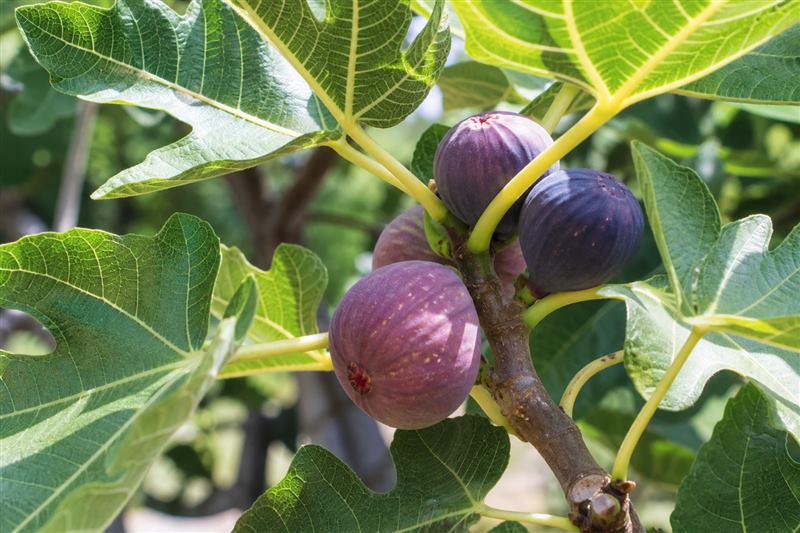
This is Ficus carica, the edible fig. It is not the Bodhi tree story; San Diego Master Gardeners mention a fig tree without identifying this species.
How it was found
Kew maps Ficus carica from the eastern Mediterranean to Central Asia and the western Himalaya. Native to: Afghanistan, Cyprus, Greece, Iran, Iraq, Crete, Lebanon-Syria, North Caucasus, Pakistan, Palestine, Tadzhikistan, Transcaucasus, Turkmenistan, Türkiye, and West Himalaya. Jepson: native to southwestern Asia. UC Master Gardeners of San Luis Obispo County: native to Western Asia and the eastern Mediterranean region.
GRIN prints a broader native table and also Other: exact native range obscure. Native limits are not treated as fully settled on that page. Kew does not print Algeria, Morocco, or Tunisia on the fetched Native to line; GRIN’s North Africa rows are not merged onto Kew’s list.
San Diego Master Gardeners: considered by historians to be the first of the domesticated crops, with evidence stretching back more than five millennia. UC SLO Master Gardeners: cultivated for thousands of years. Those are domestication-and-diet sentences, not Kew’s native-range map.
How people used it
Kew use classes include food, animal food, medicine, poison, environmental uses, and social uses. Jepson: commonly cultivated. GRIN: human food (fruit); also cultivated widely in tropics and subtropics.
The thing we call a fig is not a simple fruit. UC SLO: figs are not technically fruit but flask-shaped modified stems encasing numerous tiny flowers. San Diego Master Gardeners: botanically a syconium. Medicine is listed on Kew without a named folk recipe.
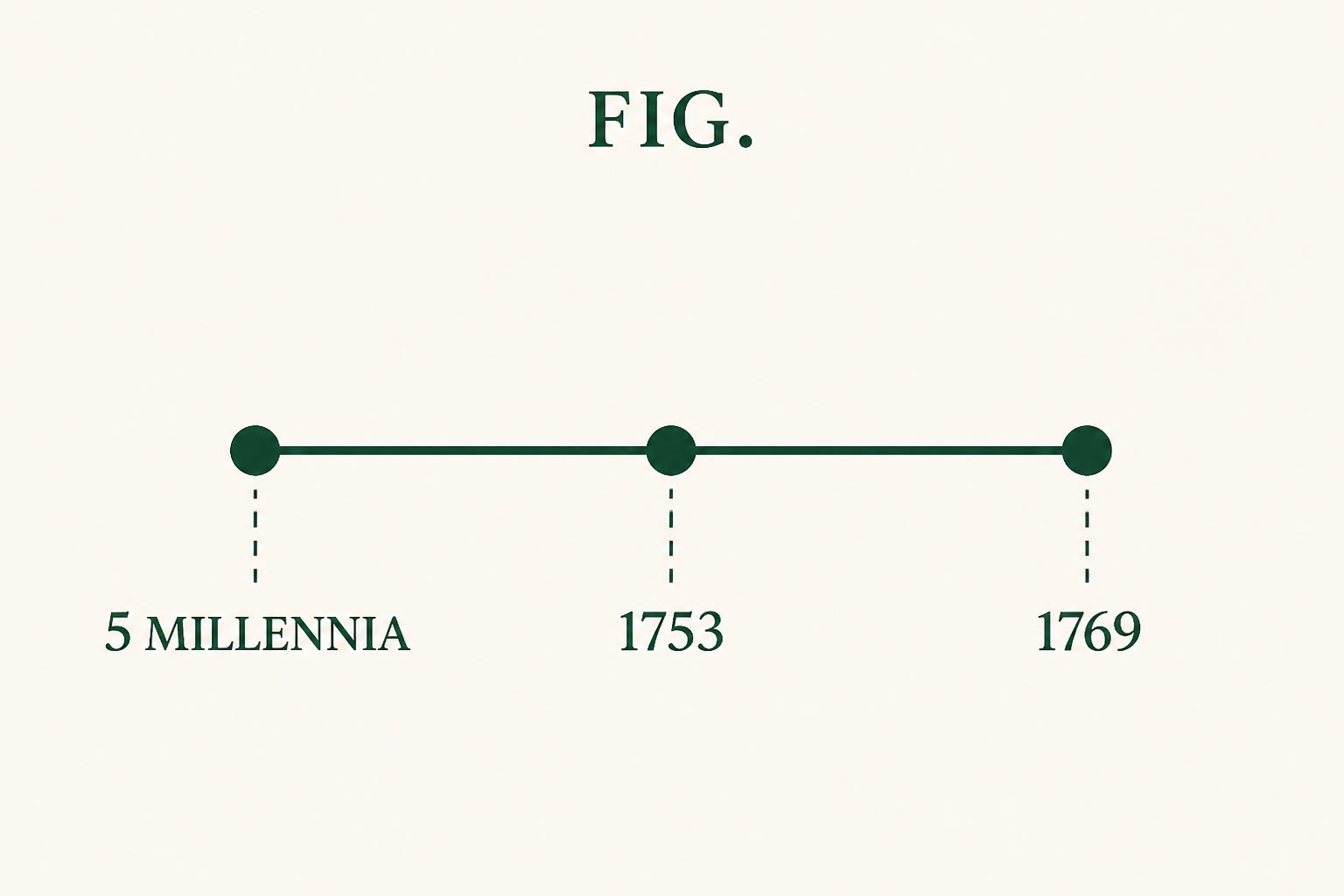
Timeline
-
More than five millennia (SD MG)
Among the first domesticated crops
San Diego Master Gardeners print that figs have long been part of the cultivated human diet, with evidence stretching back more than five millennia, and that historians consider fig among the first domesticated crops. That is the oldest domestication wording on this page. Kew does not print that millennia line on the taxon page used here.
San Diego Master Gardeners
-
1753
Named in Species Plantarum
Linnaeus published Ficus carica in Species Plantarum: 1059. Kew accepts the species (family Moraceae; tree of the temperate biome).
Kew POWO
-
1769
Mission San Diego, the Mission fig
UC SLO Master Gardeners and San Diego Master Gardeners write that figs were first planted in California at Mission San Diego (Mission San Diego de Alcalá) in 1769. SD MG: the dark-purple variety the priests planted became known as the Mission fig. That is California’s dated arrival, not the crop’s first domestication.
UC SLO Master Gardeners; San Diego Master Gardeners
-
Present (California production, SD MG)
Almost all U.S. figs
San Diego Master Gardeners print California as producing 100% of the nation’s dried figs and 98% of the fresh figs. A Mediterranean crop became a California packing story.
San Diego Master Gardeners
Cool to know
UC SLO Master Gardeners: figs are not technically fruit but flask-shaped modified stems encasing numerous tiny flowers. San Diego Master Gardeners: botanically a syconium. The “fruit” is a hollow stem lined with flowers.
UC SLO Master Gardeners; San Diego Master Gardeners
UC SLO and SD MG: four types — Caprifig, Smyrna, San Pedro, and Common. Some types need a fig wasp (Blastophaga) and a caprifig for pollination; Common types (typical home garden) do not require pollination.
UC SLO Master Gardeners; San Diego Master Gardeners
GRIN prints Other: exact native range obscure, alongside a native table spanning western Asia, the Mediterranean, and adjacent regions. Kew’s Native to list does not include North Africa on the fetched line. Those maps stay named.
USDA-ARS GRIN; Kew POWO
Growing notes for this plant live on the Plant Wiki. This page is origin and use, not a How-To.
Want a fig in a San Diego yard? Ask about planting and stewardship — this page is origin and use, not a planting How-To. Get a quote or write yourgardenofgold@gmail.com.