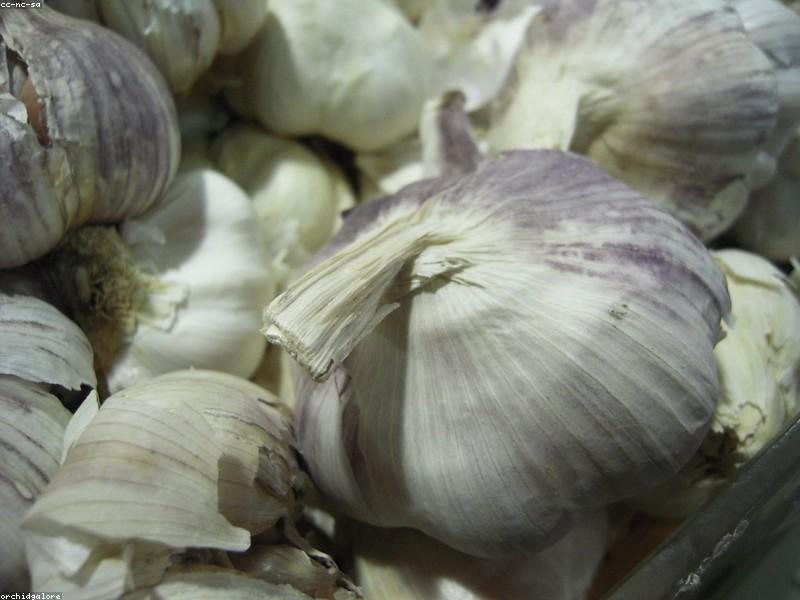
This story is true garlic, Allium sativum — not elephant garlic, which UC treats as a leek relative.
How it was found
Kew maps Allium sativum from Central Asia to northeastern Iran. The native list names Iran, Kazakhstan, Kirgizstan, Tadzhikistan, Turkmenistan, and Uzbekistan, and the species is introduced widely in Europe, North Africa, parts of Asia, and the Americas.
USDA GRIN does not print a native-country table for this taxon. It lists garlic as widely cultivated and notes only “possible origin c. Asia.” That is not the same sentence as Kew’s Central Asia–to–Iran map, and this page does not collapse them into one country of origin.
No fetched page printed a first-cultivation date or a single domestication center. UCCE Stanislaus writes that alliums have seasoned food for thousands of years, and that onions and garlic were two of the most important crops consumed in ancient Egypt — a use story, not a Kew first-domestication year.
How people used it
People eat the cloves. Kew lists food, and also animal food. UC ANR Publication 8568 treats garlic as a culinary bulb. UCCE Stanislaus puts garlic with onion as ancient Egyptian food crops and as flavorful seasoning for thousands of years.
California Agriculture (March–April 1988): about 80 percent of California garlic is produced for processing into dehydrated flakes, granules, or powders; this garlic is usually grown under contract with dehydrator companies.
Kew lists the species as a medicine. The taxon page does not name a remedy. GRIN lists “Medicines — folklore” with literature citations; those folklore details are not copied here as recipes.

Timeline
-
Thousands of years / ancient Egypt
Seasoning, then a staple crop
UCCE Stanislaus County writes that alliums have provided flavorful seasoning in food for thousands of years, and that onions and garlic were two of the most important crops consumed in ancient Egypt. That is the oldest use wording on this page. It is not a first-domestication country, and Kew does not print that Egypt line on the taxon page.
UCCE Stanislaus — Alliums in Your Garden (2007)
-
1753
Named in Species Plantarum
Kew accepts Allium sativum L., first published in Species Plantarum: 296 (1753). USDA GRIN prints the same 1753 citation. That names the crop this story is about. It does not date the first garden.
Kew POWO; USDA GRIN
-
Present (California, as printed 2016)
Most U.S. garlic is Californian
UC ANR Publication 8568 prints that California produces over 90 percent of the garlic grown commercially in the United States. The major commercial varieties named there are California Early and California Late. That is a production fact for this state, not a claim that garlic originated here.
UC ANR Publication 8568
-
1955 (as printed)
Virtually all U.S. garlic, then
California Agriculture (Ralph I. Crane): virtually all of the nation’s garlic, artichokes, and Brussels sprouts are grown in California. A 1955 production-share table on the same article lists garlic at 100 percent of U.S. production. That is a dated production share, not a first-arrival date, and it is not the same beat as UC ANR 8568’s later “over 90 percent” line. No fetched page printed a Mission year for garlic.
California Agriculture — California Vegetable Industry (v.10 n.5)
-
1950
California Late, selected at Davis
California Agriculture (May 1960), Louis K. Mann, UC Davis: in 1950, workers at Davis selected for experimental work a number of lines of California Late garlic from commercial fields. A breeding selection, not a first planting.
California Agriculture — Nematode-free Garlic Planting Stock (May 1960)
-
Autumn 1960 (as printed)
Nematode-free stock, Lassen ordinance
California Agriculture (May 1960): after several years of selection, nematode-free planting stock became available for planting on clean land; Lassen County established an ordinance to prevent uninspected garlic from being planted in the county, and a state certification program for nematode-free planting stock had been established. The first planting stock for commercial production is expected to become available in the autumn of 1960.
California Agriculture — Nematode-free Garlic Planting Stock (May 1960)
Cool to know
Elephant garlic is Allium ampeloprasum (var. ampeloprasum), a close relative of the leek. UC ANR 8568 and UCCE Stanislaus both keep it off true garlic. Huge cloves do not make it A. sativum.
UC ANR Publication 8568; UCCE Stanislaus
UC ANR 8568 splits A. sativum into two main types: softneck (var. sativum) and hardneck (var. ophioscorodon). Hardneck types produce a scape. That is why some garlic beds send up a curly stalk and some do not.
UC ANR Publication 8568
The pungent flavor of fresh garlic comes from the enzyme alliinase converting alliin to allicin when clove cells are broken. Cooking destroys the enzyme, so roasted garlic is sweet rather than pungent. That is kitchen chemistry UC actually printed — not folklore medicine.
UC ANR Publication 8568
UC Master Gardeners of Santa Clara County: California Early White is a subtle, mild-tasting garlic variety developed for the California garlic industry, known as Gilroy garlic; California Late White is one of the two Gilroy cultivars; Susanville is considered an improved selection of California Early.
UC Master Gardeners of Santa Clara County — Garlic
Growing notes for this plant live on the Plant Wiki. This page is origin and use, not a How-To.
Want garlic in a San Diego bed? See the garlic How-To for clove depth and harvest timing here. Get a quote or write yourgardenofgold@gmail.com.