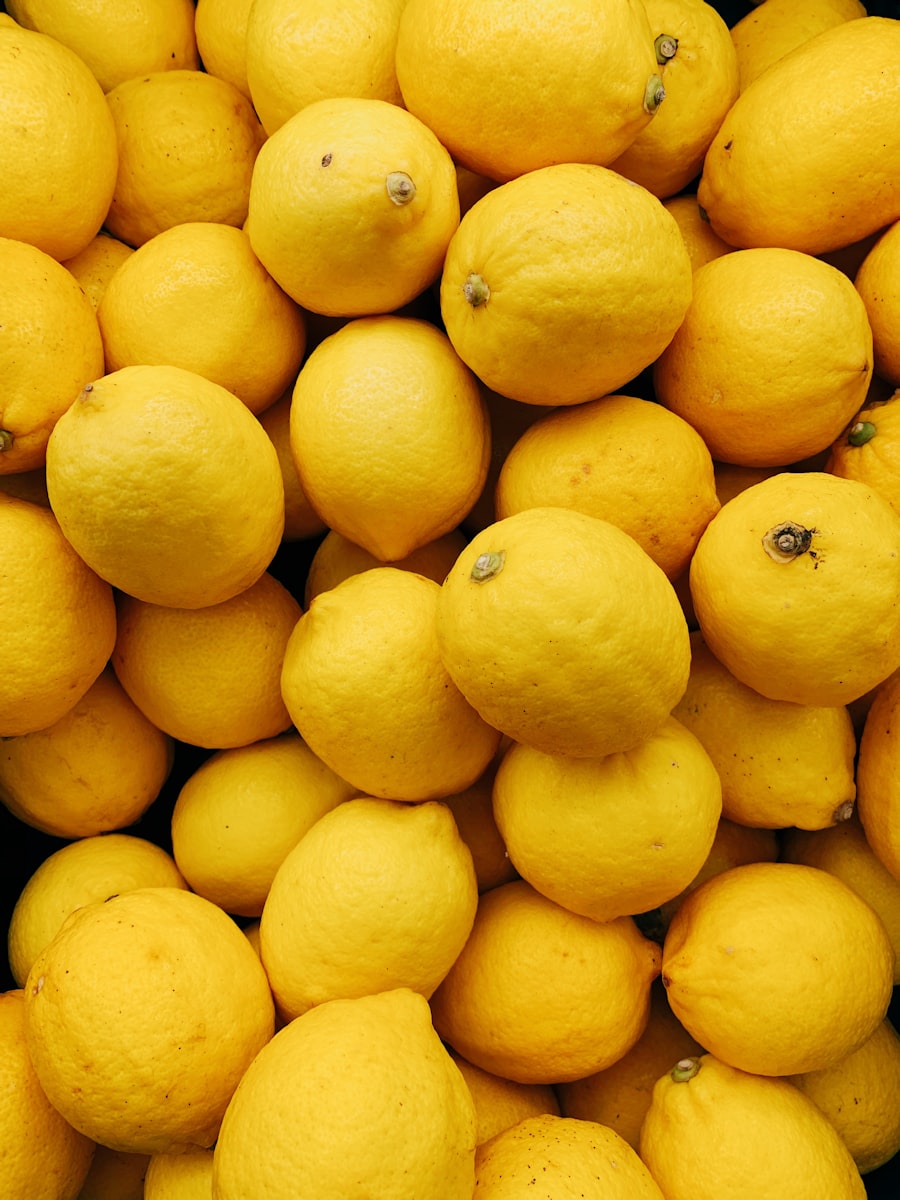
There is no separate lemon card on this wiki. Meyer lemon is the citrus this story is about.
How it was found
Kew accepts Citrus × limon (L.) Osbeck as a hybrid and prints the native range as a cultigen derived from artificial hybrids. There is no Native to list on that taxon page. The hybrid formula Kew prints is C. maxima × C. medica × C. reticulata — pummelo, citron, and mandarin.
UC Master Gardeners of Napa County write that Frank Meyer (USDA) imported the Meyer lemon from China to California in 1908, and that the plant is probably a hybrid of orange and lemon. UC Solano writes that he is credited with finding it growing in a pot in China, and that the citrus was named after him. USDA-ARS GRIN lists English common name Meyer lemon under Citrus meyeri, now a synonym of Citrus × limon, and prints hybrid parentage with origin unknown, likely China.
Those parentage lines are not identical. Kew’s three-species formula is not the same as UC’s orange × lemon (and lemon-and-mandarin wording on UC pages). This page keeps both. Citrus × meyeri Yu.Tanaka (1946) is a Kew heterotypic synonym of Citrus × limon, not Kew’s accepted name.
How people used it
Kew (Citrus × limon) lists food, animal food, medicine, fuel, and environmental uses. GRIN economic-use rows include human food (fruit) as Citrus meyeri.
UC Napa Master Gardeners: intended as an ornamental tree (attractive; grows well in containers); fruit used locally; never caught on as a long-distance commercial crop because the thin-skinned fruit does not handle storage and shipping well. That is why Meyer stays a backyard and farmers-market fruit more than a shipping box fruit.
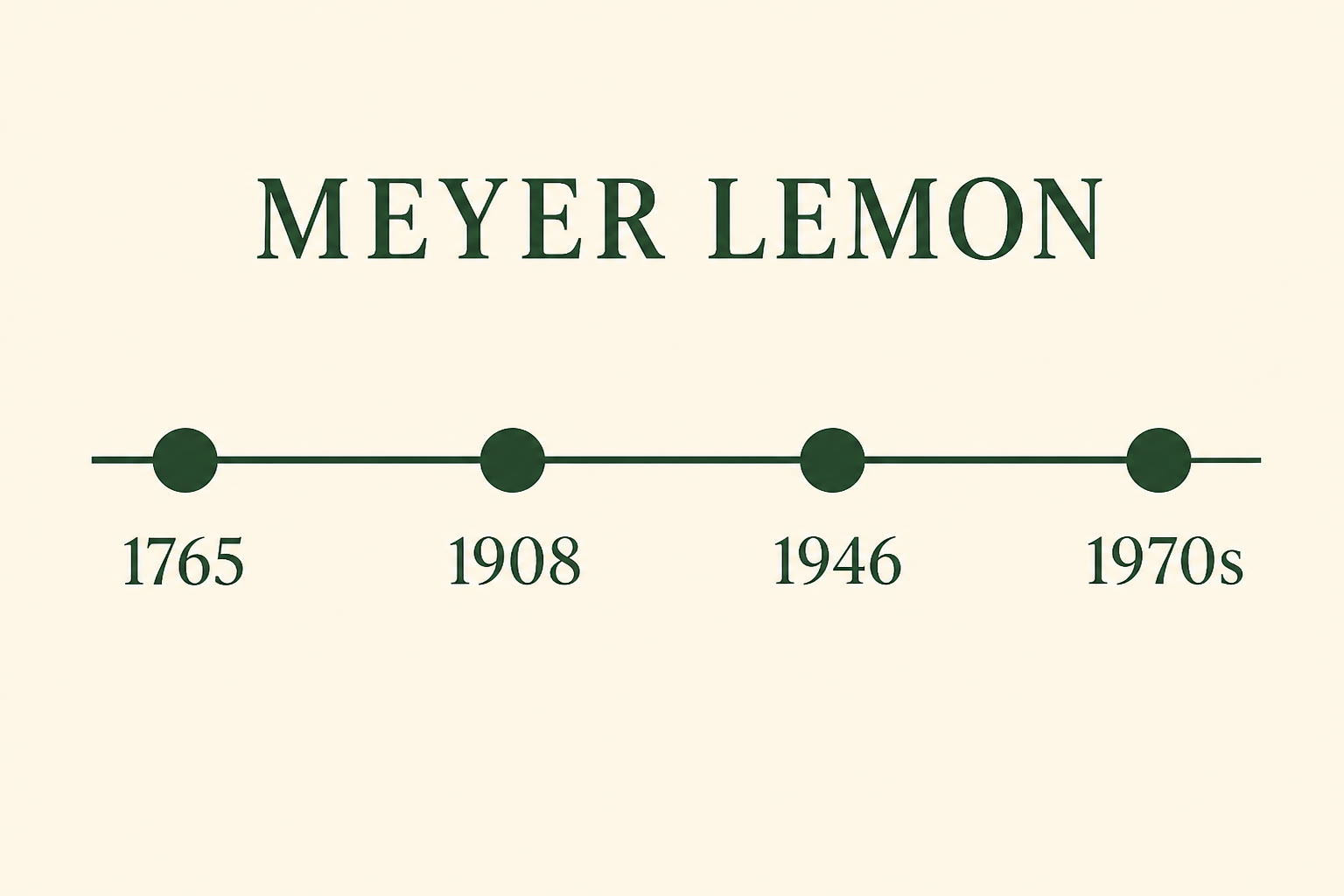
Timeline
-
1765
Citrus × limon published
Kew: Citrus × limon (L.) Osbeck first published in Reise Ostindien: 250. Kew accepts this hybrid. That is the accepted name wrapping Meyer lemon on Kew’s page.
Kew POWO — Citrus × limon
-
1908
Frank Meyer, a pot in China
UC Napa and UC Solano Master Gardeners write that USDA agricultural explorer Frank Meyer imported the Meyer lemon from China to California in 1908. Solano prints that he is credited with finding it growing in a pot in China; the citrus was named after him. That is the California arrival story this page uses.
UC Master Gardeners of Napa County; UC Master Gardeners of Solano County
-
1946
The Meyer name on paper
Kew: Citrus × meyeri Yu.Tanaka first published in Icon. Jap. Citrus Fruits 1: 91 (1946). Kew treats the name as a heterotypic synonym of Citrus × limon. UC pages still print Citrus × meyeri for the garden plant.
Kew POWO — Citrus × meyeri
-
1970s
Improved Meyer from Riverside
UC Master Gardeners of Solano County write that in the 1970s the University of California, Riverside introduced the Improved Meyer lemon tree. UC Napa: first Meyer lemons were symptomless carriers of tristeza virus; breeders later provided Improved Meyer and virus-free clones. That is why the backyard tree sold now is usually the improved clone, not the 1908 import as-is.
UC Master Gardeners of Solano County; UC Master Gardeners of Napa County
Cool to know
Kew prints Citrus × limon as a hybrid (hybrid = true) and a cultigen derived from artificial hybrids, formula C. maxima × C. medica × C. reticulata. UC Napa prints that the Meyer is probably a hybrid of orange and lemon. Both lines stay; neither is rewritten as the other.
Kew POWO; UC Master Gardeners of Napa County
UC Napa Master Gardeners print that Meyer is resistant to extremes of temperature, relatively easy to grow, and tasty, but thin-skinned fruit ships poorly. Ornamental tree, local fruit — not a long-haul commercial lemon.
UC Master Gardeners of Napa County
Gardens of Gold has meyerLemon, not a separate lemon card. This taxon is not a license to invent a second citrus identity.
Gardens of Gold plant wiki identity (packet note)
Growing notes for this plant live on the Plant Wiki. This page is origin and use, not a How-To.
Want a Meyer in a San Diego pot? See the citrus How-To for planting in this climate. Get a quote or write yourgardenofgold@gmail.com.