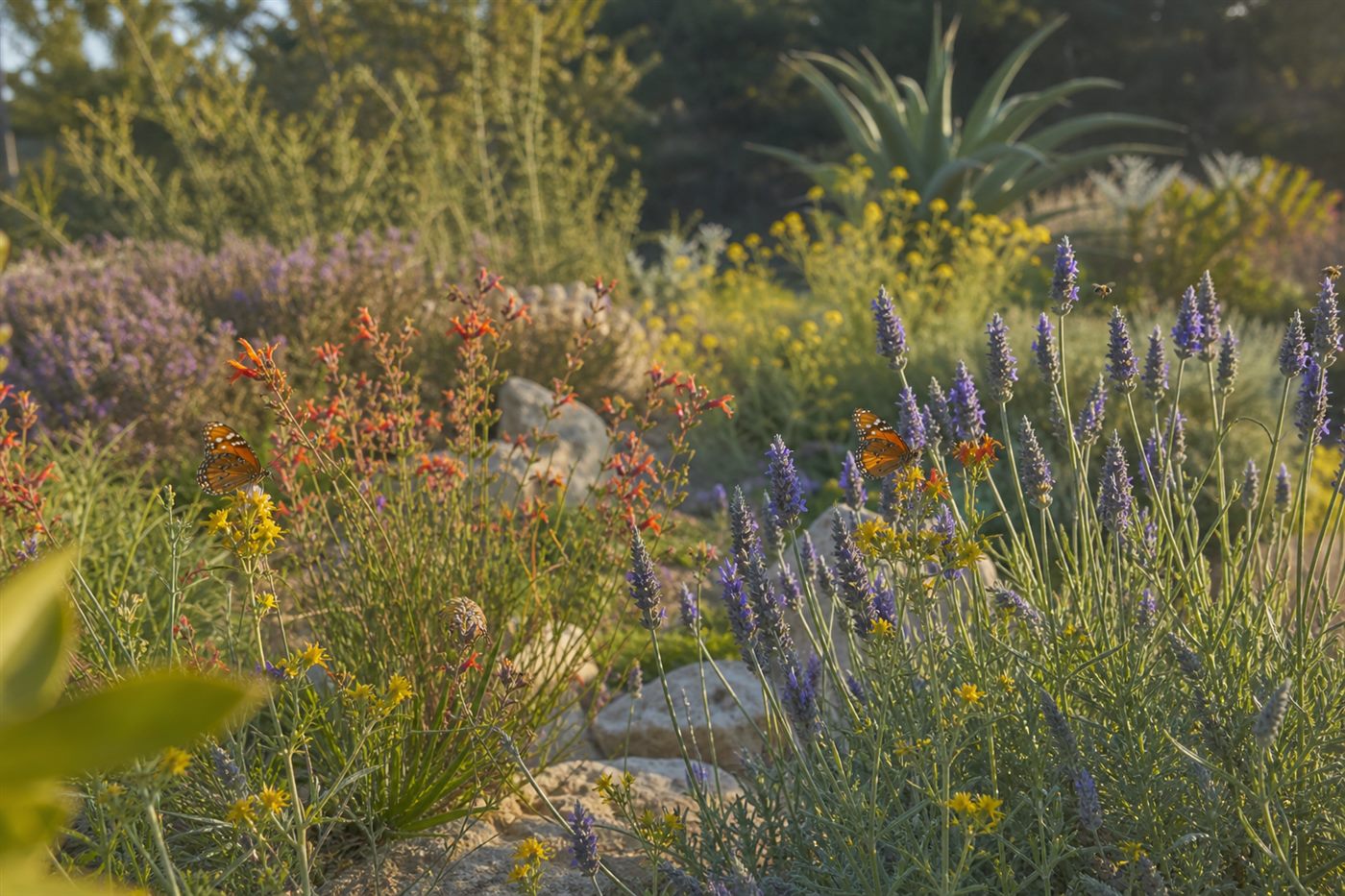
Plant nectar and hosts in drifts, not onesies.
UC IPM notes that only about 1% of insects and mites are harmful pests.
Skip broad insecticides so predators can work.
Kit
- California natives such as buckwheat, sages, yarrow, and toyon where space allows
- Nectar plants with single (not double) flowers
- Larval host plants (e.g. local milkweed for monarchs when appropriate)
- Shallow water dish with pebbles
- A no-spray plan for blooming strips
Do this
-
Plant in drifts, not onesies
Group the same species in roughly 3–4 ft patches so pollinators can forage efficiently.
UC IPM.
-
Include natives for beneficials
California buckwheat, purple sage, toyon, and yarrow support many predators and pollinators with low water once established.
UC IPM.
-
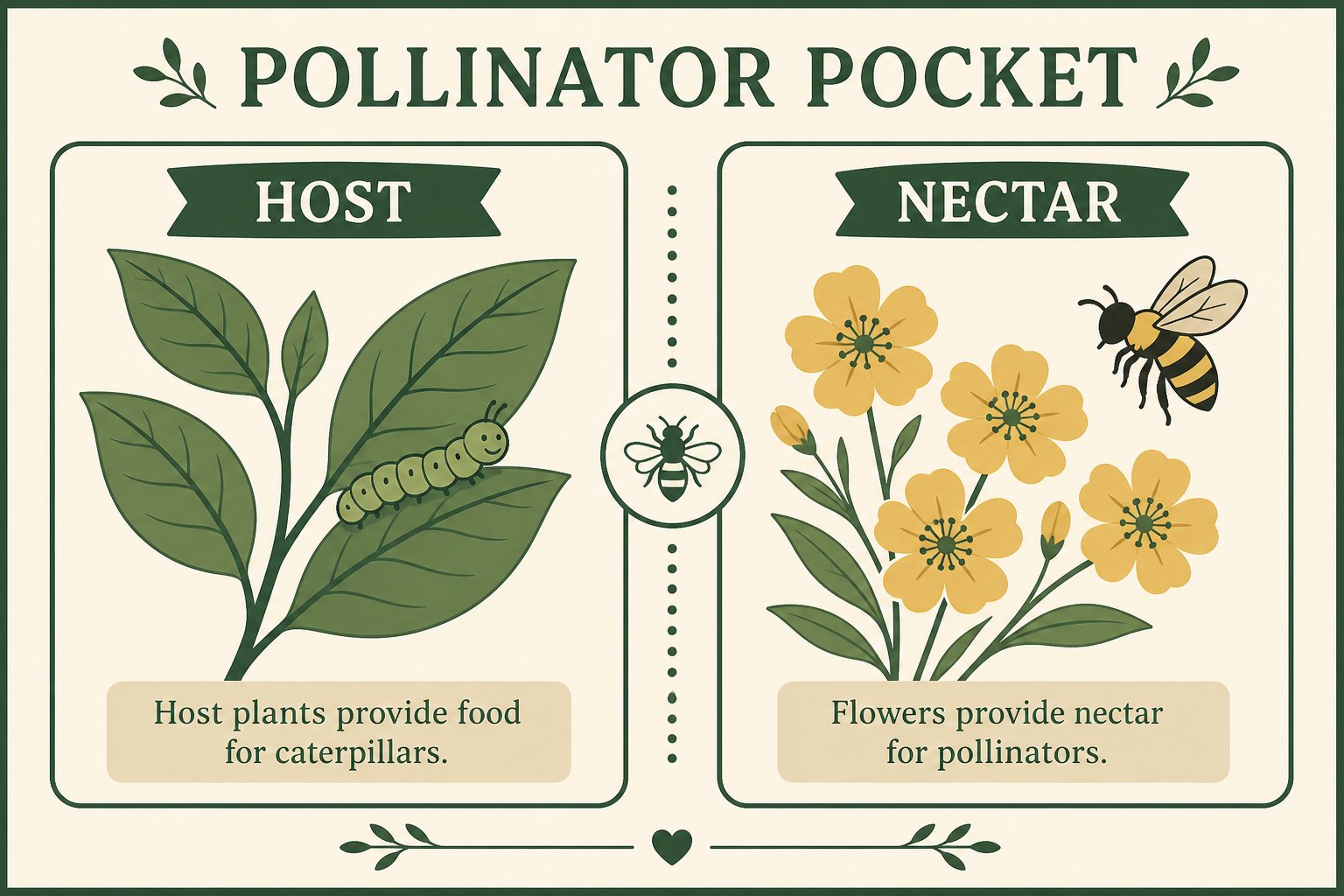
Add butterfly hosts
Butterflies need sun, wind shelter, nectar, and species-specific host plants — nectar alone is not enough.
UC IPM.
-
Keep bloom overlapping
Aim for flowers from early spring into fall so food does not disappear mid-season.
UC IPM.
-
Skip broad insecticides
Protect natural enemies. Spot-treat only when a real pest threshold is reached.
UC IPM.
Want a habitat strip planted in a San Diego yard? Gardens of Gold designs and plants habitat beds in San Diego County. Get a quote.