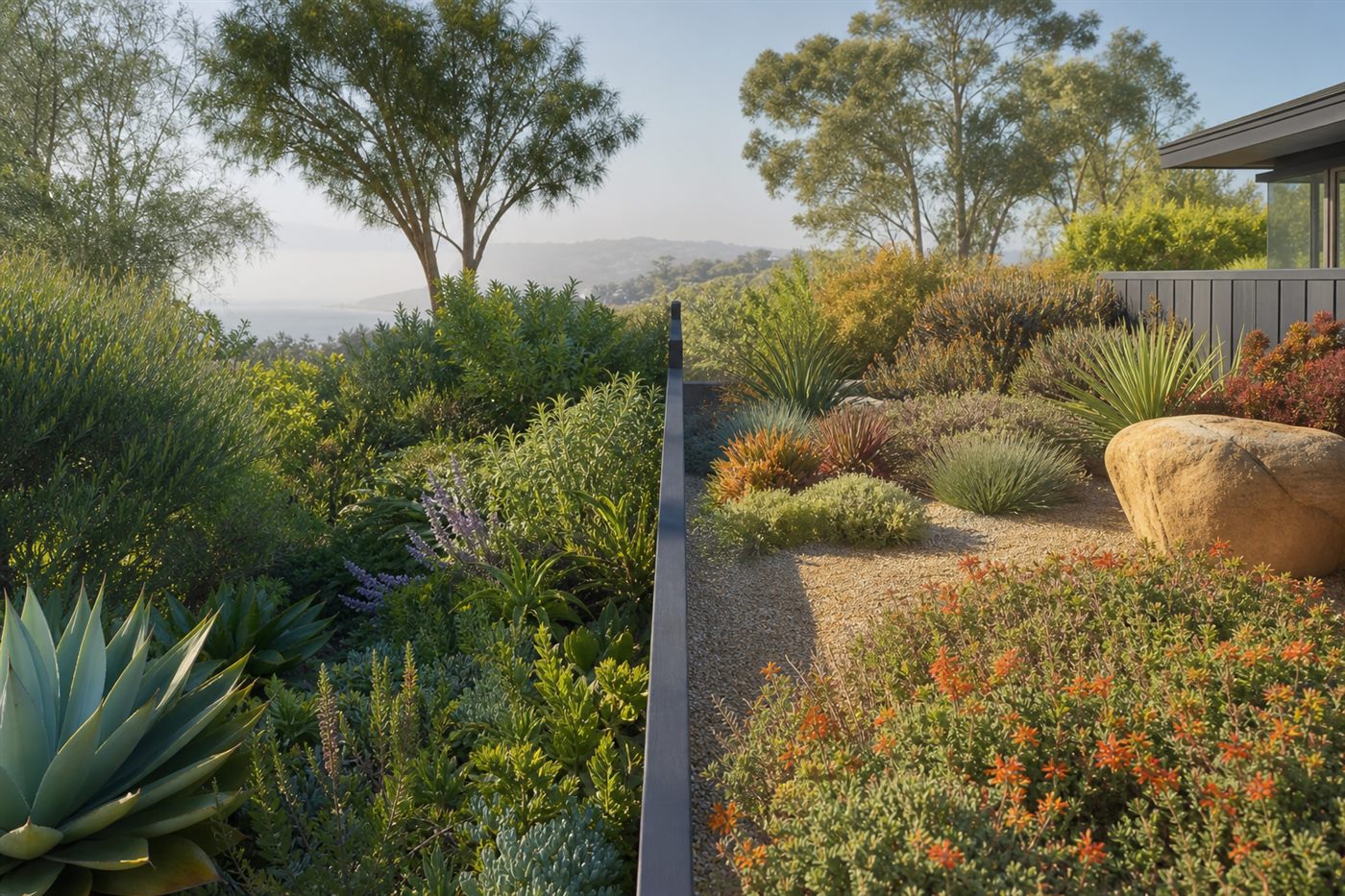
Map sun, wind, and frost pockets on your own lot.
Microclimates exist within a city block — warm south walls, cold pockets, wind tunnels.
Hydrozone by thirst; USDA tracks winter cold, not summer heat.
Kit
- Notebook or phone photos of sun/shade across a day
- Zip check on USDA Plant Hardiness map
- Nursery tags that list Sunset/Western climate notes when available
- Plant Wiki filters for sun/water/size
Do this
-
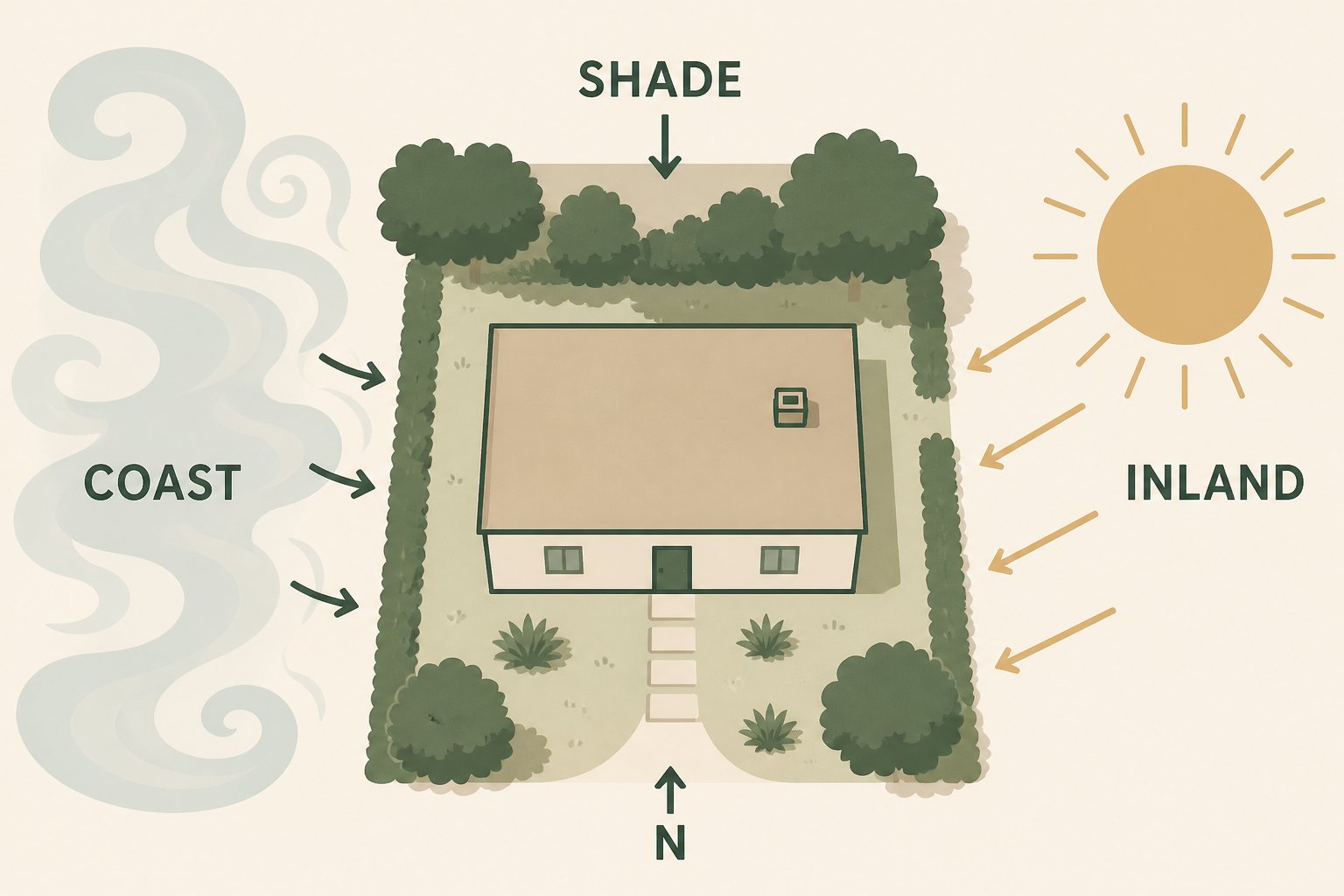
Map sun, wind, and frost pockets
Walk morning and afternoon. Note reflected heat from walls/driveways and cold low spots.
UC MG.
-
Use USDA for cold, not for everything
USDA hardiness tracks extreme winter lows. It does not fully capture SoCal summer heat, humidity, or marine influence.
UC MG.
-
Think coastal vs inland heat
Marine-influenced coast stays milder; inland valleys take hotter summers and sharper Santa Ana drying. Plant lists should differ.
UC MG.
-
Hydrozone by thirst
Group high-, medium-, and low-water plants on separate irrigation valves.
UC MG.
-
Trial in containers first if unsure
Test tender or new-to-you plants before committing a whole bed.
UC MG.
Want plants matched to your coastal or inland block? Gardens of Gold designs water-smart plantings in San Diego County. Get a quote.