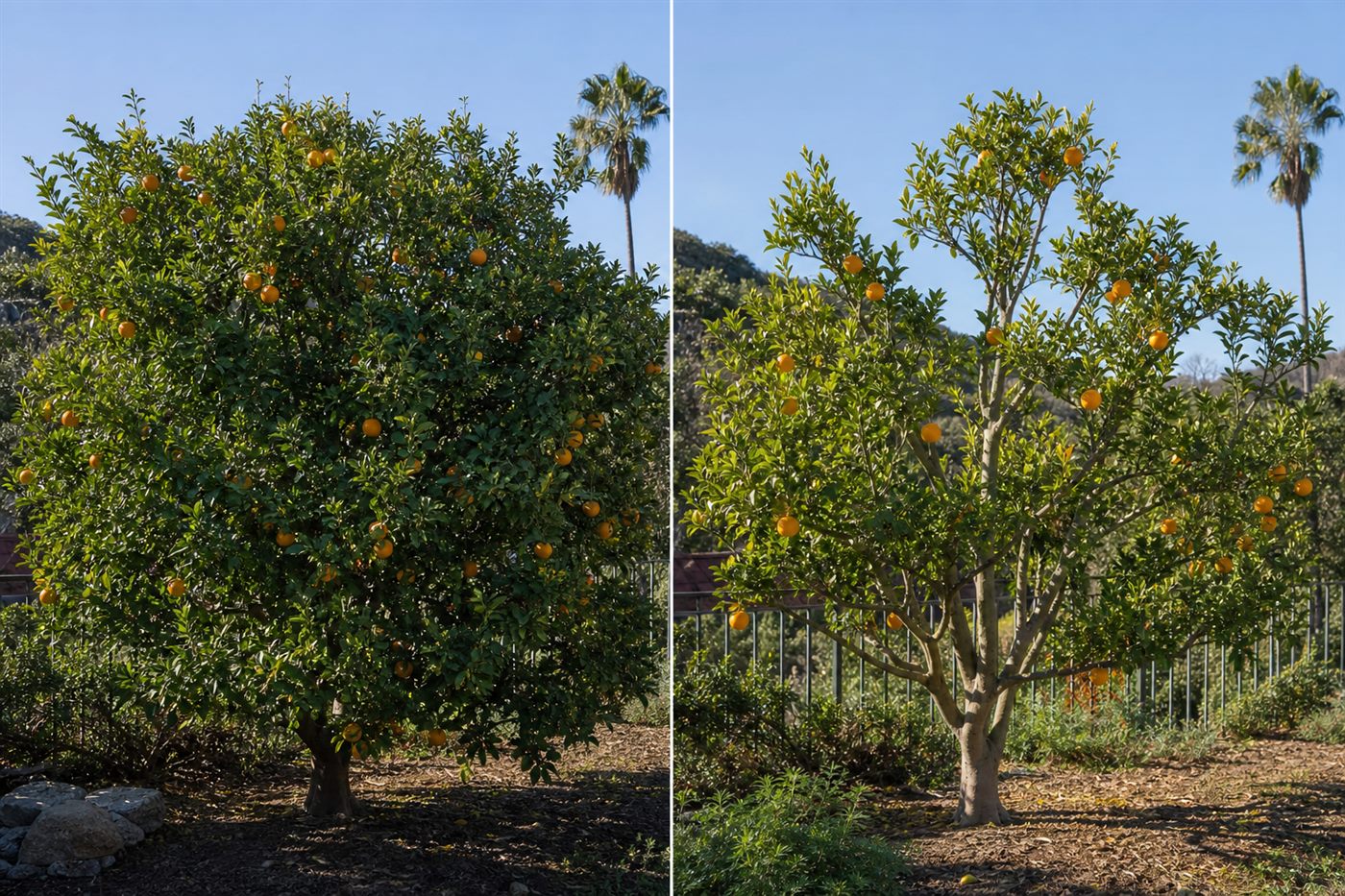
Measure real sun and mature width, including winter shade.
Espalier saves footprint and can use warm walls for frost-tender crops.
Plan drip or basins per tree, not lawn spray on the trunk.
Kit
- Tape measure for mature width
- Sun notes for winter shade
- Nursery list of dwarf/semi-dwarf or genetic dwarf options
- Trellis materials (for an upright frame that supports trained branches) if espaliering
Do this
-
Measure real sun and space
Note winter shade from two-story neighbors. Fruit needs sun more than wishful spacing.
UC Marin MG.
-
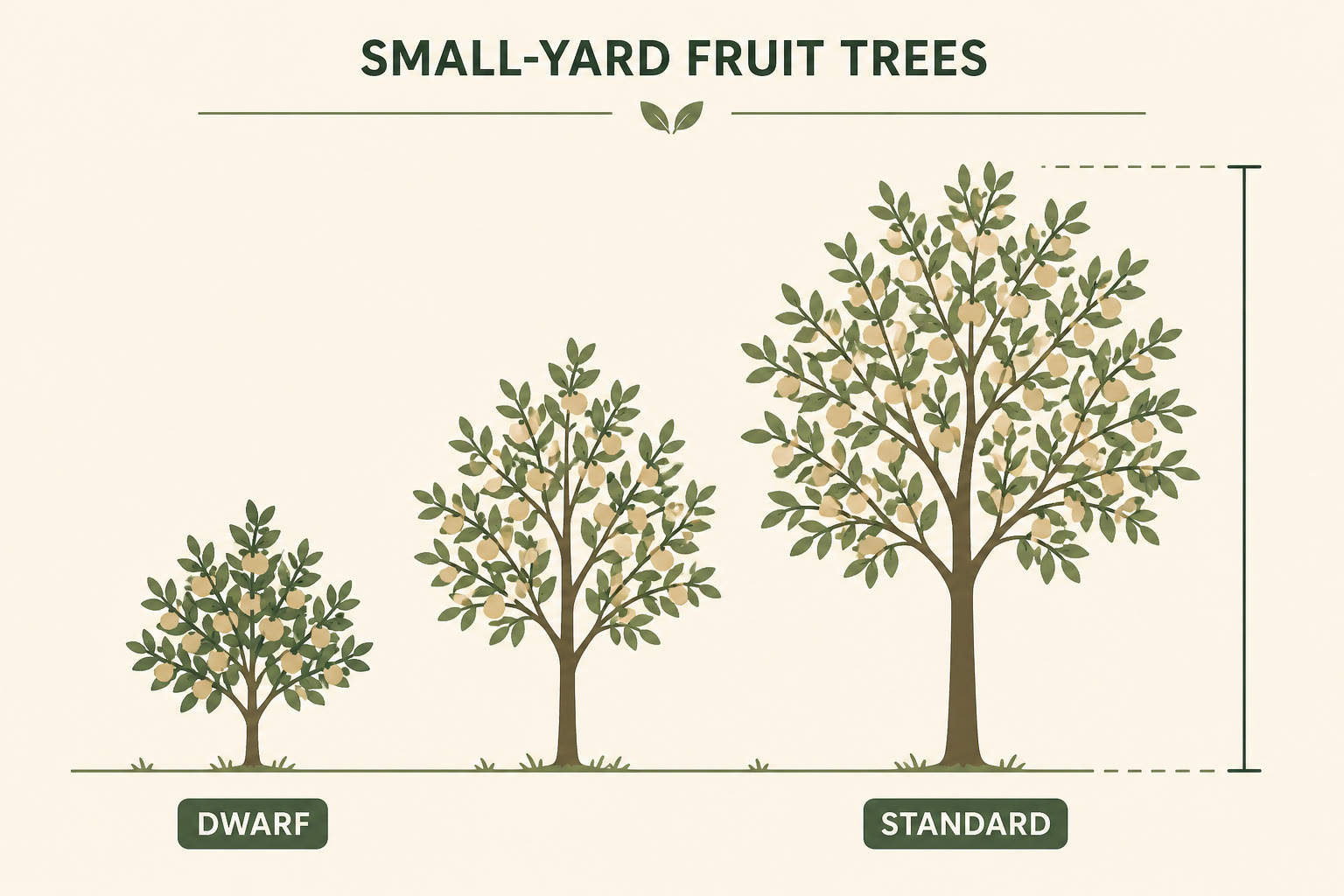
Prefer dwarf or semi-dwarf
Ask for rootstock suited to containers or tight beds. Know genetic dwarfs vs dwarfing rootstocks — they are not identical.
UC Marin MG.
-
Consider espalier
Flat training on a south or west fence saves footprint. Apple, pear, citrus, and genetic dwarfs are common starters.
UC Marin MG.
-
Plan irrigation per tree
Deep basins or drip rings beat lawn sprinklers hitting trunks.
UC Marin MG.
-
Prune for access
Espalier needs spring/early-summer training plus winter touch-ups. Keep harvest reachable.
UC Marin MG.
Need a small-yard fruit tree planted in San Diego? Gardens of Gold plants and tends fruit trees in San Diego County. Get a quote.