Design the System, Then the Palette
California landscapes often use a large share of household water outdoors. The biggest wins come from irrigation scheduling and zoning — then plant choices that match those zones.
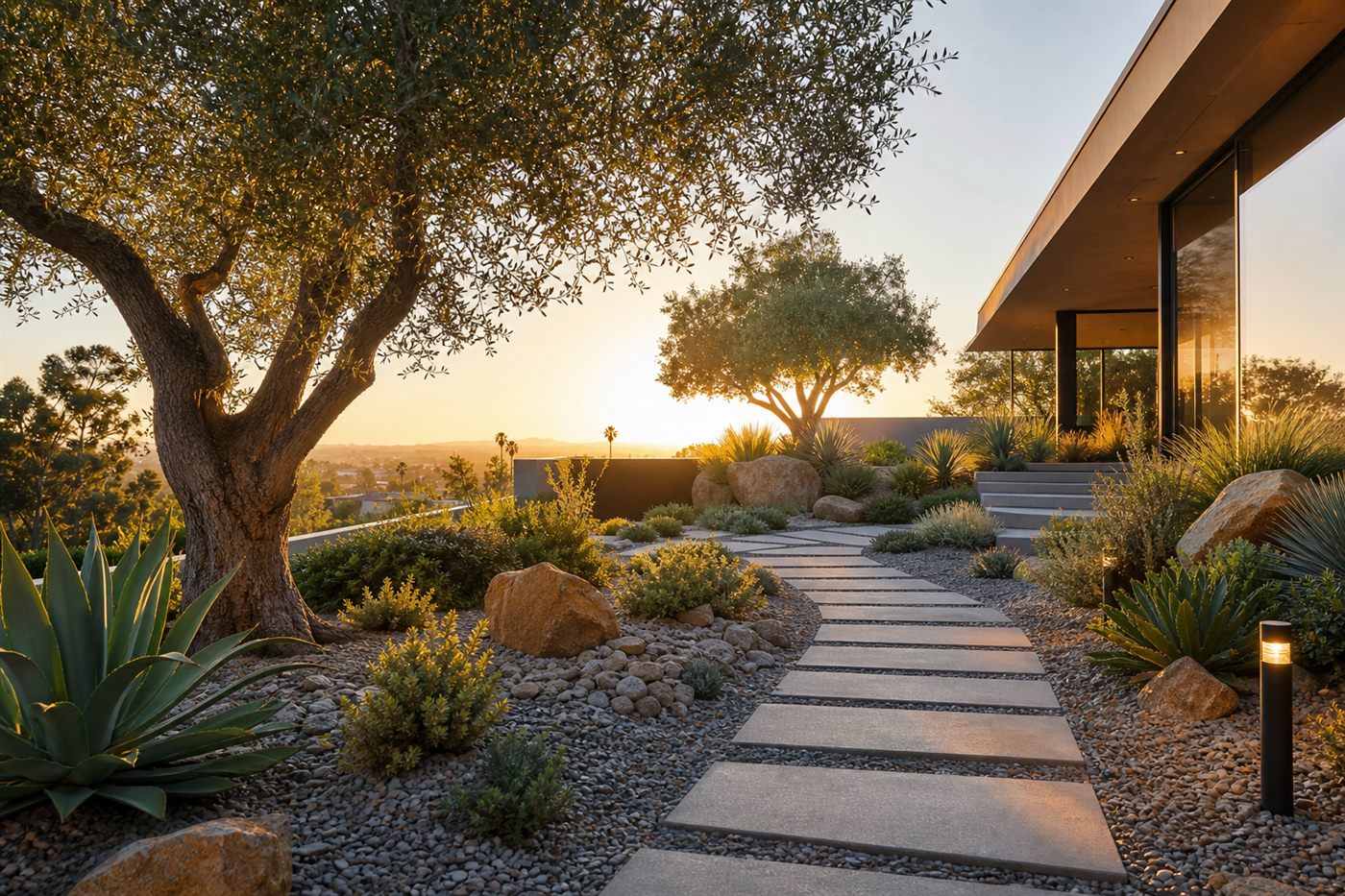
Materials Required
- Site sketch with sun/wind notes
- Mulch + drip parts list
- Plant list grouped by water need
- Controller capable of multiple programs
Step by Step
-
Audit what you already irrigate
Run each zone. Fix overspray, mixed plant types on one valve, and unused lawn you do not use.
-
Build hydrozones
Separate high-, medium-, and low-water plantings. Lawns should not share valves with Mediterranean shrubs.
-
Convert beds to drip
Microirrigation delivers water to root zones and can cut use substantially versus spray when designed well.
-
Mulch and sheet-mulch conversions
Cover bare soil. When removing lawn, follow local rules and smother thoughtfully rather than leaving bare dirt.
-
Plant for your real climate
Choose coastal-tough or inland-heat plants honestly. Drought-tolerant labels only save water if irrigation is reduced.
San Diego Tips
- Karlik (UC ANR): scheduling changes drove ~33% outdoor savings in a case study; plant swaps alone barely moved the needle.
- Keep trees — shade lowers landscape water demand.
Want help getting this done right? Gardens of Gold designs and installs water-smart landscapes across San Diego County. Get a quote.