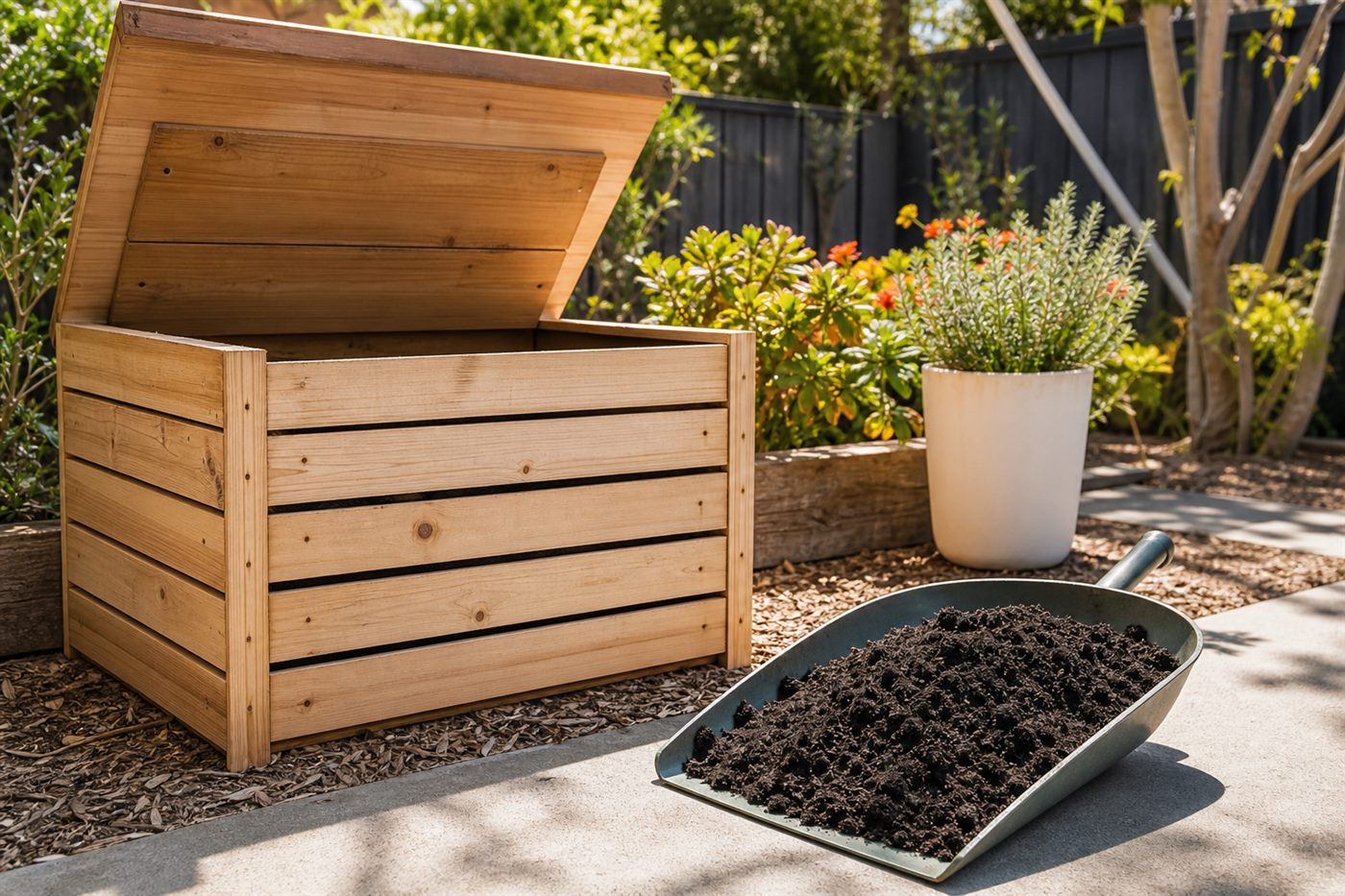
Chop greens and browns into a pile big enough to heat.
Hot compost needs enough mass; skip meats and grease in backyard piles.
Keep it like a wrung sponge; cure until dark and earthy.
Kit
- Bin or open pile space (~3×3×3 ft ideal for heat)
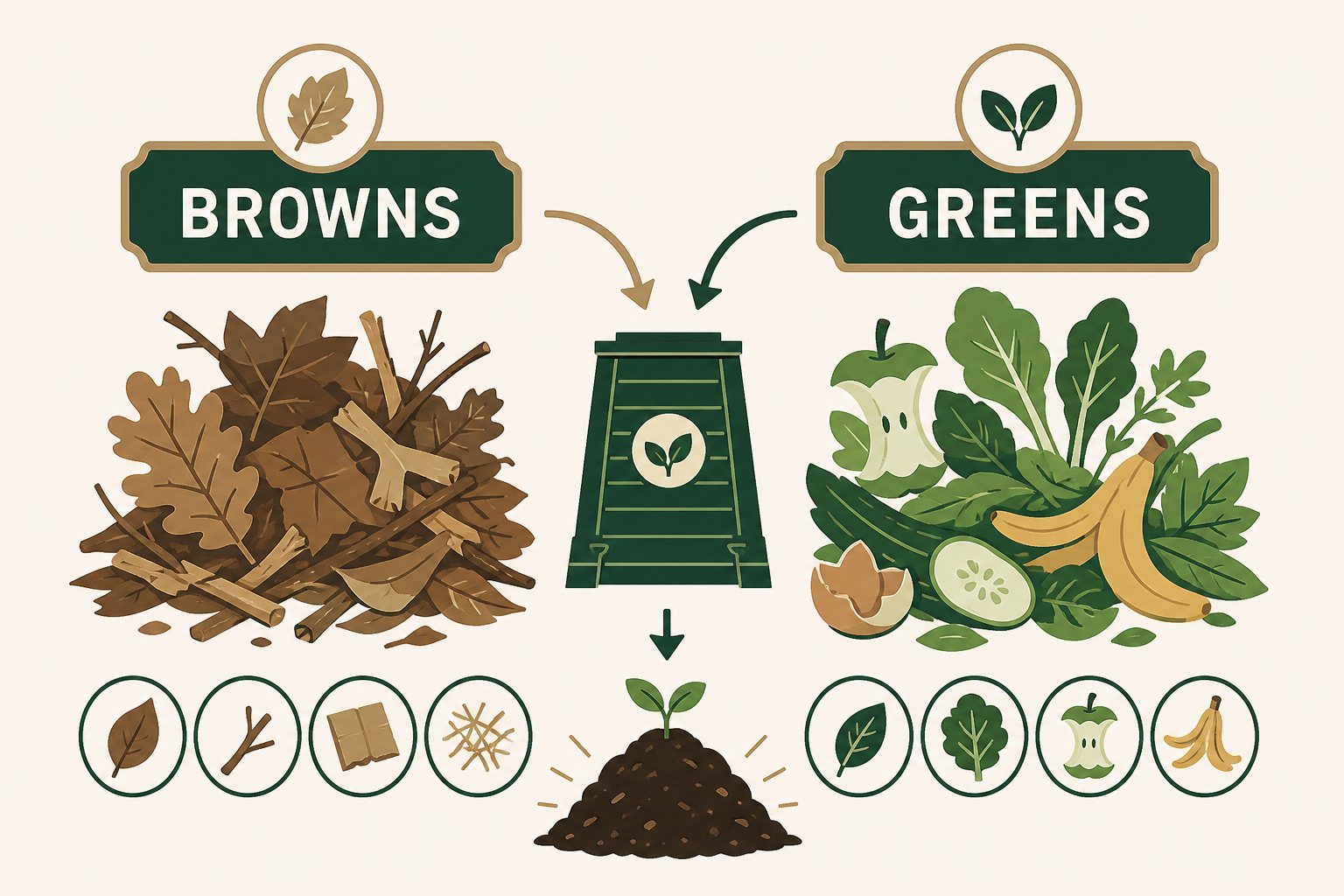
- Browns (leaves, chips) and greens (kitchen scraps, fresh clippings)
- Water source
- Pitchfork or aerator
- Optional second bin for curing
Do this
-
Size for heat
Aim near 3 feet of material so microbes can raise temperature. Leave room to turn.
UC MG Sacramento.
-
Chop and layer
Pieces about 2 inches compost faster. Alternate browns and greens; avoid treated wood bins.
UC MG Sacramento.
-
Moisture like a wrung sponge
Too dry stalls; too wet smells. Add water or dry leaves as needed.
UC MG Sacramento.
-
Turn on a schedule you can keep
Weekly turning speeds warm compost (centers can reach roughly 100–150°F). Cold piles still work — just slower.
UC MG Sacramento.
-
Cure and screen
Finished compost is dark with an earthy smell. Screen through 1/4-inch mesh for potting blends.
UC MG Sacramento.
Need bulk browns hauled or finished compost moved to beds? Gardens of Gold rents the electric dump trailer for San Diego County cleanups. Get a quote.