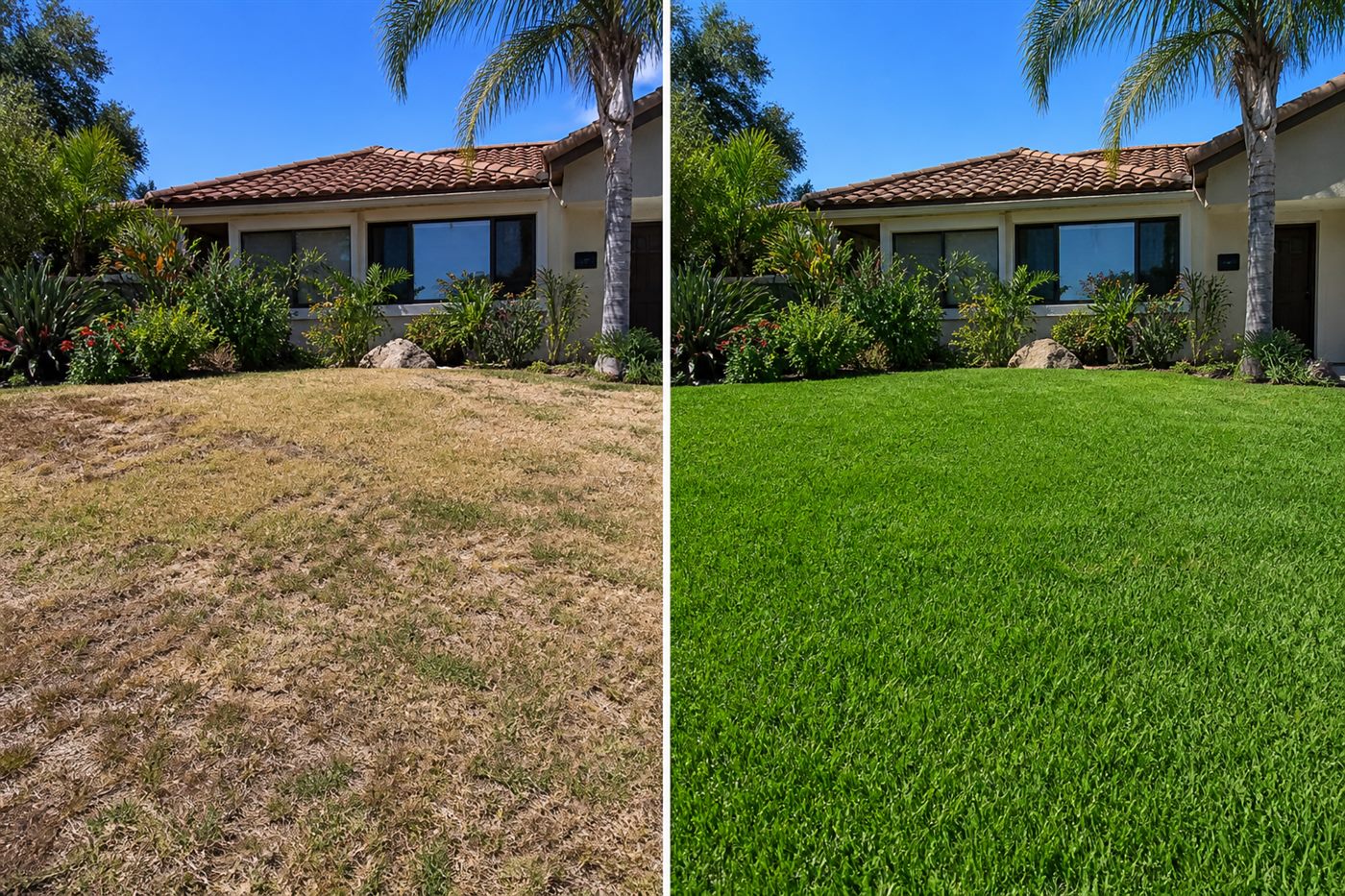
Rule out broken sprinklers, dull-mower scalp, and dog spots first.
UC IPM urges checking irrigation, mowing, fertilizer, drainage, insects, and thatch before assuming disease.
Water deeply and early; measure thatch over about 1/2 inch.
Kit
- Soil probe
- Mower with sharp blade
- Dethatching rake or verticut rental if thatch >1/2 in
- Irrigation flags for broken heads
Do this
-
Rule out abiotic causes
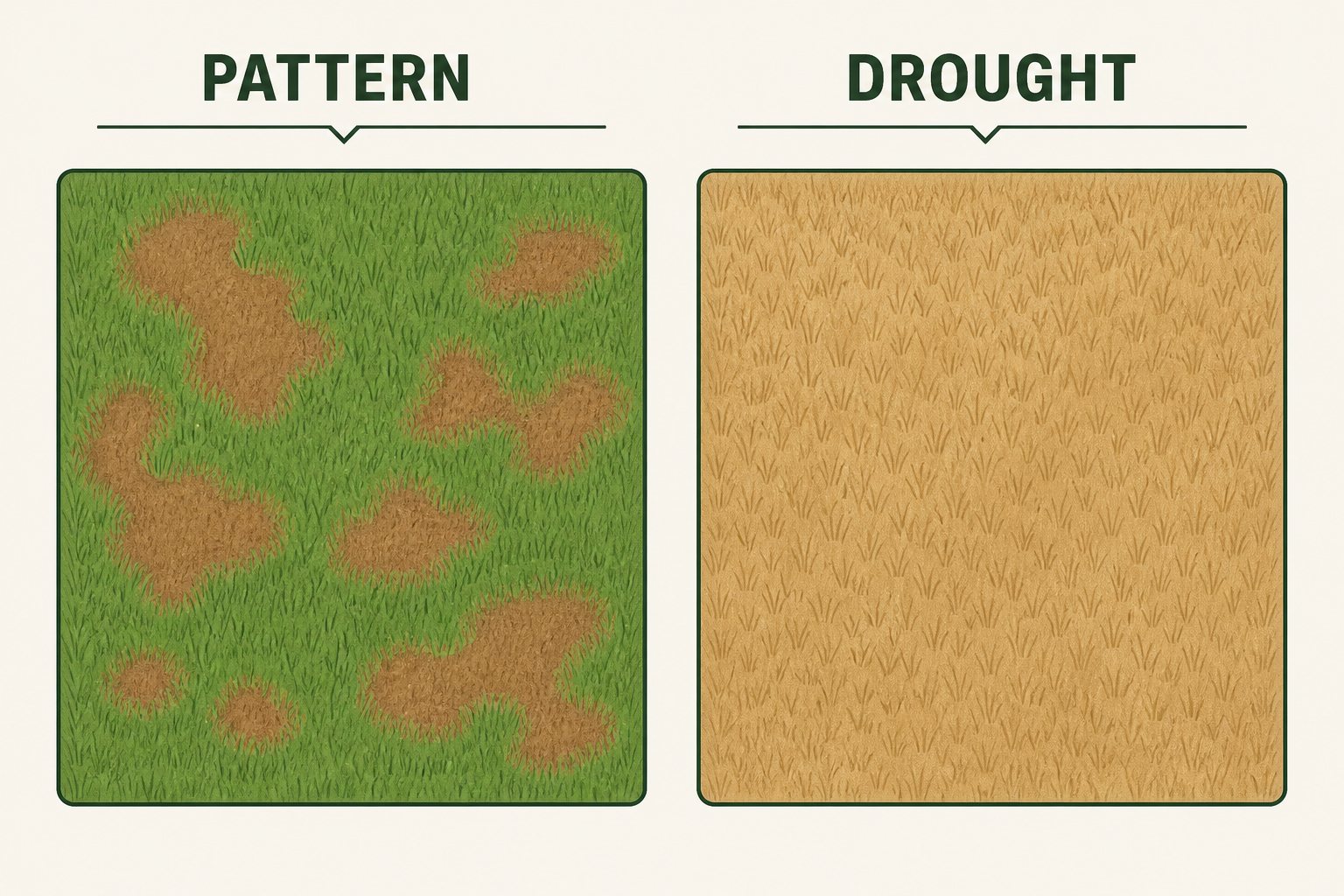
Check dog urine spots, fuel spills, dull-mower scalp, and broken sprinklers. Sudden widespread damage is often cultural, not one pathogen.
UC IPM.
-
Measure thatch
Up to about 1/2 inch can help; thicker thatch holds moisture against crowns and favors disease. Verticut heavy thatch producers like bermuda and kikuyu.
UC IPM.
-
Water deeply, early
Irrigate pre-dawn or early morning to shorten leaf wetness. Water to several inches depth when needed — not nightly light sprays.
UC IPM.
-
Watch Rhizoctonia patterns
Large/brown patch on warm-season turf is favored by poor drainage, thick thatch, long wet leaves, low mow height, and excess nitrogen.
UC IPM.
-
Decide: repair or replace
Chronic problem lawns in unused areas may be better as mulched beds or groundcovers that match your water goals.
UC IPM.
Want a San Diego lawn diagnosed before you spray? Gardens of Gold designs and tends landscapes in San Diego County. Get a quote.