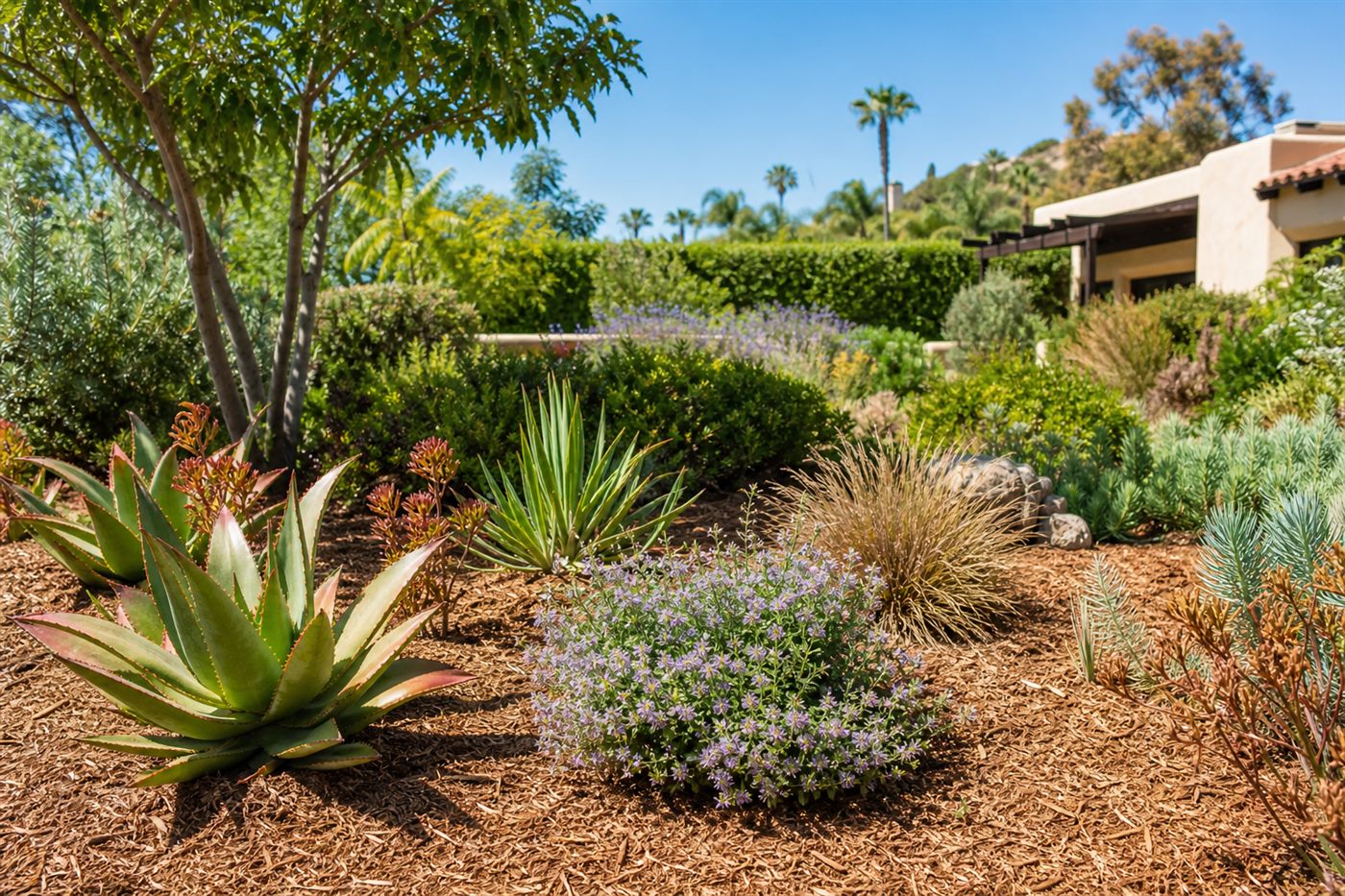
Pull weeds, water, then mulch — never over bone-dry soil in summer heat.
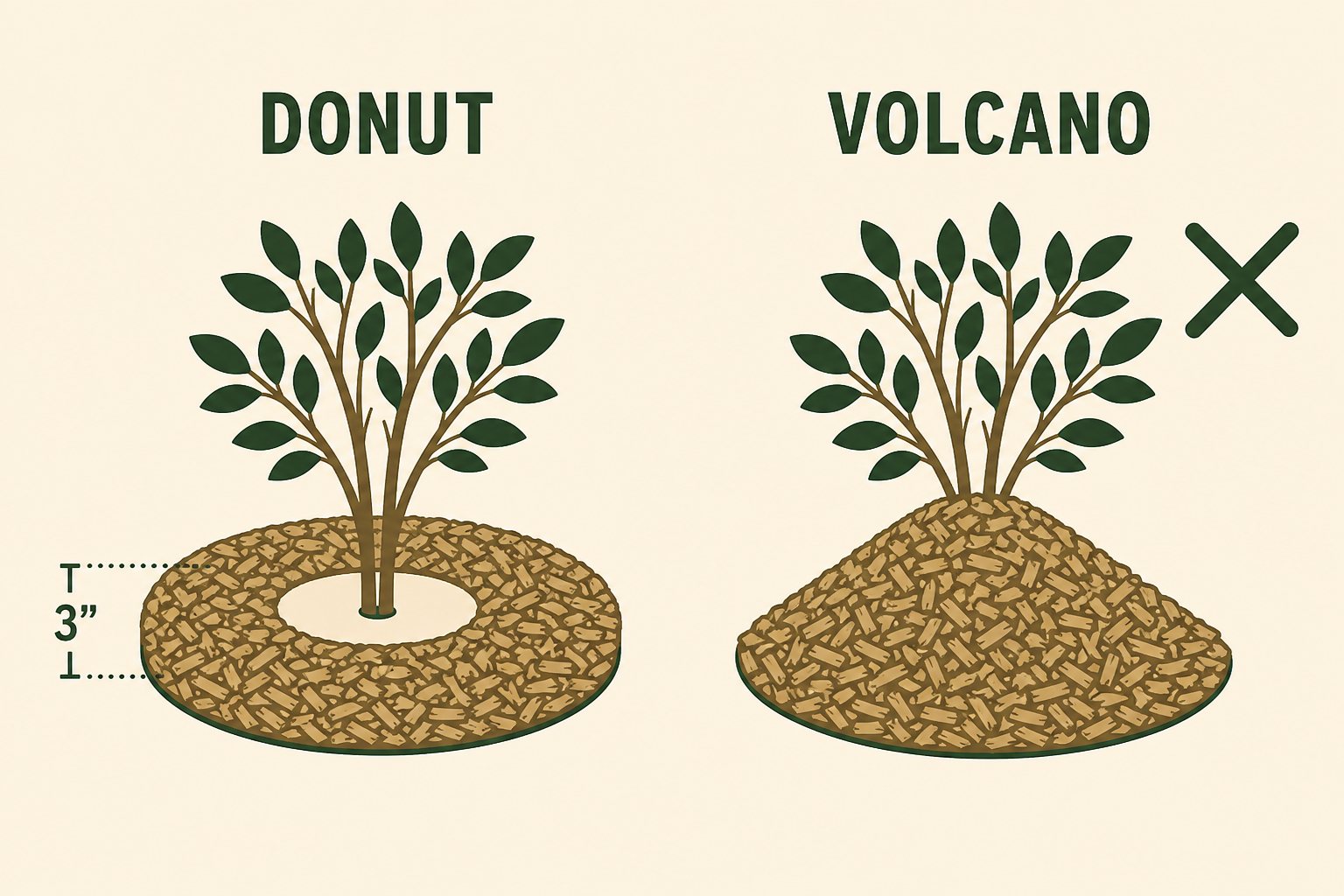
Match depth to texture; keep a donut at the crown, 6–12 in off trunks.
Top up in spring and fall; inland yards need it in summer.
Kit
- Organic mulch (arbor chips, shredded bark, or coarse wood chips)
- Rake and wheelbarrow or buckets
- Gloves; optional tarp for staging
- Drip line already in place (or install before mulching)
Do this
-
Clear weeds and water first
Pull weeds, then deep-water so moisture is locked under the mulch — never mulch bone-dry soil in summer heat.
UC Marin Master Gardeners.
-
Choose the right material
Shredded cedar or arbor chips for beds; rock only where you want heat and zero organics. Skip dyed mulch against edible stems.
UC Marin Master Gardeners.
-
Match depth to texture
Fine mulches (grass clippings, fine shreds): about 1–2 inches. Medium wood chips in beds: about 2–3 inches.
UC Marin Master Gardeners.
-
Keep a donut at the crown
Pull mulch several inches away from soft stems. For trees and shrubs, keep mulch 6–12 inches off the trunk so the root flare stays visible and dry.
UC Marin Master Gardeners.
-
Top up twice a year
Spring and fall top-ups beat one giant dump. Refresh after big wind events as organic mulch breaks down.
UC Marin Master Gardeners.
Need a San Diego bed mulched the right way? Gardens of Gold mulches and tends garden beds in San Diego County. Get a quote.