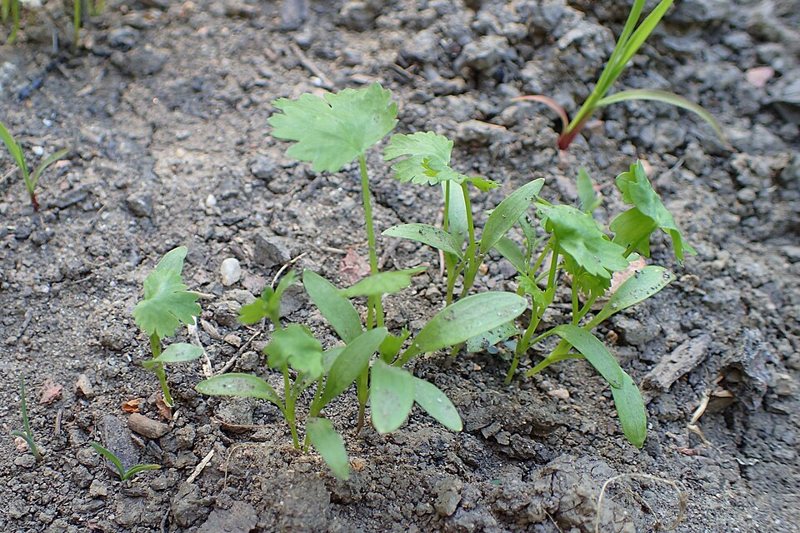
Coriandrum sativum is not parsley. Chinese parsley on UC and GRIN pages is a common name of this species, not Petroselinum.
How it was found
Kew maps Coriandrum sativum from the eastern Mediterranean to western Pakistan. Native list: Afghanistan, Iran, Lebanon-Syria, North Caucasus, Pakistan, Palestine, Saudi Arabia, Sinai, Transcaucasus, Türkiye. Introduced widely (the taxon page list begins Alaska, Algeria, Amur, Andaman Islands, Angola, Argentina, and continues).
USDA GRIN does not print a native-country table. It lists the species as cultivated (including Morocco, India, Pakistan, European Russia, Ukraine, Romania, Mexico, Argentina) and naturalized worldwide, and notes “probable origin Mediterranean region.” Kew’s eastern Mediterranean-to-western Pakistan native list and GRIN’s probable Mediterranean origin are not identical.
No single dated first-cultivation country is treated as Kew/GRIN consensus. UCCE Solano prints coriander seeds dating back 8000 years found in the hills near the Dead Sea in 1983, and coriander seeds in King Tut’s tomb — historical finds as printed, not a Kew first-domestication country.
How people used it
Kew lists food (also animal food). UC Sonoma: a tender annual whose fresh leaves are known as cilantro and dried seeds as coriander; every part of the plant is edible; used in East Indian, Asian, Mediterranean, and Latin cuisines. UCCE Solano: North Americans distinguish seed (coriander, the spice) from leaves and stems (cilantro, the herb); other parts of the world call plant and seed coriander. USDA GRIN common names include cilantro, coriander, and Chinese-parsley; economic use includes food-additive flavoring (spice, herb).
Kew lists medicine with no specific remedy named. GRIN folklore medicines are not copied. UCCE Solano’s Hippocrates-medicine and Middle Ages aphrodisiac lines are skipped.
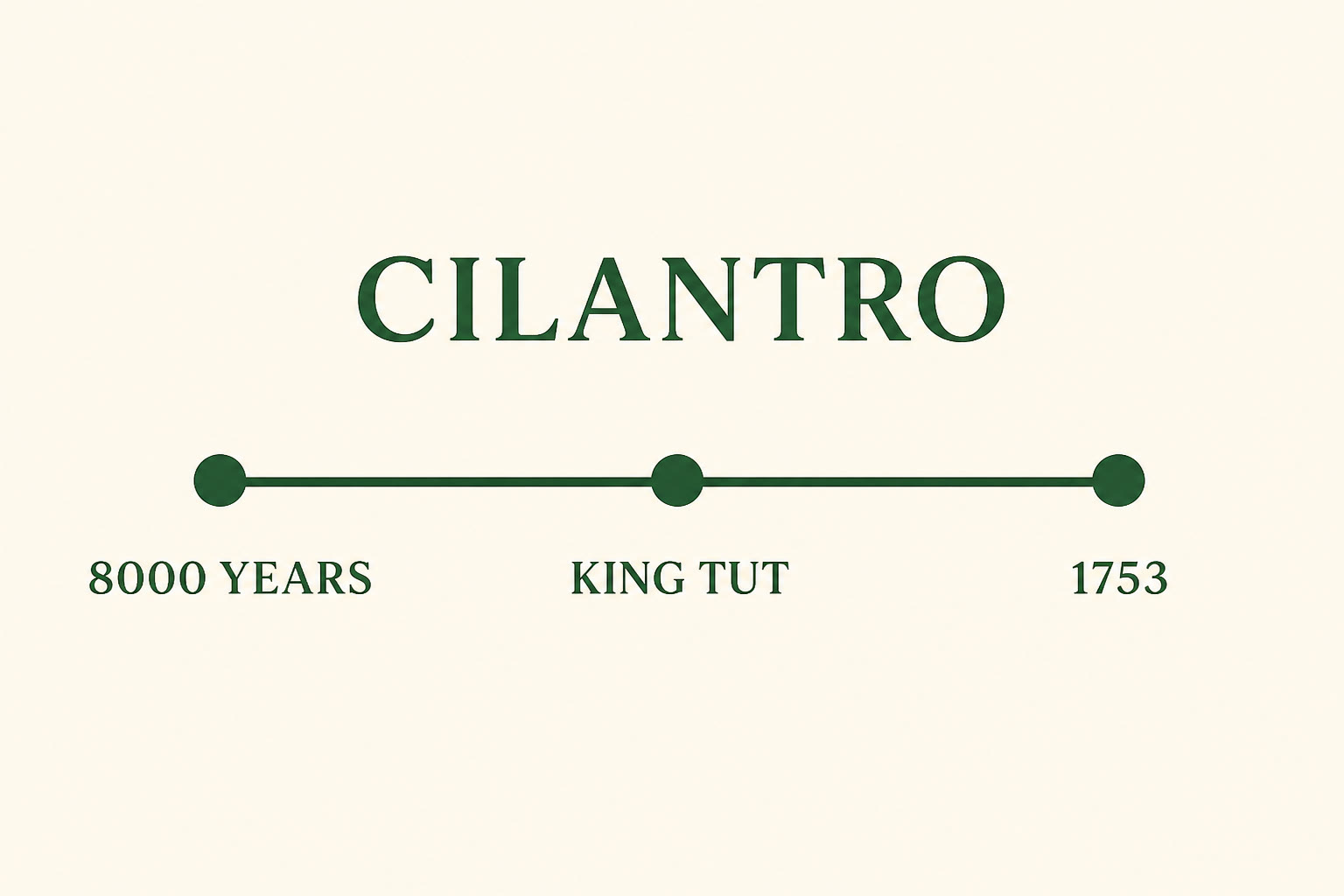
Timeline
-
8000 years / 1983 find (as printed by UCCE Solano)
Seeds near the Dead Sea
UCCE Solano Master Gardeners write that coriander seeds dating back 8000 years were found in the hills near the Dead Sea in 1983. That is a find date as printed on that page — not Kew or GRIN consensus domestication.
UCCE Solano — Jeopardy Question
-
King Tut’s tomb (as printed)
Seeds for the afterlife
UCCE Solano Master Gardeners write that King Tut’s tomb contained coriander seeds for the afterlife. A spice in a burial, not a recipe card.
UCCE Solano — Jeopardy Question
-
1753
Named in Species Plantarum
Kew accepts Coriandrum sativum L., first published in Sp. Pl.: 256 (1753). USDA GRIN: Sp. pl. 1:256. 1753. Leaf and seed stay one species.
Kew POWO; USDA GRIN
-
Present (as printed)
Grown worldwide, two flavors
UCCE Solano: today the herb/spice is grown worldwide as an annual and used to flavor food of all types. UC Sonoma: leaves (cilantro) and dried seeds (coriander) are not interchangeable in the kitchen; they have very different flavors and textures.
UCCE Solano; UC Sonoma
Cool to know
UC Sonoma and UCCE Solano: cilantro leaf and coriander seed are the same species, Coriandrum sativum. USDA GRIN lists cilantro, coriander, and Chinese-parsley as common names of this taxon. Not parsley (Petroselinum crispum).
UC Sonoma; UCCE Solano; USDA GRIN
UCCE Solano: up to 14% of people possess the olfactory receptor gene OR6A2 that causes them to taste cilantro the same as soap; the culprit is aldehydes found in cilantro and also in soap.
UCCE Solano
UCCE Solano leaf ID vs parsley: if the leaves are pointy on the ends, it’s parsley; if rounded, it’s cilantro. Related to parsley and both related to carrots — related, not the same species.
UCCE Solano
Growing notes for this plant live on the Plant Wiki. This page is origin and use, not a How-To.
Want cilantro in a San Diego pot? See the easy-herbs guide for keeping culinary herbs going here. Get a quote or write yourgardenofgold@gmail.com.