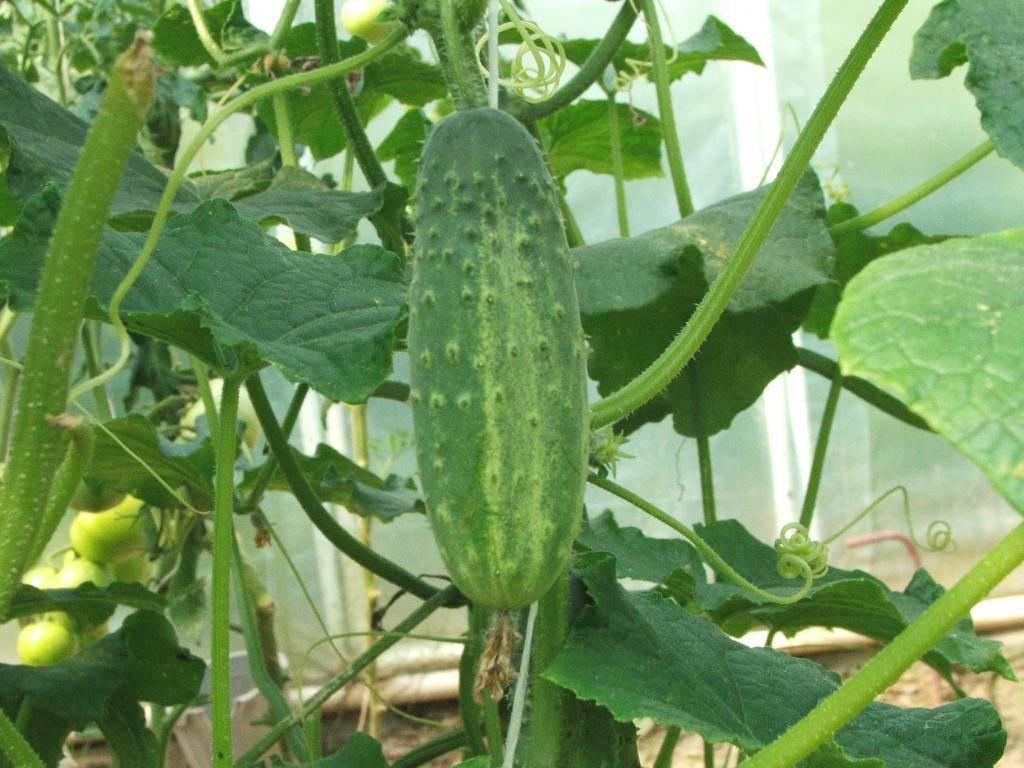
Garden cucumber is Cucumis sativus — the slicing, pickling, and burpless fruit on a San Diego trellis, not the Armenian cucumber-melon.
How it was found
Kew maps the wild range from the Himalaya through southern China (Yunnan, Guizhou, Guangxi) and northern Thailand. The native list also names Assam, Bangladesh, Myanmar, Nepal, and both sides of the Himalaya, and the species is introduced widely — including many U.S. states, parts of Europe, and the Caribbean.
UC ANR and UCCE pages tell a cultivation story: cucumbers originated in South Asia and have been grown in India for at least 3,000 years. Riverside Master Gardeners print the same span and origin in India. Kew does not print a single country of first cultivation.
USDA GRIN’s native table names China (Guangxi, Guizhou, Yunnan), India, Sri Lanka, Myanmar, and Thailand, and calls the crop widely cultivated. Sri Lanka is on GRIN’s table; it is not on Kew’s native list in this packet. Those are neighboring maps, not one sentence.
UCCE Solano then carries the crop west: introduced to Europe in the 9th century, planted in Haiti in 1494, and reported in Florida when Ferdinand De Soto arrived. UC ANR adds that during the 16th century European trappers introduced cucumbers to Native Americans in the Great Plains and Rocky Mountain regions. Kew is a native-range map. UC is a South Asia cultivation-and-travel story. This page keeps both instead of picking a winner.
How people used it
People eat the fruit. UC ANR: raw in salads, cold soups, and sauces, and also pickled. Kew lists food, and also animal food.
Kew also lists the species as a medicine. The taxon page does not name a remedy, so this page does not invent one. No fiber use showed up on the fetched pages.
Timeline
-
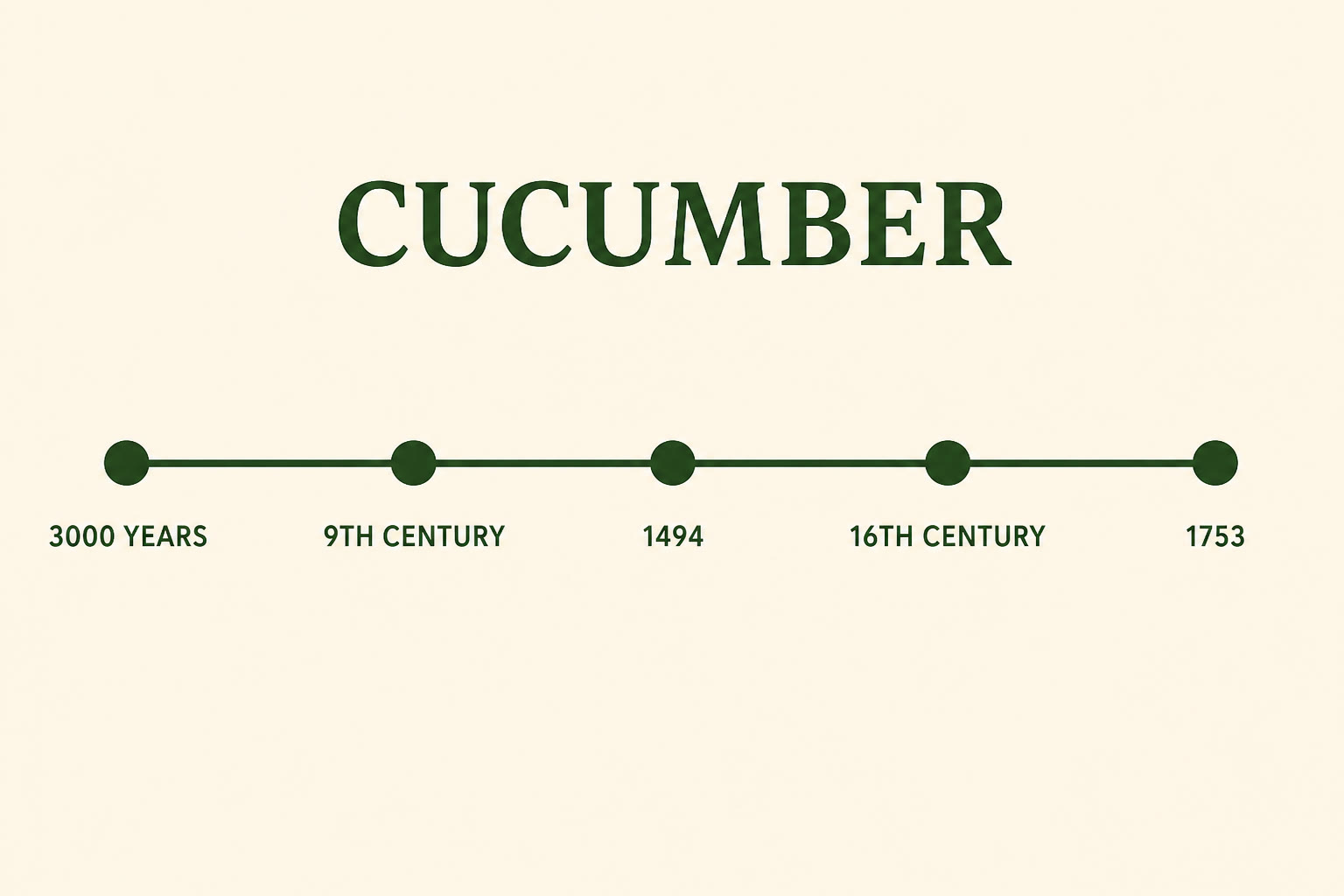
At least 3,000 years
Grown in India
UC ANR and UCCE write that cucumbers originated in South Asia and have been cultivated in India for at least 3,000 years. Riverside Master Gardeners print the same span: humans have been cultivating and eating cucumbers for at least 3,000 years, originated in India (South Asia). That is the oldest cultivation wording on this page — not Kew’s native-range map.
UC ANR CalFresh cucumber sheet; UCCE Riverside Master Gardeners
-
9th century
Into Europe
UCCE Solano Master Gardeners write that Cucumis sativus originated in the Indian subcontinent and was introduced to Europe in the 9th century. That is the packet’s first printed move off the subcontinent. It is why a plant mapped as Himalayan-to-Thai on Kew’s page shows up later in European gardens.
UCCE Solano — When is a Cucumber Not a Cucumber?
-
1494
Planted in Haiti
UCCE Solano Master Gardeners write that Columbus planted cucumbers (Cucumis sativus) in Haiti in 1494. That is the packet’s first dated planting in the Americas. It matters because the later North American reports sit after this Caribbean planting, not before it.
UCCE Solano — Salt and Pepper Cucumber
-
16th century
Great Plains, Rockies, Florida
UC ANR writes that during the 16th century, European trappers in North America introduced cucumbers to Native Americans in the Great Plains and Rocky Mountain regions. The same Solano page says Ferdinand De Soto reported they were growing in Florida when he arrived. Together those lines put the fruit on the continent after the Haiti planting — still as C. sativus, still not Armenian cucumber.
UC ANR CalFresh; UCCE Solano
-
1753
Named in Species Plantarum
Kew accepts Cucumis sativus L., first published in Species Plantarum: 1012 (1753). That is the name this story uses. It is a publication date, not a claim that the crop began in 1753.
Kew POWO
Cool to know
A raw cucumber with peel is 95% water. That is why the fruit eats like a cool slice more than a starchy vegetable — and why pickling and salads are the uses UC actually prints.
UC ANR CalFresh; UCCE Riverside Master Gardeners
Garden cucumber is Cucumis sativus. Armenian cucumber and Carosello cucumber-melons are Cucumis melo — the melon species. UCCE Solano is explicit: a cucumber that is not this cucumber. Do not file Armenian under C. sativus, even if a variety list groups them on a cucumber page.
UCCE Solano — When is a Cucumber Not a Cucumber?
Riverside UCCE Master Gardeners print more than 120 cultivated cucumber varieties, grouped as slicing, pickling, and burpless/seedless. Those are horticultural groups of one species, not three wild origins.
UCCE Riverside cucumber fact sheet
Growing notes for this plant live on the Plant Wiki. This page is origin and use, not a How-To.
Want cucumbers on a San Diego trellis? See the cucumber How-To for hanging fruit in this climate. Get a quote or write yourgardenofgold@gmail.com.