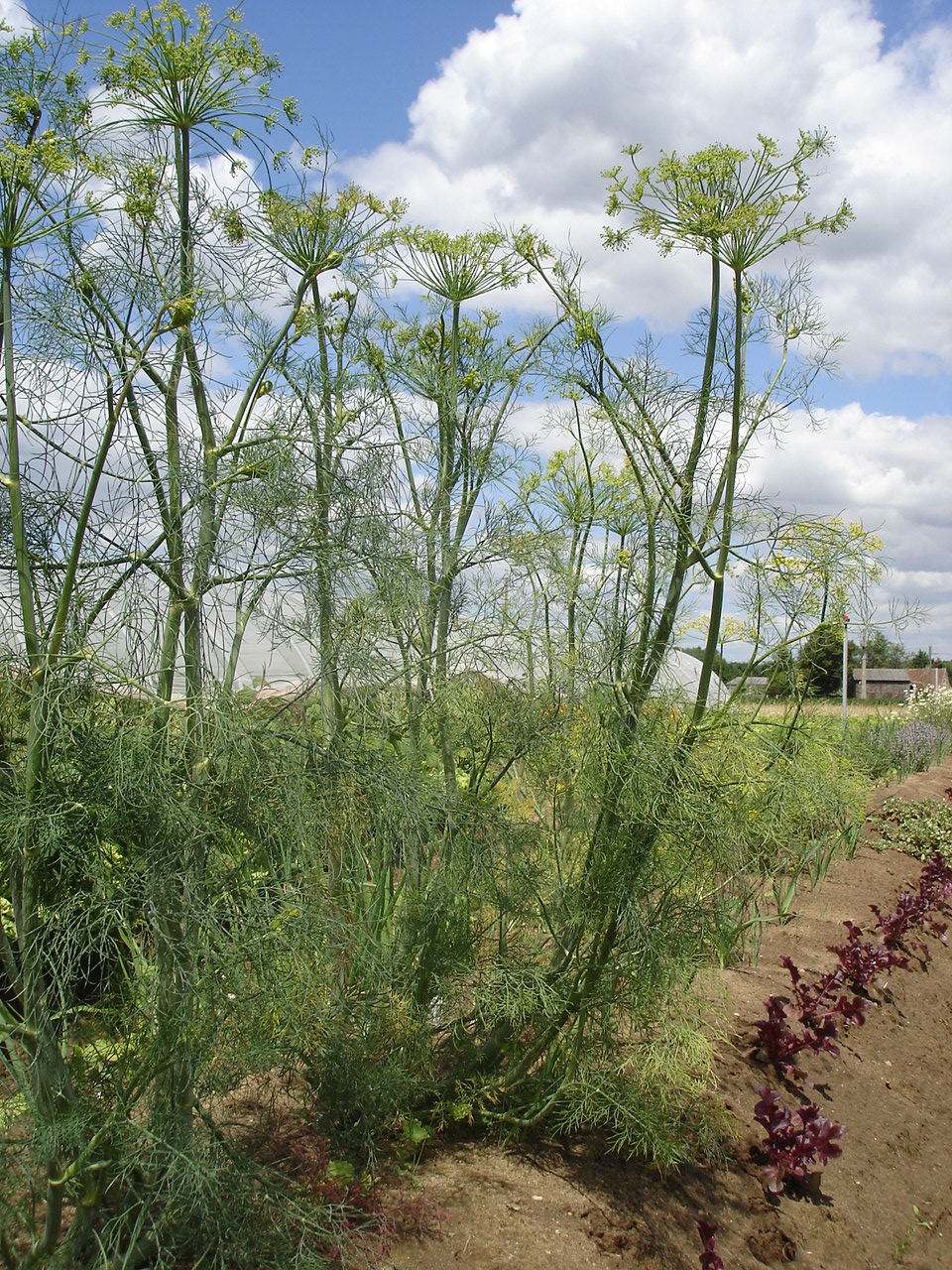
Anethum graveolens is related to parsley, celery, cumin, and fennel — related, not the same species.
How it was found
Kew maps Anethum graveolens from North Africa to Chad, and from Iran to the Arabian Peninsula. Native list: Algeria, Chad, Cyprus, Gulf States, Iran, Lebanon-Syria, Libya, Morocco, Oman, Saudi Arabia, Tunisia.
USDA GRIN does not print a native-country table. It lists the species as cultivated widely, adventive worldwide, and notes “probable origin s. Asia.” UC Master Gardeners of Santa Clara County: native to southern Russia, western Africa, and the Mediterranean.
Those three statements (Kew; GRIN southern Asia; UC Santa Clara) are not identical. No fetched page printed a first-cultivation date. This page does not pick one country.
How people used it
Kew lists food, and also that the species has environmental uses (no named environmental use on the taxon summary). UC Santa Clara: leaves used fresh or dried as an herb in dips, soups, salads, seafood, and pickles; can be grown for both leaves and seeds. UC Sonoma: offers both seeds and leaves, called dill weed when dried. UCCE Garden Notes: dill weed leaves used in soups, stews, meat dishes, pasta, and egg dishes; seeds or whole seed heads used for pickles. USDA GRIN: food-additive flavoring (herb; seed and oil and flowers used), and materials — essential oils — used in perfumery.
Kew lists medicine with no specific remedy named. GRIN folklore medicines are not copied. POWO general-information flora notes that mention “dill water” were not used as recipes.
Timeline
-
Native range as printed (no first-cultivation date)
Three origin sentences
UC Master Gardeners of Santa Clara County: dill is native to southern Russia, western Africa, and the Mediterranean. Kew prints a different native range (North Africa to Chad, Iran to Arabian Peninsula). GRIN: probable origin southern Asia. All three stay. None is a first-garden year.
UC Santa Clara; Kew POWO; USDA GRIN
-
1753
Named in Species Plantarum
Kew accepts Anethum graveolens L., first published in Sp. Pl.: 263 (1753). USDA GRIN: Sp. pl. 1:263. 1753. GRIN homotypic synonym Peucedanum graveolens (L.) Benth. ex C. B. Clarke; heterotypic synonym Anethum sowa Roxb. ex Fleming — not treated here as a separate crop species.
Kew POWO; USDA GRIN
-
Present (as printed)
A self-seeding annual
UC Sonoma: harvest dill weed as soon as needle-like foliage appears; when seeds are set, the plant dies. Santa Clara: a self-seeding annual; new leaf production stops when plants bloom.
UC Sonoma; UC Santa Clara
Cool to know
UC Santa Clara: part of the Umbelliferae family, which includes celery, cumin, fennel, and parsley — related, not the same species as parsley or cilantro.
UC Master Gardeners of Santa Clara County
UC Sonoma: expect parsley worms, larvae of the swallowtail butterfly, feeding on a few leaves — printed as a garden fact, not a use.
UC Master Gardener Program of Sonoma County
GRIN lists Anethum sowa as a heterotypic synonym of A. graveolens — not treated here as a separate crop species.
USDA GRIN
UC Sonoma MG: dill plants attract beneficial insects to their flat-headed, yellow flowers. Printed as a garden fact, not collapsed with the existing parsley-worm / swallowtail line on the same page.
UC Master Gardener Program of Sonoma County — Dill
Kew POWO lists California among Introduced into (no arrival year). That is a distribution status, not a California planting date and not a Mission year.
Kew POWO
Growing notes for this plant live on the Plant Wiki. This page is origin and use, not a How-To.
Want dill in a San Diego pot? See the easy-herbs guide for keeping culinary dill going here. Get a quote or write yourgardenofgold@gmail.com.