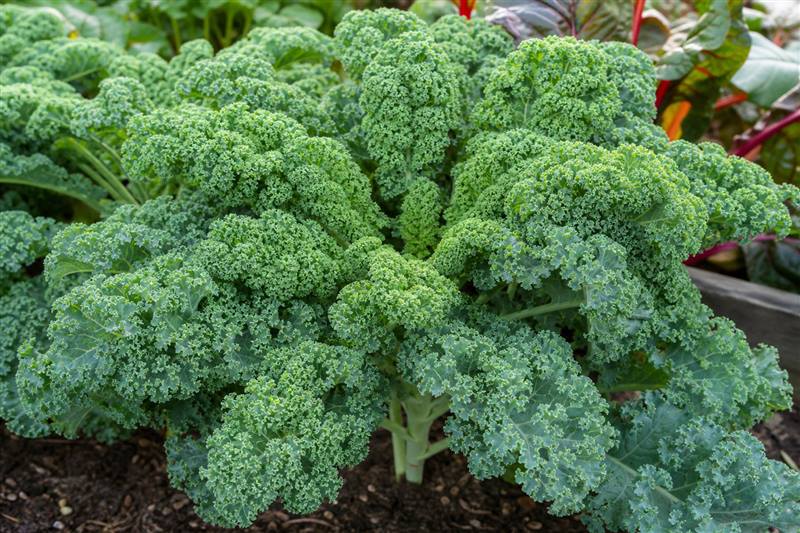
Acephala means headless. Red Russian and Siberian kales are Brassica napus on the Marin page — a different species from this card.
How it was found
Kew (species): Atlantic coasts of Great Britain, France and Spain. Native list: France, Great Britain, Spain. Introduced widely (including California). USDA GRIN (species): native United Kingdom (coasts), Germany (Schleswig-Holstein), France (west and north coasts), Spain (north coast); widely cultivated. GRIN Acephala Group (var. sabellica) and Collard Group (var. viridis) are “only cult.” Tahoe UCCE MG: undomesticated wild cabbage is found in western Europe along the sea coast on limestone outcrops.
UCCE Carter (ornamental kale): “Kale is native to the eastern Mediterranean or to Asia Minor” and “it is difficult to tell where kale originated” — not the same as Kew’s Atlantic-coast native list. Both are printed. Kew treats Brassica oleracea var. acephala DC. as a synonym of B. oleracea. GRIN treats var. acephala DC. as a synonym of var. viridis (Collard Group) and uses var. sabellica as Acephala Group (curly kale).
How people used it
Kew (species): used for food (also animal food). UCCE Carter: many people cook and eat kale; leaves blanched, steamed, stir-fried, or added to soup; ornamental kale still edible. UC Marin MG: edible/salad kale eaten raw or cooked. GRIN Acephala Group (var. sabellica): human food, vegetable, used as a cooked vegetable.
Kew lists medicine with no specific remedy named. GRIN folklore medicine rows under var. viridis are not copied.
Timeline
-
100 AD (as printed)
Greeks and Romans in the kitchen
UCCE Carter: kale was present in 100 AD when the Greeks used them in their cooking along with the Romans and the early Christians. The same page says it is difficult to tell where kale originated. That difficulty is why Kew’s Atlantic-coast map and Carter’s eastern Mediterranean / Asia Minor wording both stay.
UCCE Carter — Ornamental Kale
-
Middle Ages (as printed)
Dinosaur leaves, frills, snow kale
Tahoe Basin UCCE MG: by the Middle Ages kale had spread through Europe and Asia; Italians developed plants with “dinosaur” scales; Scots created frilly-leaf types; Russians produced kale that could survive in the snow; by the end of the Middle Ages it was one of the most important green vegetables in Europe.
Tahoe Basin UCCE MG — Lettuce & Kale workshop
-
1753
Named as cabbage’s species
Kew accepts Brassica oleracea L., first published in Sp. Pl.: 667 (1753). USDA GRIN: Sp. pl. 2:667. 1753. Kew lists B. oleracea var. acephala DC. among synonyms of the species. Acephala is a cultivar group, not a Kew-accepted species.
Kew POWO; USDA GRIN
-
World War II (as printed)
Victory vegetable, then forgotten, then back
Tahoe Basin UCCE MG: during WWII kale was promoted as a victory vegetable in Britain, France, and Germany (especially fall and winter) for nutrient value and cold-weather resistance; after the war it was abandoned as wartime ration; rediscovered as a “super green” in the 1990s.
Tahoe Basin UCCE MG — Lettuce & Kale workshop
Cool to know
Kale is not a different species from broccoli, cabbage, cauliflower, or Brussels sprouts: all are Brassica oleracea (Tahoe UCCE MG; UCCE Carter; UC Marin MG). Acephala means “headless” (Carter).
Tahoe UCCE MG; UCCE Carter; UC Marin
UC Marin MG: ornamental kale is the same genus and species as edible kale and other cole crops; breeders selected edible kale for foliage color. Carter: ornamental kale sold as “ornamental cabbage” is not the same horticultural type — ornamental cabbage forms a head; ornamental kale does not.
UC Marin; UCCE Carter
UC Marin MG: “Red Russian” and Siberian kales are Brassica napus, not B. oleracea — a different species from this card. GRIN Acephala Group (var. sabellica, curly kale) is not the same horticultural group as Collard Group (var. viridis).
UC Marin; USDA GRIN
Growing notes for this plant live on the Plant Wiki. This page is origin and use, not a How-To.
Want kale in a San Diego bed? See the fall-garden How-To for cool-season timing here. Get a quote or write yourgardenofgold@gmail.com.