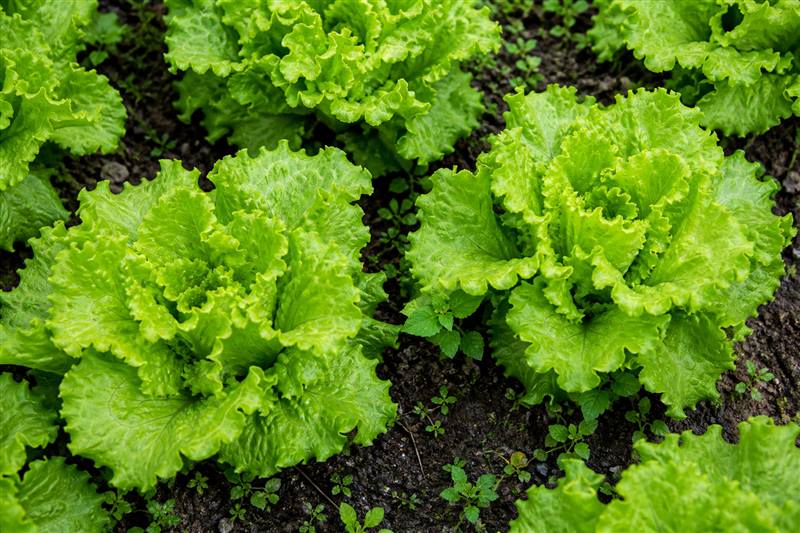
Garden lettuce is Lactuca sativa, not prickly lettuce (Lactuca serriola), the edible weed UC IPM treats as a separate species.
How it was found
Kew maps Lactuca sativa as a cultigen from western Asia. Native list printed: Iraq, Sumatera. Introduced widely, including California and many other U.S. states, parts of Europe, Asia, Africa, and the Americas. USDA GRIN: cultivated (only cult.) — no native-country table. Tahoe Basin UCCE Master Gardeners: native to the eastern Mediterranean region and western Asia; wild form thought to be closely related to Lactuca serriola (prickly lettuce). Kew’s cultigen + Iraq/Sumatera Native list and UC’s eastern Mediterranean / western Asia wording are not the same statement.
Tahoe Basin UCCE MG: Egypt 4500 BC cultivation — initially grown for latex-like sap and oils; later edible leaf forms developed. Kew prints cultigen from western Asia, not a first-cultivation country or date. GRIN prints only cultivated. A Riverside MG fact sheet’s “Ancient Egyptians cultivated lettuce 6,000 years ago” line cites Soft Schools and is skipped.
How people used it
Kew lists food (also animal food). UC IPM: cool-season vegetable grown for leaves (leaf lettuce most common in home gardens; head types include Bibb, Iceberg, and Romaine). Tahoe UCCE MG: later edible leaf forms; California leads U.S. production with iceberg the most common store type as printed.
Kew: used to treat unspecified medicinal disorders and as a medicine (no named remedy on the taxon page). GRIN lists human food as oil/fat in Egypt (citing de Vries 1997) — an economic-use row, not copied as a folk-medicine recipe. Tahoe’s Adonis/aphrodisiac/lettuce-opium lines are skipped.
Timeline
-
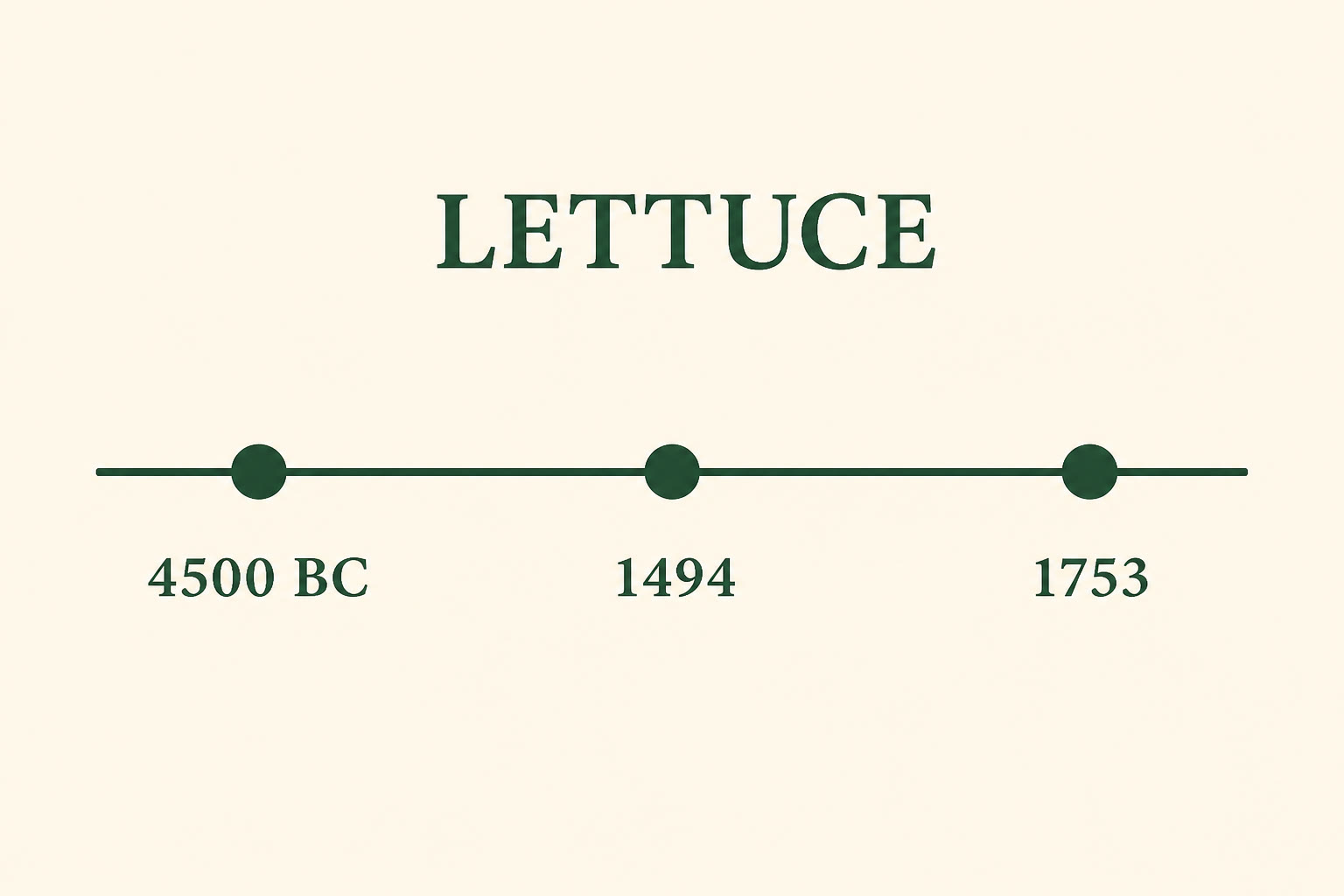
4500 BC (as printed by UCCE Tahoe MG)
Egypt, sap first, then leaves
Tahoe Basin UCCE Master Gardeners: Egypt 4500 BC cultivation; initially grown for latex-like sap and oils; later edible leaf forms developed. That is UC’s date, not Kew/GRIN consensus. Kew prints cultigen from western Asia without that year.
Tahoe Basin UCCE MG — Lettuce & Kale workshop (2019)
-
7th century
Arrived in China
Tahoe Basin UCCE MG: lettuce arrived in China by the 7th century, though how or by whom is unclear on that page. A travel note, not a second origin country.
Tahoe Basin UCCE MG — Lettuce & Kale workshop
-
1494
Columbus, the New World
Tahoe Basin UCCE MG: Columbus in 1494 brought lettuce to the new world. Same year as the cucumber Haiti planting on the cucumber page — a different crop, a different packet sentence.
Tahoe Basin UCCE MG — Lettuce & Kale workshop
-
17th century
California, as the slide prints it
Tahoe Basin UCCE MG: California, 17th century (as printed on the history slide). That is the packet’s California wording — not a Mission year invented from another crop.
Tahoe Basin UCCE MG — Lettuce & Kale workshop
-
1753
Named in Species Plantarum
Kew accepts Lactuca sativa L., first published in Sp. Pl.: 795 (1753). USDA GRIN: Sp. pl. 2:795. 1753.
Kew POWO; USDA GRIN
Cool to know
Tahoe UCCE MG: the white sap is a milky latex (lactucarium); the name is from Latin lactus, milk. The same workshop: the sap in homegrown lettuce is completely harmless.
Tahoe Basin UCCE MG
Tahoe UCCE MG: the wild form of lettuce is thought to be closely related to Lactuca serriola — prickly lettuce, an edible weed. UC IPM treats prickly lettuce as a separate weed species (L. serriola), not the garden crop.
Tahoe Basin UCCE MG; UC IPM
Tahoe UCCE MG groups garden types as romaine (cos), iceberg, butterhead, green/loose leaf, oakleaf, plus stem lettuce (celtuce, grown for the stem, used in Chinese cooking).
Tahoe Basin UCCE MG
Growing notes for this plant live on the Plant Wiki. This page is origin and use, not a How-To.
Want lettuce in a San Diego bed? See the fall-garden How-To for timing in this climate. Get a quote or write yourgardenofgold@gmail.com.