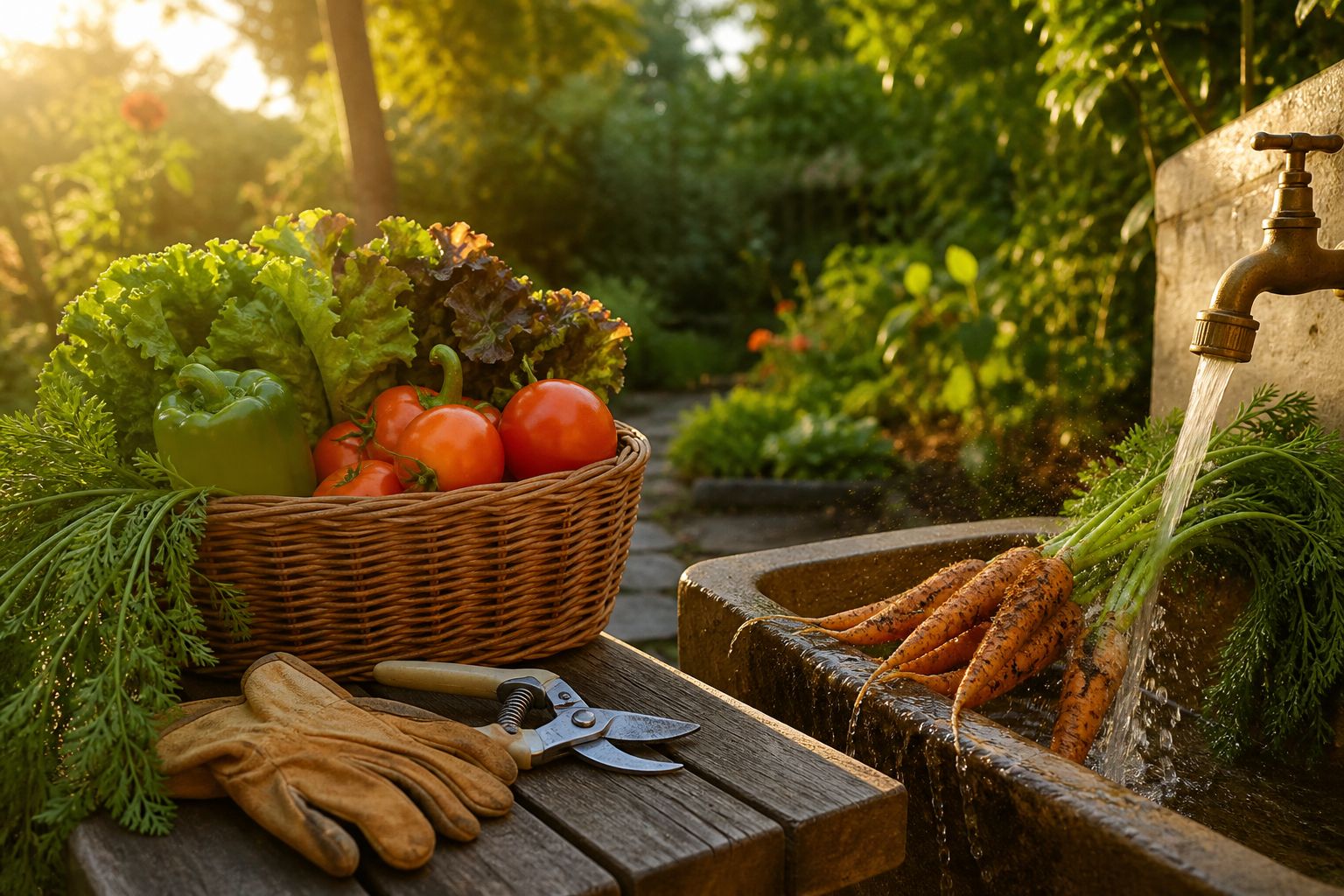
Pick in the cool morning into a clean container.
Water, soil, tools, animals, and hands can move microbes onto produce.
Rinse under running potable water — no soap — then cool promptly.
Kit
- Clean harvest basket or food-safe container
- Clean knife or pruning snips
- Gloves for thorny or soil-covered crops
- Potable running water
- Clean produce brush for firm vegetables
- Clean towels or salad spinner
- Refrigerator containers or bags
Do this
-
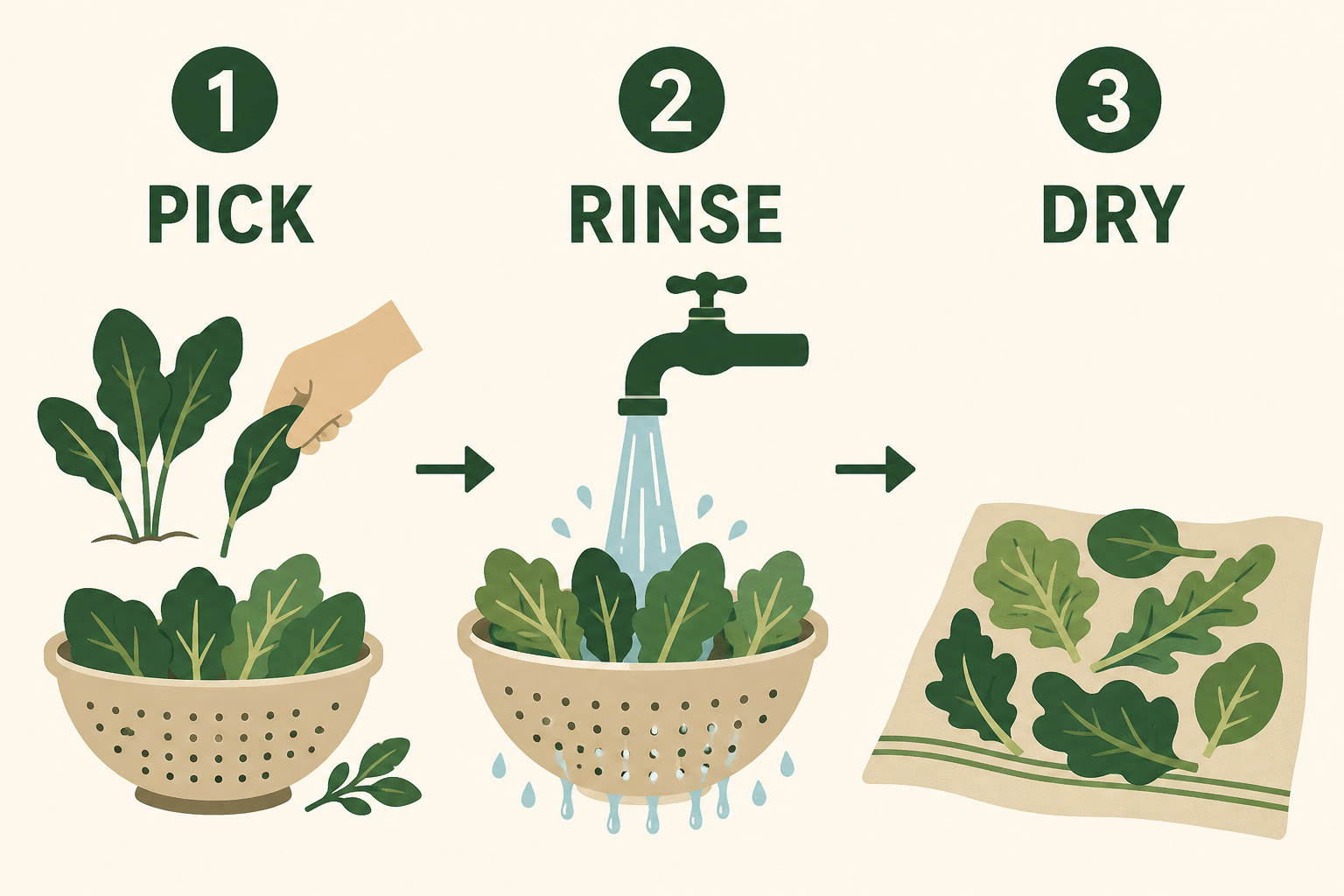
Harvest during the cool morning
Pick after dew dries but before produce heats in direct sun. Use shade while you work, and harvest only sound produce for storage.
UC MG.
-
Use clean hands, tools, and containers
Wash hands before harvest and after handling compost, soil, animals, or waste. Start with a clean basket and cutting tool.
- Do not reuse a container that held chemicals.
- Keep pets and livestock out of vegetable beds.
- Set harvested food on a clean surface, not bare soil.
UC MG.
-
Remove field soil without bruising
Gently shake or brush off loose soil outdoors. Cut, do not tear, when a crop needs a clean stem.
UC MG.
-
Rinse under running potable water
Wash produce under cool running tap water. Rub firm produce with clean hands or a clean produce brush.
UC MG.
-
Dry and cool promptly
Remove excess water with a clean towel or spinner and refrigerate crops that benefit from cooling. Keep cut produce cold and do not leave it at room temperature for extended periods.
UC MG.
-
Keep harvesting to keep plants producing
Check fast crops frequently. Pick outer lettuce leaves while leaving the center intact, and remove mature squash, cucumbers, beans, and peppers so plants continue directing energy into new flowers and fruit.
UC MG.
Want help planting and harvesting a San Diego vegetable bed? Gardens of Gold plants and tends vegetable beds in San Diego County. Get a quote.