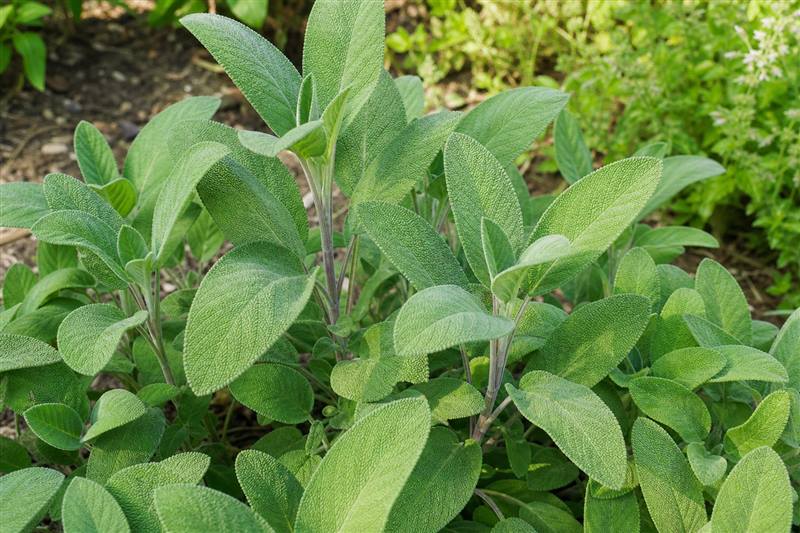
This card is Salvia officinalis only — not rosemary (Salvia rosmarinus) and not pineapple sage (Salvia elegans).
How it was found
Kew maps Salvia officinalis from southwestern Germany to southern Europe. Native list: Albania, France, Germany, Greece, Italy, northwest Balkan Peninsula, Spain, Switzerland. Introduced widely, including California and other U.S. states, North Africa, and parts of Asia. Kew’s California line is an undated introduced-into status, not a Mission year. A Calaveras Mission Garden list that includes “sage” states the plants selected are not exact cultivars used by the missionaries — not treated as a Salvia officinalis arrival date.
USDA GRIN native: southeastern Europe only — Former Yugoslavia, Albania, Greece, Italy; also cultivated and naturalized elsewhere. UC Marin: native to Mediterranean and North Africa. Kew lists Algeria, Morocco, Tunisia, and Libya as introduced, not native. Marin’s North Africa wording, GRIN’s narrower southeastern-Europe table, and Kew’s inclusion of France, Germany, Spain, and Switzerland are three statements. They are not collapsed.
No fetched page printed a first-cultivation date or a single domestication center. UC Marin: used for centuries for cooking and medicine. UCCE SLO: a signature plant from the Mediterranean.
How people used it
Kew lists food. UCCE SLO: culinary seasoning in stuffing, sausage, pasta, fish, and vegetable dishes. UC Marin: leaves and flowers edible. USDA GRIN: food-additive flavoring, and also materials — essential oils. UC Sacramento: culinary sage cultivars in the Mediterranean herb bed. UC Master Gardeners of Santa Clara County: culinary sage is a Thanksgiving herb and pairs with cheese, pasta, and bean dishes.
Kew lists medicine and also poison, with no specific remedy named. GRIN lists “Medicines — folklore”; those details are not copied. UCCE SLO’s 10th-century immortality/curative line is skipped. UC Sacramento prints the Latin etymology salveo (“I save” / “I heal”) without a named recipe.
Timeline
-
Centuries (as printed)
Cooking and medicine, Marin’s wording
UC Marin Master Gardeners write that sage has been used for centuries for cooking and medicine, and that it is native to Mediterranean and North Africa. Kew’s native list does not treat North Africa as native. Both sentences stay named.
UC Marin Master Gardeners — Sage
-
1737
Franklin’s sage-leaf bills
UC Master Gardeners of Sacramento County write that in 1737, Benjamin Franklin invented nature printing from leaf casts for transferring a sage leaf image onto the back of paper money bills, intended to thwart counterfeiters. A kitchen herb became a security feature.
UC Master Gardeners of Sacramento County — Grow herbs!
-
1753
Named in Species Plantarum
Kew accepts Salvia officinalis L., first published in Sp. Pl.: 23 (1753). USDA GRIN: Sp. pl. 1:23. 1753. Rosemary later took a different Salvia name; this epithet stays with culinary sage.
Kew POWO; USDA GRIN
Cool to know
UC Sacramento: the Latin name salvia comes from salveo, “I save” or “I heal.” Salvia is the largest genus in the mint family. The etymology is printed without a folk recipe on that page.
UC Master Gardeners of Sacramento County
UCCE SLO: plants are short-lived and become woody and leggy; they should be replaced every 3–4 years. Marin: typically replace around three to four years when too woody. A Mediterranean shrub, not an immortal garden fixture.
UCCE SLO; UC Marin
Culinary sage is Salvia officinalis. Do not mix with Salvia rosmarinus (rosemary, Kew accepted) or ornamental landscape salvias such as pineapple sage (Salvia elegans on the Sacramento page).
UC Master Gardeners of Sacramento County (packet do-not-claim)
UC Master Gardeners of Santa Clara County: besides being a Thanksgiving herb, sage also pairs well with cheese, pasta, and bean dishes. “Berggarten” is a compact growing cultivar from Germany, considered to be one of the better-flavored culinary sages.
UC Master Gardeners of Santa Clara County — Sage
UCCE SLO Master Gardeners: sage is also attractive to bees and a source of excellent honey.
UCCE SLO Master Gardeners — Sage
Growing notes for this plant live on the Plant Wiki. This page is origin and use, not a How-To.
Want culinary sage in a San Diego bed? See the easy-herbs guide for keeping Mediterranean herbs going here. Get a quote or write yourgardenofgold@gmail.com.