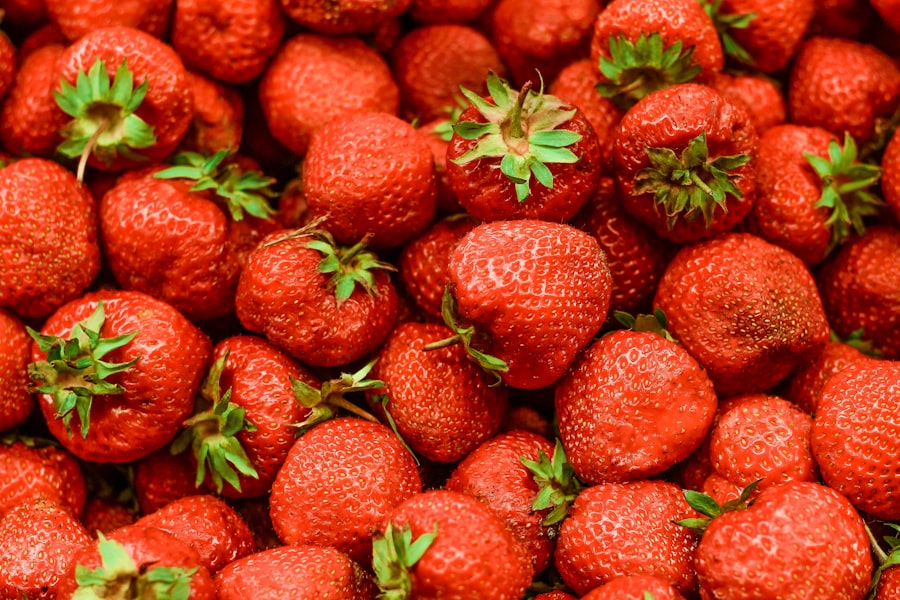
This card is Fragaria × ananassa, the garden and farm strawberry. Woodland or alpine strawberry (Fragaria vesca) is a different species.
How it was found
Kew prints the native range of this hybrid as a naturalised artificial hybrid. Native list: British Columbia, California, Oregon, Washington. Introduced widely in Europe, parts of Asia, Central America, and elsewhere. USDA GRIN native table: southwestern British Columbia, western Oregon, western Washington, northwestern California; also widely cultivated. Kew does not print a wild-country native range for a non-hybrid wild species. That Pacific-coast list is not proof the garden strawberry is a California-endemic wild species.
Kew and USDA GRIN print the hybrid formula F. chiloensis × F. virginiana. UCCE Napa Master Gardeners: the strawberry grown today in gardens and on farms was first hybridized in France in the late 18th century; a cross between North American and Chilean species. Tahoe Basin UCCE Master Gardeners: F. × ananassa is a cross between F. virginiana and F. chiloensis; New World varieties brought to Europe in the 1600s; crosses in the 1700s.
In 1712 Amédée François Frézier collected beach strawberry (F. chiloensis) plants in Chile and took them to France; those plants became the basis of experimental crosses with F. virginiana that led to the modern strawberry. That beat is about a parent species, not woodland strawberry.
How people used it
USDA GRIN economic uses: human food (fruit; also beverage base). UCCE Napa MG treats the garden and farm strawberry as a cultivated fruit. Kew’s hybrid taxon page did not print a use-class sentence.
Kew’s hybrid page does not print “used as a medicine.” UCCE Napa MG says that prior to hybridization people foraged wild strawberries and that in ancient times people valued them for medicinal uses — that line is about wild strawberries, not a named remedy for F. × ananassa, and is not copied as a garden-hybrid medicine recipe.
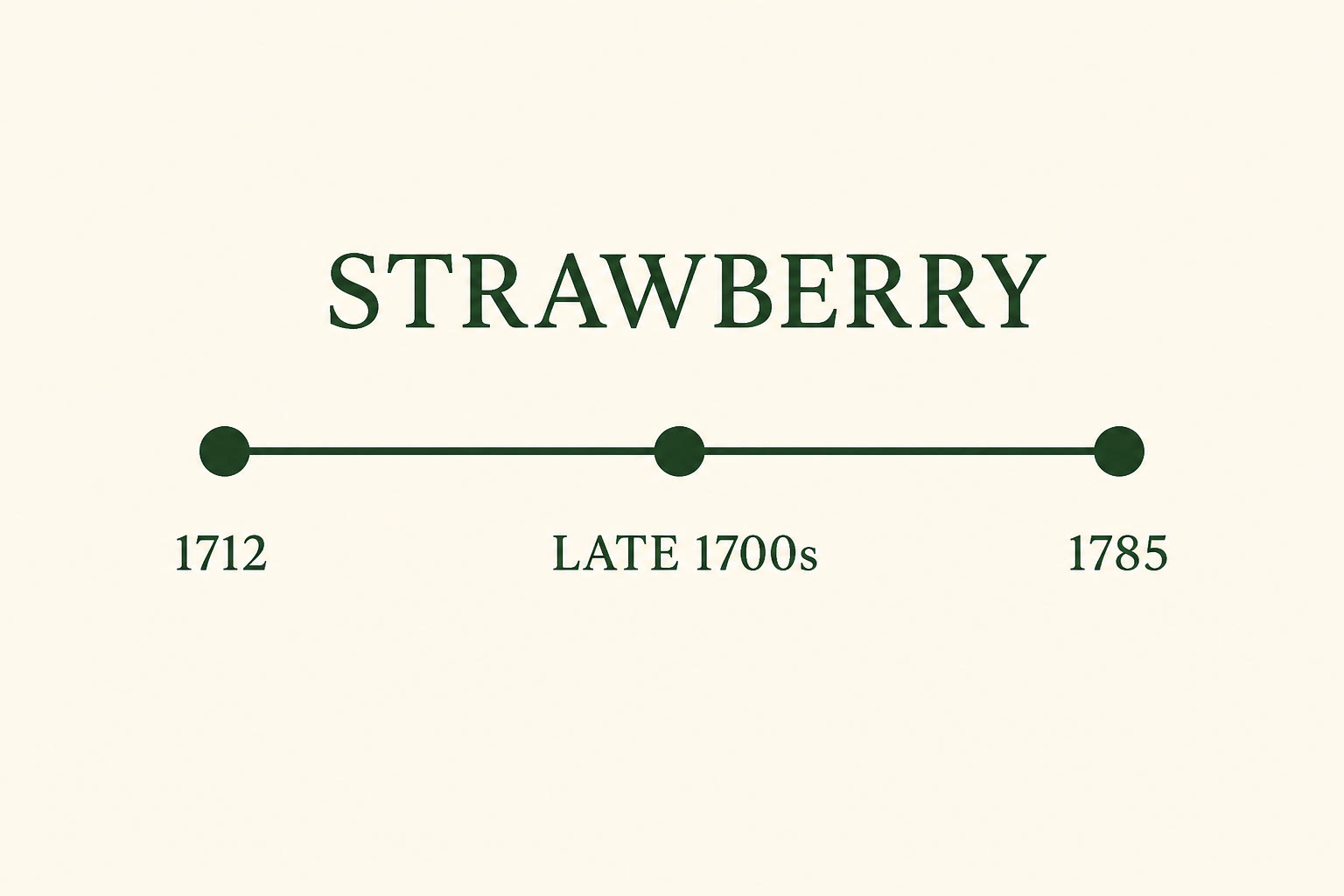
Timeline
-
1600s
New World strawberries to Europe
Tahoe Basin UCCE Master Gardeners write that New World strawberry varieties were brought to Europe in the 1600s. That page distinguishes wild F. vesca / F. virginiana from commercial F. × ananassa. The parents traveled first; the garden hybrid came later.
Tahoe Basin UCCE Master Gardeners — Strawberry Basics
-
1712 (parent collection, as printed)
Frézier’s Chilean plants
Tahoe Basin UCCE Master Gardeners write that in 1712 Amédée François Frézier collected beach strawberry (F. chiloensis) plants in Chile and took them to France. Those plants became the basis of experimental crosses with F. virginiana that led to the modern strawberry. Parent, not woodland strawberry.
Tahoe Basin UCCE Master Gardeners — Strawberry Basics
-
1700s / late 18th century
Hybridized in France
Tahoe Basin UCCE MG: crosses of F. chiloensis and F. virginiana in the 1700s. UCCE Napa MG: first hybridized in France in the late 18th century; a cross between North American and Chilean species. That is why a supermarket strawberry is a nothospecies, not a wild California berry.
Tahoe Basin UCCE MG; UCCE Napa Master Gardeners
-
1785
The hybrid name
Kew accepts Fragaria × ananassa (Duchesne ex Weston) Duchesne ex Rozier, first published in Cours Compl. Agric. 5: 52 (1785). USDA GRIN: Cours compl. agric. 5:52. 1785. Hybrid parentage = F. chiloensis × F. virginiana.
Kew POWO; USDA GRIN
Cool to know
Kew prints the hybrid formula F. chiloensis × F. virginiana and accepts the nothospecies. GRIN prints the same parentage. The garden strawberry was made, not found as-is.
Kew POWO; USDA GRIN
UCCE Napa Master Gardeners: the little spots on the surface of the strawberry are ovaries; each one has a seed inside. The red flesh is not a simple berry wall in the everyday sense.
UCCE Napa Master Gardeners
Tahoe Basin UCCE MG: F. × ananassa is octoploid (2N=56), matching the American parents F. virginiana and F. chiloensis. Woodland/alpine strawberry F. vesca is diploid (2N=14) and is a different species. Middle-ages cultivation on that PDF is printed for F. vesca, not this hybrid.
Tahoe Basin UCCE Master Gardeners
UCCE Napa MG: garden strawberries are June-bearing, ever-bearing, or day-neutral types; family Rosaceae (related to roses).
UCCE Napa Master Gardeners
Growing notes for this plant live on the Plant Wiki. This page is origin and use, not a How-To.
Want strawberries in a San Diego bed? See the berries How-To for growing steps in this climate. Get a quote or write yourgardenofgold@gmail.com.