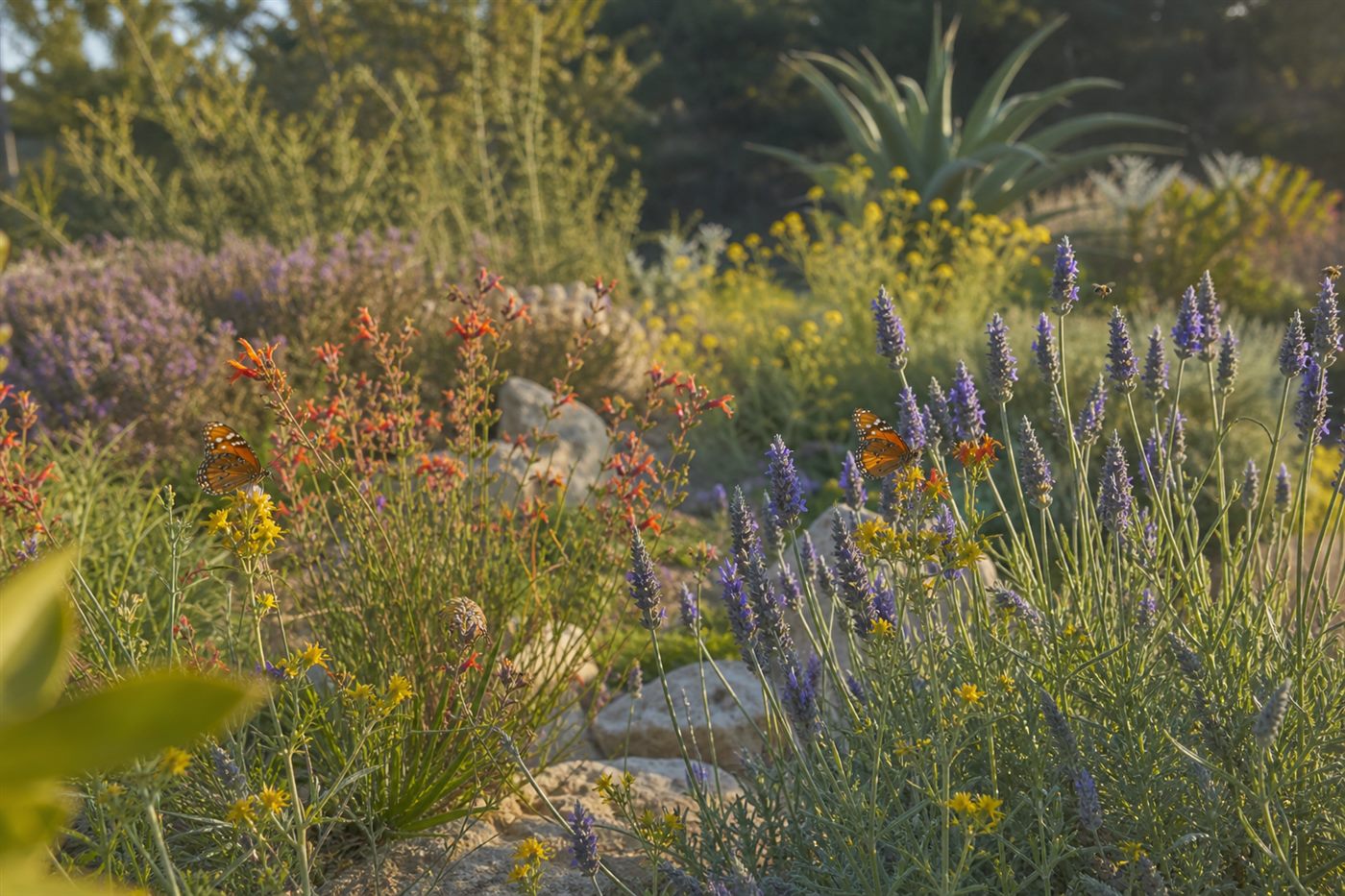
Pick a sunny strip with some wind shelter.
Even a fence-line strip can support bees, butterflies, and beneficial predators if you plant drifts and skip spray.
Plant in drifts; add shallow water with pebbles.
Kit
- Sunny strip (several hours of sun)
- Native / habitat plants (buckwheat, sages, yarrow, phacelia, etc.)
- Shallow water with landing stones
- Mulch kept off crowns
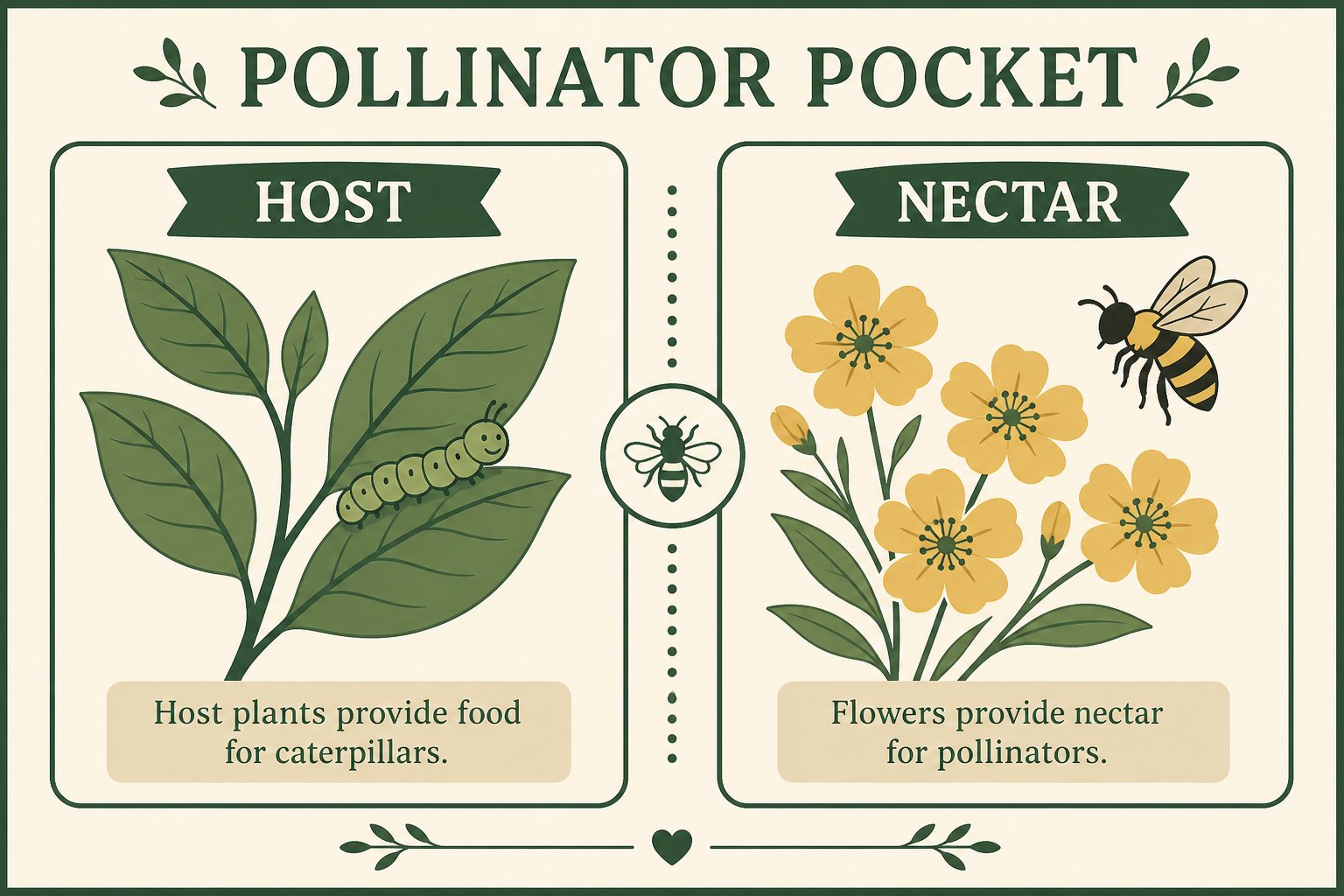
Do this
-
Pick a sunny strip
Most pollinators need sun and some wind shelter. South or east edges of fences work well.
UC MG Contra Costa.
-
Plant in drifts
Repeating the same plant in patches beats a checkerboard of singles.
UC MG Contra Costa.
-
Include natives
Buckwheat, ceanothus, manzanita, sages, and culinary herbs are frequent habitat heroes.
UC MG Contra Costa.
-
Add shallow water
A saucer with pebbles gives insects a safe sip without drowning.
UC MG Contra Costa.
-
Skip broad insecticides
Habitat collapses when blooms are sprayed. Spot-treat pests only when necessary.
UC MG Contra Costa.
Want a pollinator strip planted in a small San Diego yard? Gardens of Gold designs and plants habitat beds in San Diego County. Get a quote.