
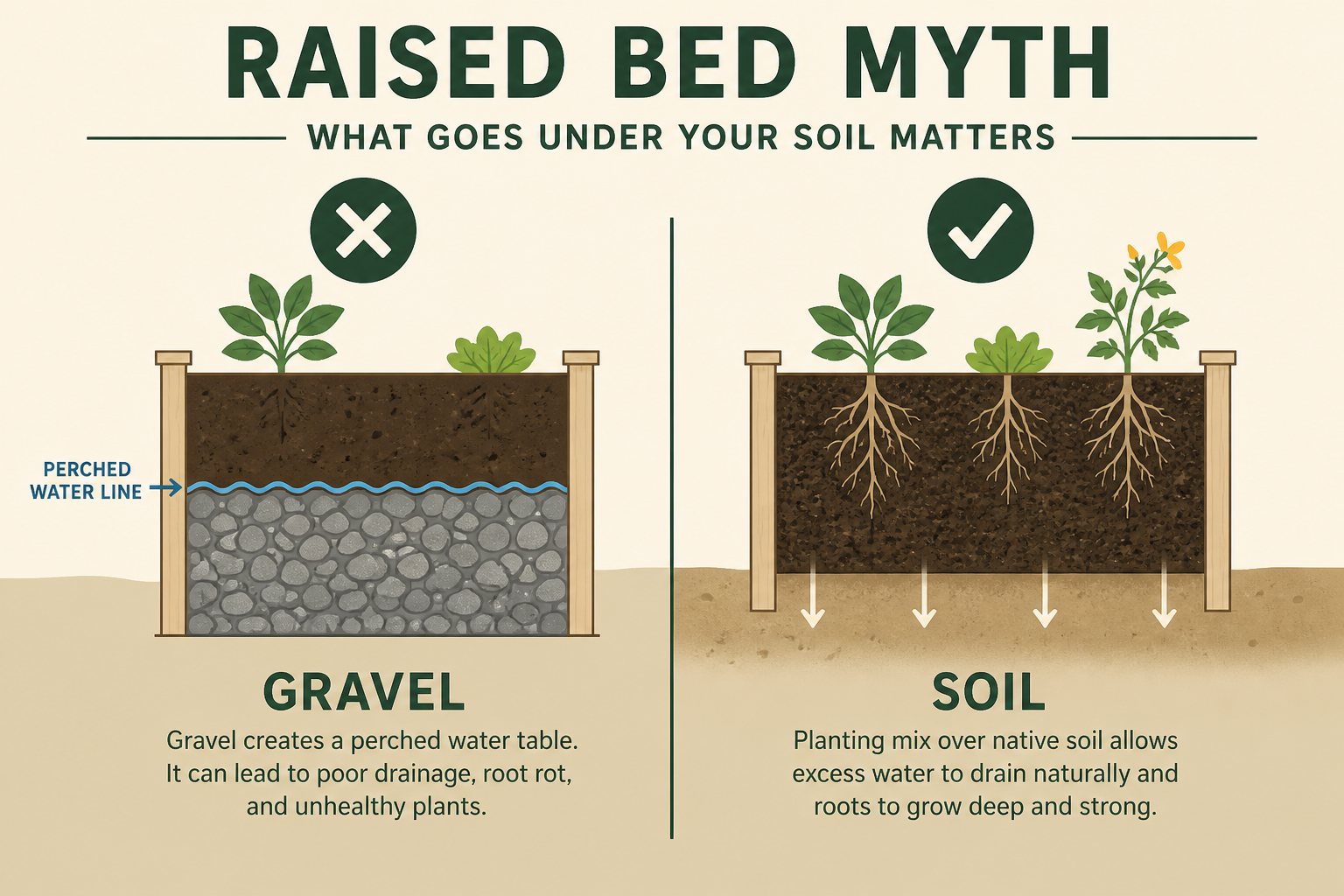
Skip the gravel layer inside the growing mix.
Water moves poorly from fine soil into coarse gravel until the fine layer is saturated.
Fill with well-drained mix from bottom to top; mulch the surface.
Kit
- Well-drained vegetable raised-bed mix
- Compost
- Optional coarse rock only for leveling a pad beside/under the box structure not as a layer inside the growing media stack
- Open-bottom bed design when possible
Do this
-
Skip the gravel layer inside the media
Do not put inches of rock under potting mix or bed soil expecting better drainage. Soil science and UC Master Gardeners say this worsens saturation at the interface.
UC MG Santa Clara.
-
Use a well-drained fill from bottom to top
Fill with a vegetable-ready mix all the way down. Keep drain paths open if using a lined trough.
UC MG Santa Clara.
-
On heavy clay, improve the site — not the myth
Raise the box, roughen clay, and blend a little native soil into the first inches of fill so you avoid a sharp layer. Address true site drainage with grading or a French drain to a legal outlet.
UC MG Santa Clara.
-
Optional: thin leveling pad outside the myth
If you need a stable, level footprint for the lumber on wet ground, a thin coarse pad under the frame can be a construction choice — still fill the growing volume with soil mix, not a deep rock reservoir.
UC MG Santa Clara.
-
Mulch and water by feel
Mulch the surface and irrigate based on root-zone moisture, not a rock layer fantasy.
UC MG Santa Clara.
Need help fixing a soggy bed the right way? Gardens of Gold designs and builds garden beds in San Diego County. Get a quote.