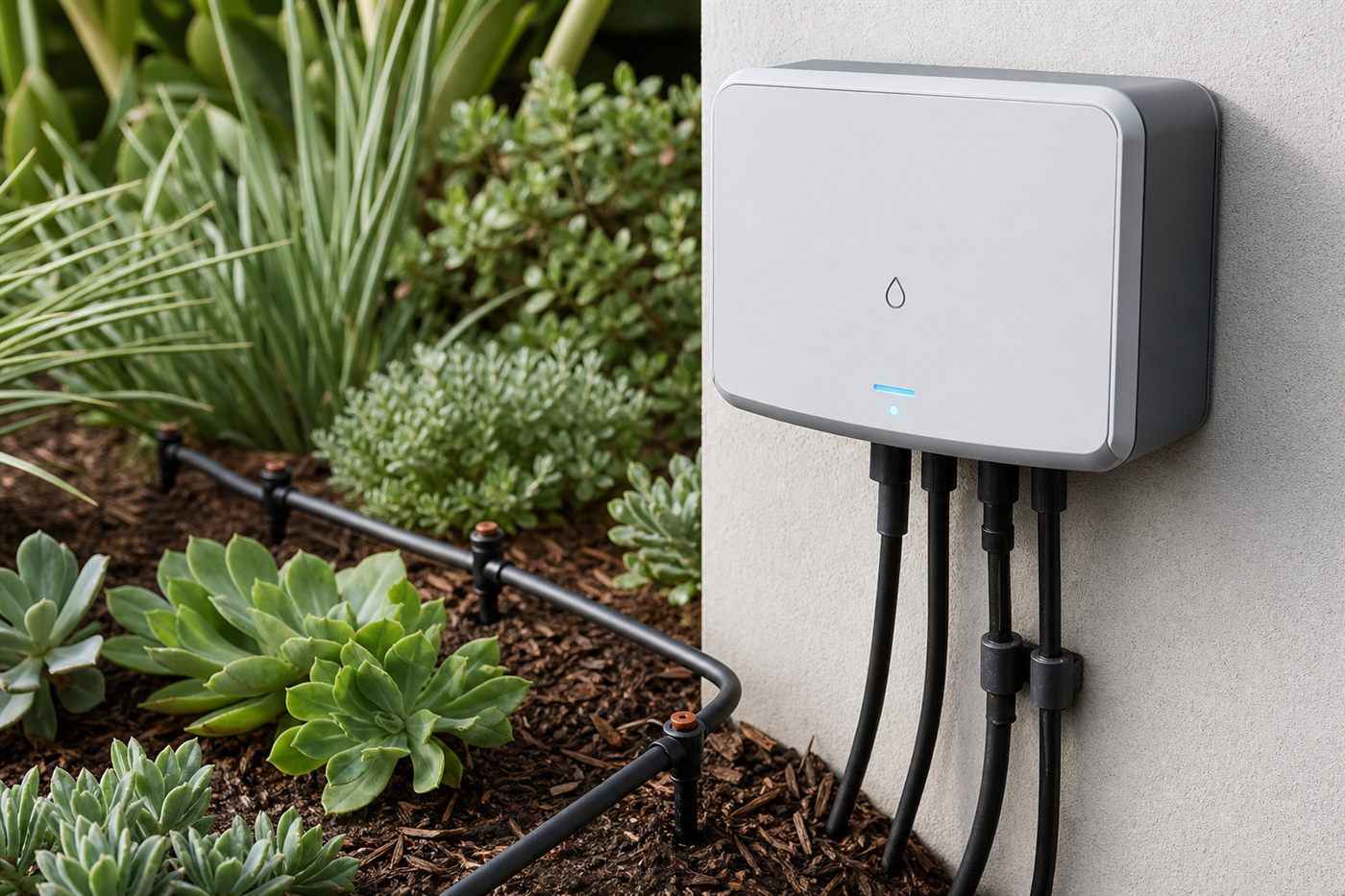
Walk the system while it runs.
Leaks, seeping valves, and cut drip lines are invisible overnight until the bill arrives.
Flag geysers, seeping valves, and cut drip before you upgrade the controller.
Kit
- Flags or chalk
- Controller key/app
- Spare fittings and Teflon tape
- Optional meter watch for a no-irrigation hour
Do this
-
Do a meter test
With all irrigation off and no indoor use, watch the meter. Movement suggests a leak.
EPA WaterSense.
-
Walk zones after a run
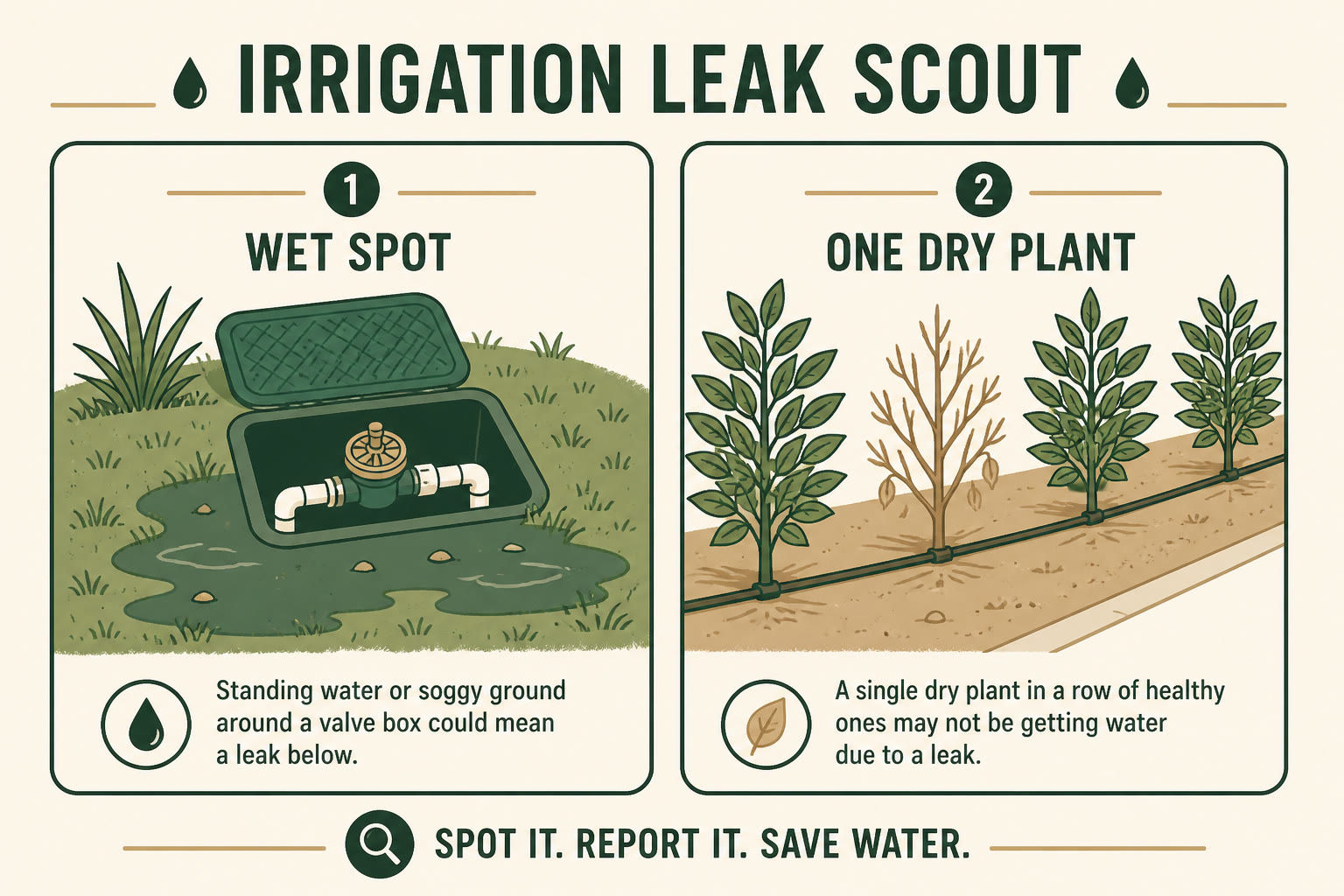
Look for pooling between cycles, misting (high pressure), spray on pavement, and soggy strips.
EPA WaterSense.
-
Open the valve box
Listen/feel for valves that do not shut fully and seep when the system should be off.
EPA WaterSense.
-
Inspect drip ends
Flag cut tubing, popped emitters, and clogged filters. Animals and edging tools love drip lines.
EPA WaterSense.
-
Fix pressure issues
Misting and leaking joints can signal high pressure or grit — check the regulator and filter.
EPA WaterSense.
Want leaks found and irrigation repaired in a San Diego yard? Gardens of Gold installs and repairs irrigation in San Diego County. Get a quote.