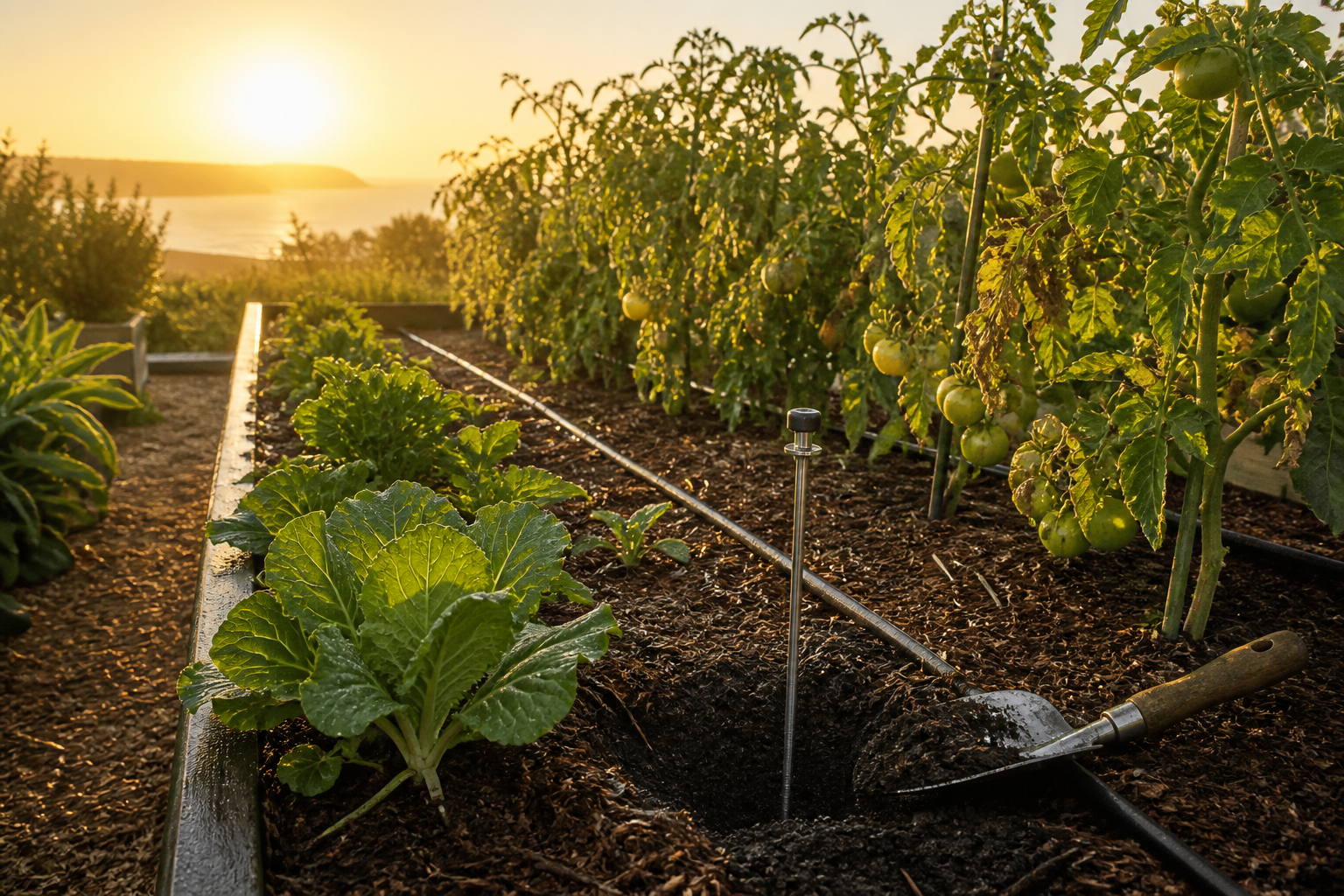
Water before mid-morning, slowly, where roots grow.
Soil texture, crop size, season, mulch, and emitter output all change the answer.
Probe depth with a trowel; let oxygen return before the next cycle.
Kit
- Dripline, soaker hose, or gentle hose wand
- Filter and pressure regulator for drip systems
- Hand trowel, soil probe, or long screwdriver
- Mulch
- Catch cups for overhead-system checks
- Simple irrigation log or controller notes
Do this
-
Water before mid-morning
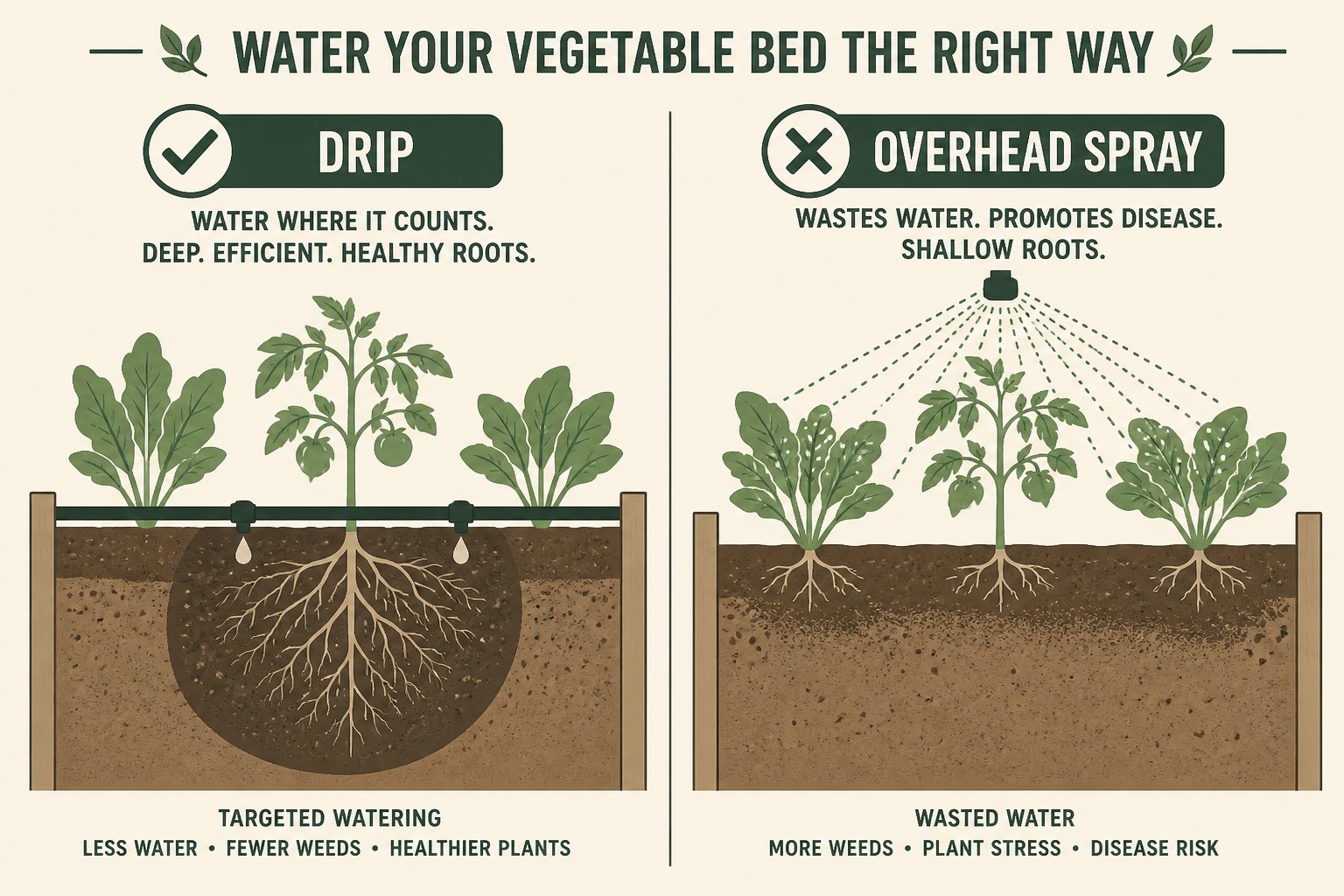
Early irrigation reduces wind and evaporation losses and gives splashed foliage time to dry. Avoid routine evening overhead watering, which can keep leaves wet through the cooler night.
UC MG.
-
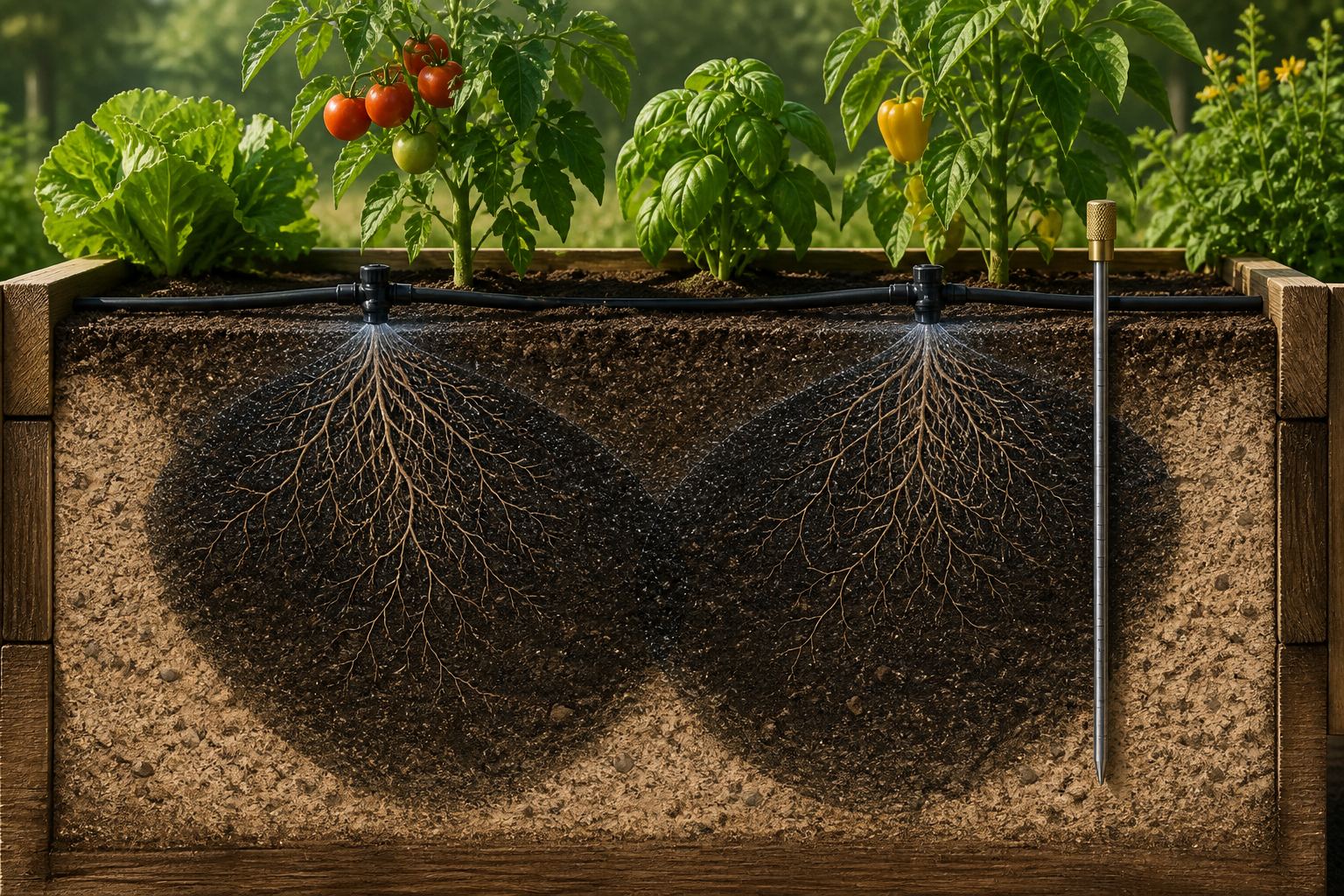
Apply water slowly where roots grow
Dripline places water near plants with less overspray than sprinklers. Use a filter and the correct pressure regulation, keep emitters visible enough to inspect, and widen the wetted area as large crops expand.
UC MG.
-
Pause if water starts to run off
Clay and compacted beds may accept water more slowly than the system applies it. Split the runtime into shorter cycles with soak time between them.
UC MG.
-
Check depth with a trowel
After irrigation, open a narrow inspection hole away from the stem. The surface can look dry while the root zone is moist—or look dark while water penetrated only an inch.
- Moist soil should hold together without dripping.
- Check several points, including line ends.
- Record the runtime that reached the target depth.
UC MG.
-
Let oxygen return before watering again
Roots need air as well as water. Recheck the soil before the next scheduled cycle and delay irrigation when the root zone remains moist.
UC MG.
-
Mulch, then adjust for weather
Mulch slows evaporation and surface crusting. Reduce irrigation during cool marine weather and after measurable rain; inspect more often during heat waves and Santa Ana winds.
UC MG.
Want vegetable watering set up on drip in San Diego? Gardens of Gold installs and repairs irrigation in San Diego County. Get a quote.