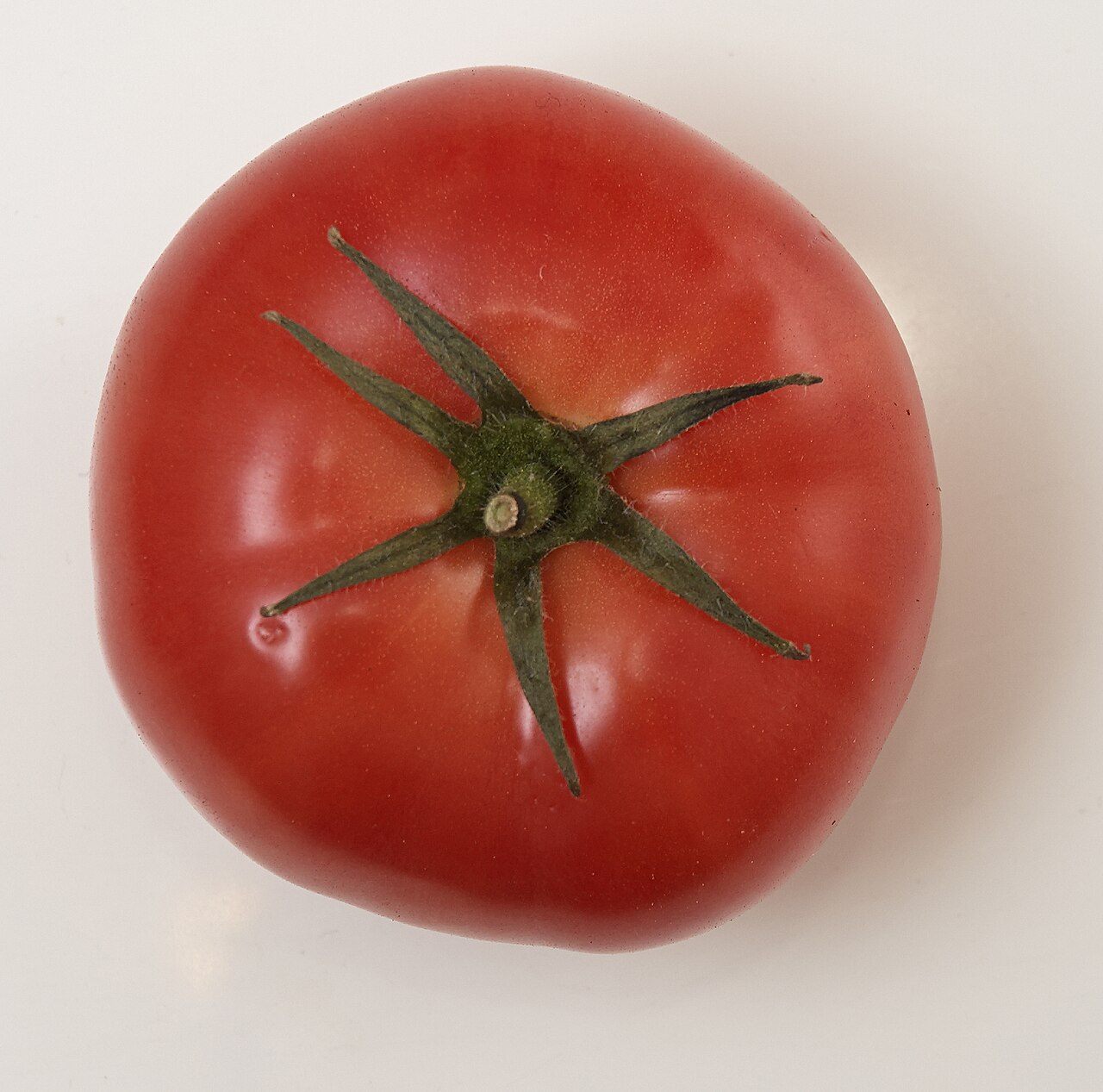
Garden tomato is Solanum lycopersicum, a berry that USDA has defined as a vegetable. This page does not collapse Peru and Mexico into one origin.
How it was found
Kew’s taxon page maps Native to: Peru, and treats the native range as a cultigen from Peru. Life form on that page: a scrambling subshrub of the wet tropical biome. Jepson eFlora prints native to South America, treats the plant as a California waif, and lists Lycopersicon esculentum Mill. as a synonym, with many cultivated forms. USDA-ARS GRIN lists the species as widely cultivated and widely naturalized and does not print a native-country table.
UC pages add other origin sentences. UC Master Gardeners of Sacramento County write that the tomato was cultivated by the Aztecs and Incas as early as 700 AD, and that page calls it native to Mexico and Central America. UC Master Food Preservers of Orange County write that the modern tomato originated in the southern Andes, coastal deserts of Peru, and Ecuador and parts of central Mexico, and that it was already widely cultivated by the Aztecs as far north as Mexico when Europeans arrived. A San Diego Master Gardeners PDF prints originated in Central America.
Kew’s native range is Peru / cultigen from Peru. UC Sacramento’s Mexico-and-Central-America wording is a different printed statement. This page does not write Kew’s native range as Mesoamerica, and it does not pick a winner.
How people used it
Kew use classes for the species include food, animal food, medicine, poison, environmental uses, social uses, and invertebrate food. UC Orange County Master Food Preservers: botanically a fruit (a berry); USDA has defined it as a vegetable; California produces about 95 percent of U.S. processing tomatoes.
This page does not copy wolf-peach etymology; Jepson and POWO pages fetched do not print it. Medicine is listed on Kew without a named folk recipe.
Timeline
-
As a cultigen (Kew)
From Peru, on Kew’s map
Kew POWO prints the native range as a cultigen from Peru, Native to: Peru. That is the Kew sentence. It is not UC Sacramento’s Mexico-and-Central-America sentence, and it is not collapsed with it.
Kew POWO — Solanum lycopersicum L.
-
By 700 AD (UC Sacramento MG)
Aztec and Inca gardens
UC Master Gardeners of Sacramento County print that the tomato was cultivated by the Aztecs and Incas as early as 700 AD, and that page calls it native to Mexico and Central America. That is a UC cultivation date. Kew does not print 700 AD on the taxon page used here.
UC Master Gardeners of Sacramento County — Heirloom tomatoes
-
Early 16th century
Tomatl becomes tomate
UC Orange County Master Food Preservers write that the Aztec (Nahuatl) word tomatl roughly translates as plump fruit, and that in the early 16th century Spanish explorers changed tomatl to tomate. The same page places the modern tomato in the southern Andes, coastal deserts of Peru, and Ecuador and parts of central Mexico. Name history and geography stay on that page’s wording.
UC Master Food Preserver Program of Orange County
-
1753
Named in Species Plantarum
Linnaeus published Solanum lycopersicum in Species Plantarum: 185. Kew accepts the name. Jepson lists Lycopersicon esculentum Mill. as a synonym and notes many cultivated forms.
Kew POWO; Jepson eFlora
-
Mid-1800s United States
Into U.S. kitchen gardens
UC Sacramento Master Gardeners write that it wasn’t until the mid-1800s that the tomato became a staple in U.S. kitchen gardens. That page also notes some Native American tribes and Creoles of New Orleans already had a long history of its use. Staple status and earlier local use are both printed there.
UC Master Gardeners of Sacramento County
-
After World War II
Bred to ship
UC Sacramento Master Gardeners write that long-distance shipping after WWII drove hybridization for uniform size, thicker skin, and disease resistance; flavor was not a major breeding goal on that page. That is why a supermarket tomato can look perfect and still taste flat — as that page tells it.
UC Master Gardeners of Sacramento County
Cool to know
UC Orange County Master Food Preservers print that the garden tomato is botanically a fruit — actually a berry — while USDA has defined it as a vegetable. Both labels are in force for different jobs.
UC Master Food Preserver Program of Orange County
The same Orange County page prints that California produces about 95 percent of U.S. processing tomatoes. That is a production fact for this state, not an origin claim.
UC Master Food Preserver Program of Orange County
Jepson eFlora: waif in California; native to South America; synonym Lycopersicon esculentum Mill.; many cultivated forms. GRIN does not print a native-country list.
Jepson eFlora; USDA-ARS GRIN
Growing notes for this plant live on the Plant Wiki. This page is origin and use, not a How-To.
Want tomatoes that finish in San Diego? See the tomato How-To for planting and support in this climate. Get a quote or write yourgardenofgold@gmail.com.