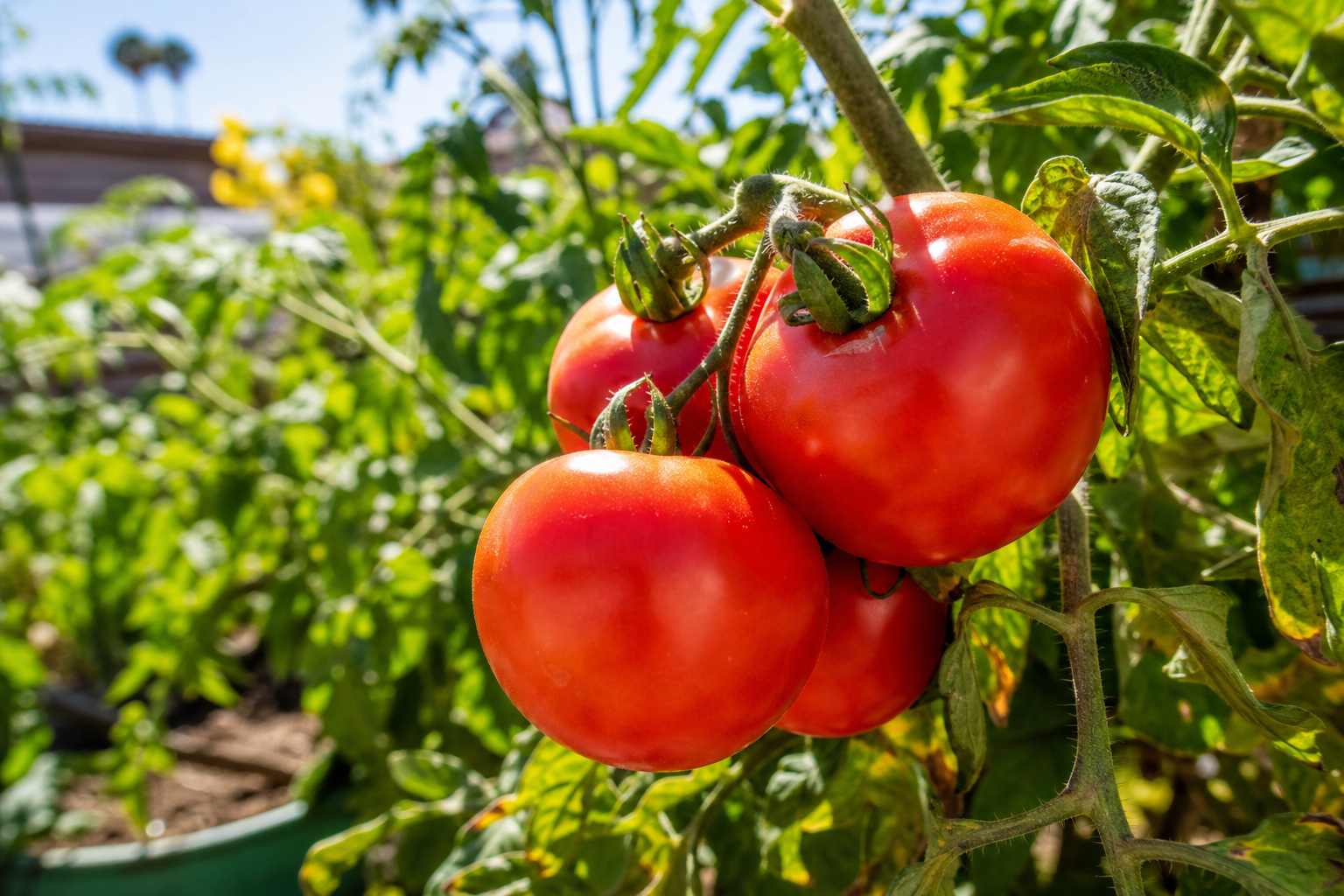
Why San Diego Is a Tomato Paradise (With One Catch)
We get roughly 266 sunny days a year and mild winters — but that coastal marine layer and our occasional heat spikes above 95 °F can stress tomatoes at the wrong moment. The good news: once you dial in timing, variety selection, and irrigation, you can harvest from May through November while most of the country is pulling dead vines in August.
When to Plant: Two Windows, Double the Harvest
In most San Diego zip codes you have two planting windows:
- Spring window: Set transplants out mid-February through mid-April. Fruit arrives in May–June before summer heat builds.
- Summer window: Start a second round of transplants in late June through July. These ripen into the sweet fall harvest window (September–November).
Inland valleys (El Cajon, Santee, Lakeside) run hotter than coastal zones (Encinitas, Oceanside), so inland gardeners should push the spring window earlier and give fall plants extra afternoon shade.
Best Varieties for San Diego Backyards
- Early Girl — The local workhorse. Sets fruit reliably in cool marine-layer mornings and tolerates mild heat spikes. Expect 50–60 days to first ripe tomato.
- Sun Gold — A tangerine-orange cherry that never stops producing. Incredibly sweet, crack-resistant, and kids love them straight off the vine.
- Celebrity — Disease-resistant (VFN) and productive. Great for beginners who want reliability over gourmet flair.
- Brandywine — Heirloom flavor worth the extra effort, but needs consistent deep watering to prevent blossom end rot.
- Patio or Tumbling Tom — Compact enough for containers on a small patio, balcony, or apartment courtyard.
Watering & Irrigation: The Make-or-Break Factor
Inconsistent watering is the #1 reason San Diego tomatoes fail. Alternate wet-dry cycles trigger blossom end rot (a calcium-uptake issue caused by moisture swings) and fruit cracking.

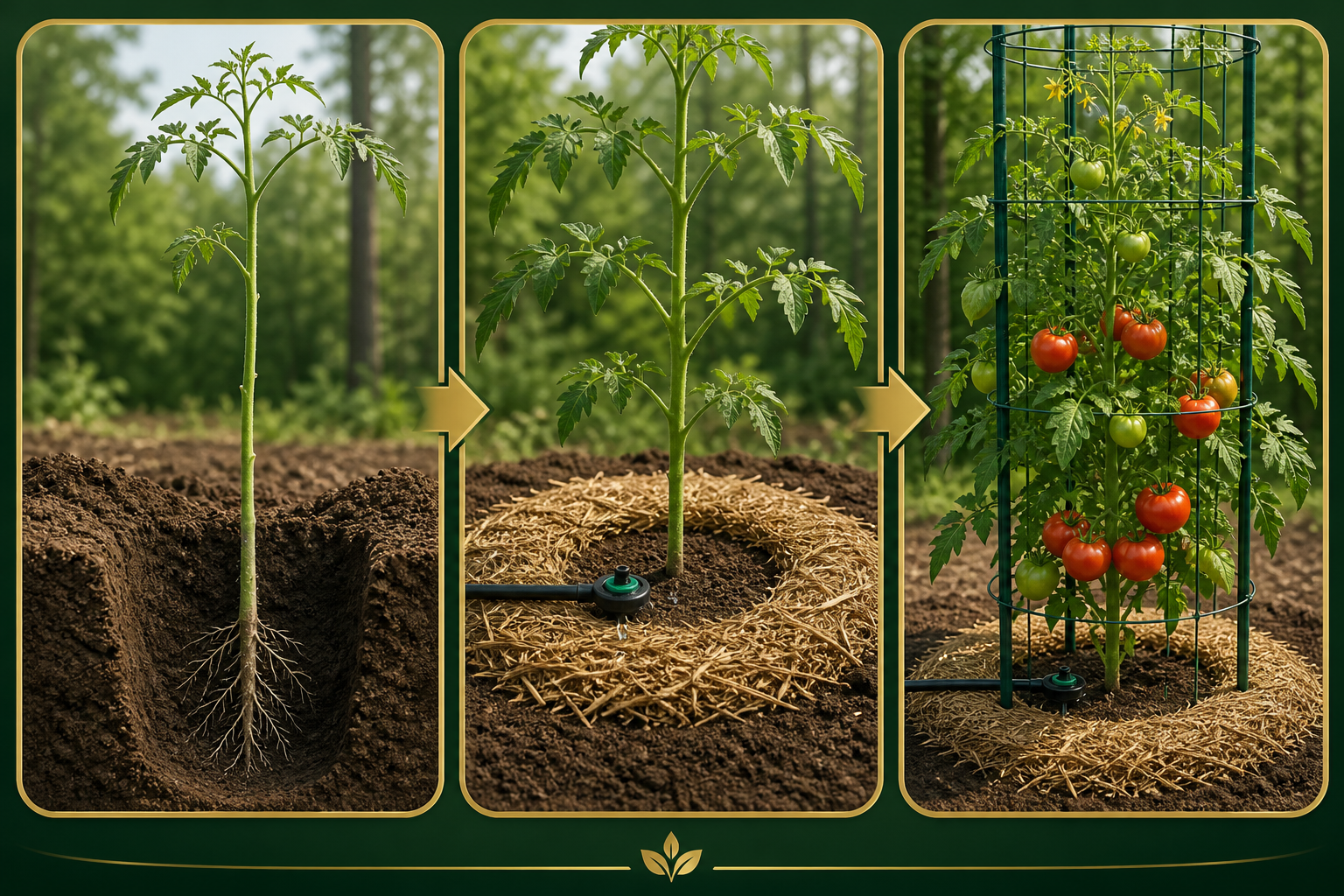
- Tomatoes prefer deep, consistent watering — 1–2 inches per week, delivered slowly so it reaches the roots (12–18 inches deep).
- A drip system with a timer running early morning is the gold standard. It keeps foliage dry (reducing fungal issues) and delivers water exactly where roots need it.
- Mulch 3–4 inches around the base to hold moisture and keep soil temperature stable.
- During heat waves above 90 °F, increase frequency — never let the top 2 inches stay bone dry for more than a day.
Ready to stop babysitting the hose? Gardens of Gold installs and programs smart drip irrigation systems tuned for San Diego's micro-climates. One installation = seasons of hands-free watering.
Support, Staking & Feeding
Indeterminate varieties (Early Girl, Sun Gold, Brandywine) will keep growing all season and need sturdy support:
- Install a heavy-gauge tomato cage or 6-foot stake at planting time, before roots spread.
- Florida weave (running twine in a figure-eight between rows of stakes) works great for a row of plants.
Feed with a balanced vegetable fertilizer (5-10-10 or similar) at planting, then switch to a low-nitrogen, high-phosphorus formula once flowers appear. Too much nitrogen after flowering produces lush leaves but no fruit.
Common San Diego Tomato Problems & Quick Fixes
- Blossom drop: Usually temperature — blossoms drop when nights are below 55 °F or days above 95 °F. Plant timing is your best fix.
- Blossom end rot (dark leathery bottom): Irregular watering. Add drip, mulch, and a calcium foliar spray as quick relief.
- Yellowing lower leaves: Normal as plants age, but widespread yellowing suggests a nitrogen deficiency or overwatering. See our guide to yellowing leaves.
- Hornworms: Those fat green caterpillars can strip a plant overnight. Handpick at dusk or apply Bacillus thuringiensis (Bt) spray. Read our full caterpillar battle plan.
- Spider mites in August: Look for fine webbing and stippled leaves. Hose down undersides daily. More in our spider mite guide.
One Last Tip From Jesus
Pinch the suckers — those small shoots that sprout in the crotch between the main stem and a branch — especially on indeterminate varieties. It focuses the plant's energy on fruit instead of leaves and keeps the canopy open for airflow. You don't need to pinch every sucker, but removing the ones below the first flower cluster makes a real difference in San Diego's humid June mornings.
Have questions about your specific yard? Reach out to Gardens of Gold — we do free site assessments and love talking tomatoes. Hablamos Español.