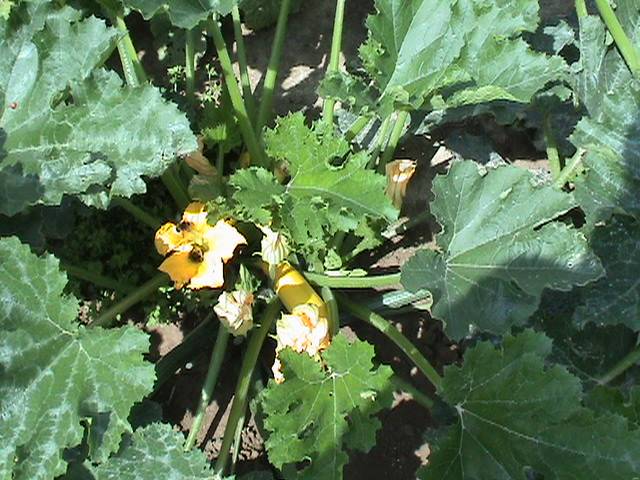
Zucchini is a fruit type of Cucurbita pepo, not its own binomial. Pumpkin and some acorn squash can be the same species; butternut and kabocha may be other Cucurbita species.
How it was found
Kew maps Cucurbita pepo as a cultigen from Mexico. Native to: Mexico Central, Gulf, Northeast, Northwest, Southeast, and Southwest. Introduced widely, including California and many other U.S. states, Europe, Africa, Asia, and the Pacific. USDA GRIN’s native table is not identical: GRIN lists native populations in the United States (Missouri, Oklahoma, Texas, Arkansas, Louisiana, Mississippi) and northern Mexico (Nuevo León, Tamaulipas), plus widely cultivated. Kew’s “cultigen from Mexico” and GRIN’s U.S.–northern Mexico native table are not collapsed.
UCCE Inyo/Mono Master Gardeners (Summer Squash): squash originated in the Americas and is one of the major and earliest plants domesticated in Mexico and North America, along with maize and beans; remains of squash seeds, rind and stems found in caves in Mexico dated to 8,000 BC. That page also prints later U.S. domestication of similar C. pepo (not modern zucchini) in Missouri, Florida, Pennsylvania, Kentucky, Tennessee and Maine, with a wild ancestor the Ozark gourd still present. UCCE Riverside MG: squash originated in Mexico and Central America. Those statements are not identical.
Zucchini as a fruit type: cultivated and improved in the very late 1800s in Italy, near Milan (UCCE Inyo/Mono). The 8,000 BC cave remains are squash remains, not “zucchini as we know it today” on that page.
How people used it
Kew: used as animal food, a poison, a medicine and invertebrate food, has environmental uses and for fuel and food. UC IPM: summer squash (zucchini, yellow, scallop) is Cucurbita pepo; blossoms are also edible. UCCE Riverside MG: scientific name Cucurbita pepo; zucchini listed among summer-squash types. UCCE Inyo/Mono: botanically fruits because they contain the seeds; summer squash is harvested before the rind hardens.
Kew lists medicine with no specific remedy named. GRIN folklore details are not copied.
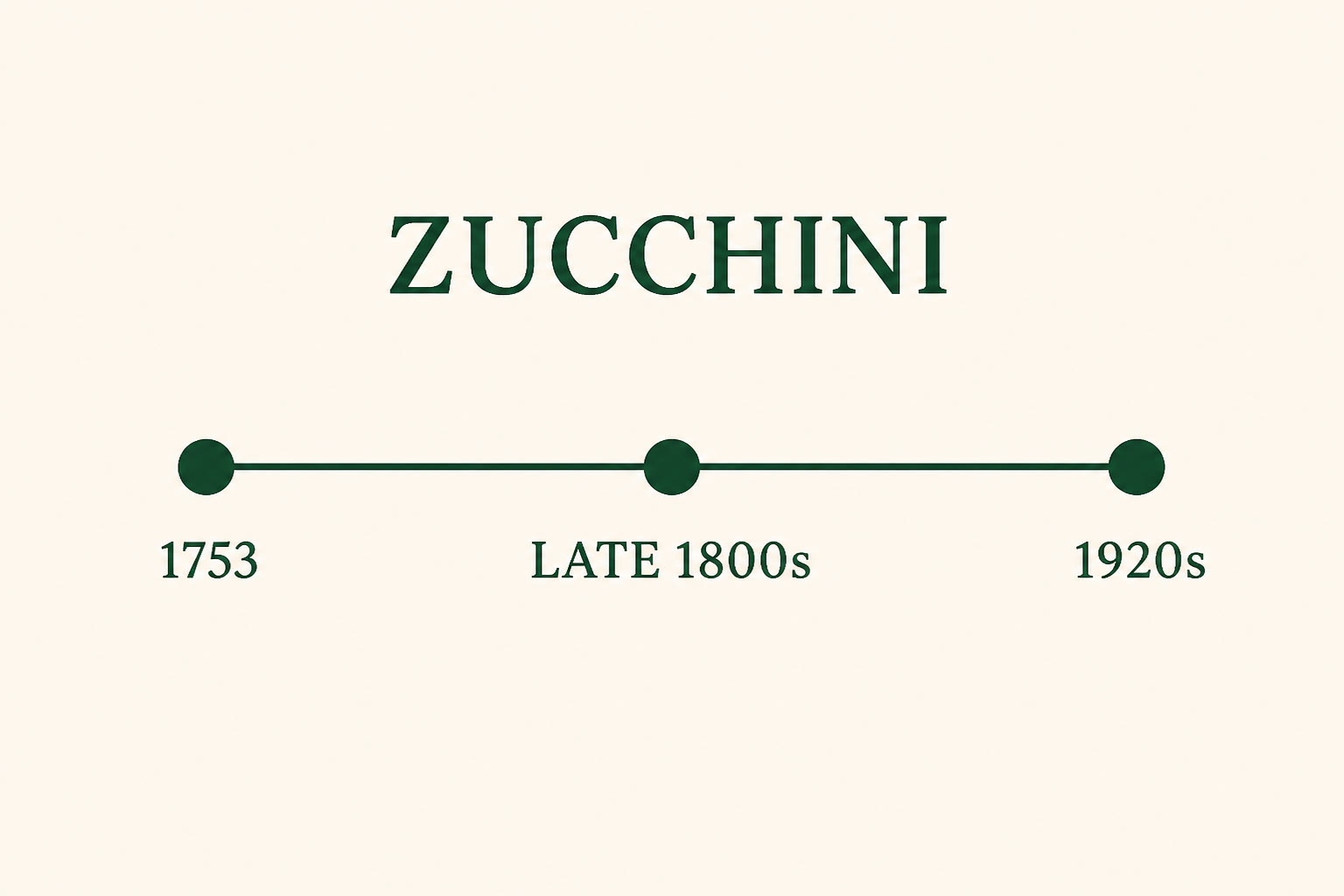
Timeline
-
8,000 BC (as printed for squash remains)
Cave squash, not modern zucchini
UCCE Inyo/Mono Master Gardeners: remains of squash seeds, rind and stems were found in caves in Mexico and were dated to 8,000 BC. Same page: squash originated in the Americas; one of the major and earliest plants domesticated in Mexico and North America, along with maize and beans. That page says that was not the zucchini as we know it today.
UCCE Inyo/Mono Master Gardeners — Summer Squash
-
Cultigen from Mexico (Kew)
Kew’s native sentence
Kew POWO: native range is as a cultigen from Mexico; Native to the six Mexico regions listed above. Life form printed as an annual of the subtropical biome. GRIN’s native table includes several U.S. states — a different printed map.
Kew POWO; USDA GRIN
-
1753
Named in Species Plantarum
Kew and USDA GRIN: Cucurbita pepo L. first published in Species Plantarum: 1010 (1753); species accepted. GRIN: Sp. pl. 2:1010. 1753. Zucchini stays this species.
Kew POWO; USDA GRIN
-
Very late 1800s (Italy, as printed)
Little squash near Milan
UCCE Inyo/Mono MG: “Zucchini” were cultivated and improved in the very late 1800s in Italy, near Milan. Zucca is printed as the Italian word for squash; zucchina means “little squash.” In England, Ireland and France the same thing is called a courgette.
UCCE Inyo/Mono Master Gardeners — Summer Squash
-
Early 1920s
Italian immigrants bring it back
UCCE Inyo/Mono MG: Italian immigrants then brought the new improved version of squash back to the US in the early 1920s. A European fruit type of an American species, returning across the Atlantic.
UCCE Inyo/Mono Master Gardeners — Summer Squash
Cool to know
Zucchini/courgette is a fruit type of C. pepo, not its own binomial. UC IPM: summer squash (zucchini, yellow, scallop) = C. pepo; winter squash (acorn, butternut, kabocha) = C. pepo, C. moschata, C. maxima. Pumpkin and some acorn squash can be the same species as zucchini; butternut/kabocha may be other Cucurbita species on that page. Chayote is printed separately on the Inyo/Mono page — not C. pepo.
UC IPM; UCCE Inyo/Mono
USDA GRIN English common names for C. pepo include marrow, pumpkin, and squash (also bush squash). Italian common name zucchino is listed.
USDA GRIN
UCCE Riverside MG: squash comes from the Narragansett word askutasquash, roughly “eaten raw or uncooked”; Presidents Washington and Jefferson grew squashes in their Virginia gardens (as printed on that fact sheet).
UCCE Riverside Master Gardeners — Summer Squash fact sheet
Growing notes for this plant live on the Plant Wiki. This page is origin and use, not a How-To.
Want zucchini in a San Diego bed? See the seed-starting How-To for planting in this climate. Get a quote or write yourgardenofgold@gmail.com.