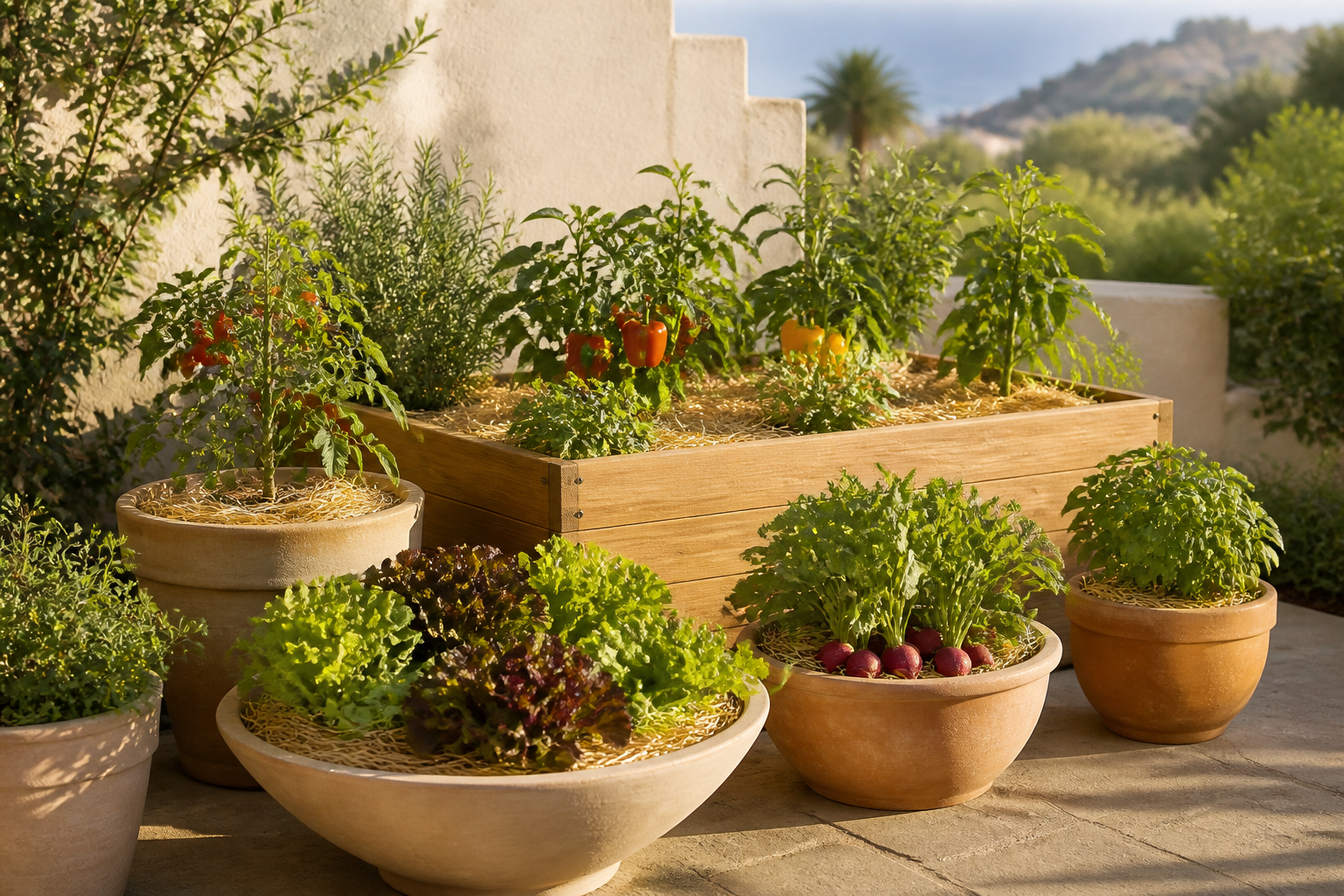
Audit light at 9 a.m., noon, and 3 p.m. before you buy plants.
Coastal patios stay milder and dry out slower; inland pots bake in the afternoon.
Potting mix, not yard soil; water by touch; mulch the surface.
Kit
- Food-safe containers with drainage holes
- Fresh, high-quality potting mix (not yard soil)
- Vegetable seeds or compact transplants
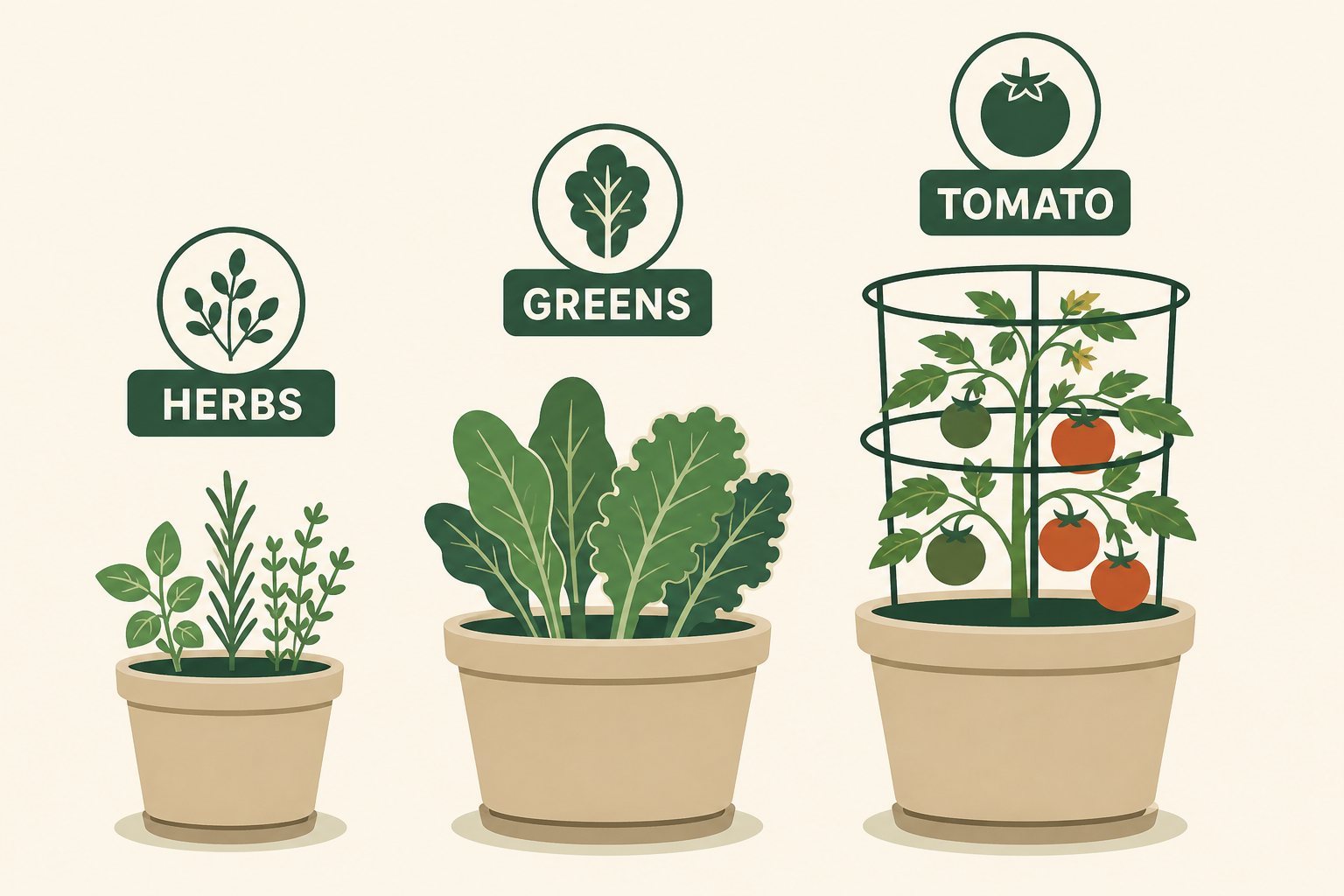
- Trellis (an upright frame for plants to climb) or cage for climbing and fruiting crops
- Watering can, hose wand, or drip line
- Organic mulch such as clean straw
- Fertilizer labeled for edible container plants
Do this
-
Audit the light before buying plants
Observe the space at 9 a.m., noon, and 3 p.m. Most fruiting vegetables need the brightest location you have; leafy greens and many root crops tolerate some afternoon shade.
UC MG.
-
Choose depth, drainage, and a cooler color
Choose deeper pots for tomatoes, beans, cucumbers, potatoes, and squash; shallower boxes can suit lettuce and radishes. Every container needs open drainage holes.
UC MG.
-
Fill with potting mix, not garden soil
Yard soil compacts in a pot, drains slowly, and can carry weed seeds or disease organisms. Fill with a fresh container mix and set the trellis now so later installation does not spear roots.
UC MG.
-
Match the crop to the container
Compact, bush, patio, and dwarf varieties turn limited root space into useful harvests. Direct-sow beans, carrots, cucumbers, peas, radishes, and squash; small tomato, pepper, and eggplant transplants usually establish more smoothly.
UC MG.
-
Water by touch, then feed lightly
Check the top inch of mix daily during hot or windy weather. When it is dry, water slowly until a little drains from the bottom, then empty standing water that cannot drain away.
UC MG.
-
Mulch and keep roots out of the heat
Add a thin layer of clean straw or another nonwoody mulch after seedlings establish. Keep mulch off stems, and move small pots into afternoon shade during severe inland heat.
UC MG.
Want patio containers planted for San Diego heat? Gardens of Gold plants and tends beds and containers in San Diego County. Get a quote.