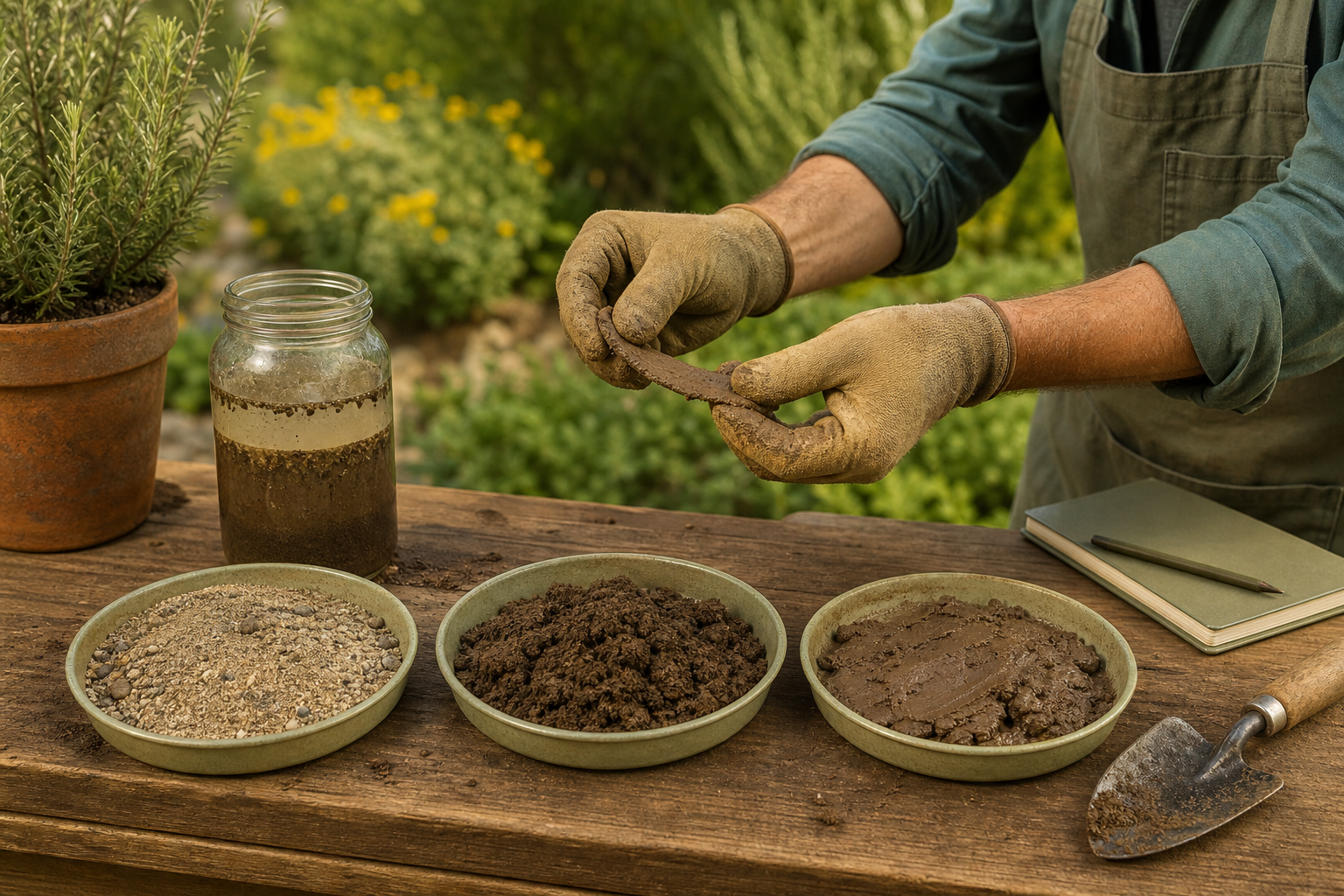
Map beds with different histories before you sample.
Sandy soil drains quickly but stores less water; clay holds more water but accepts it slowly.
Improve structure with finished compost; do not add sand to clay as a casual fix.
Kit
- Clean hand trowel or soil probe
- Bucket for combining samples
- Water for a hand-texture test
- Resealable sample bag
- Permanent marker and simple bed map
- Finished compost
- Optional accredited soil laboratory test
Do this
-
Map beds with different histories
Keep samples separate when areas have different fill soil, drainage, prior crops, or possible contamination. An old driveway edge and a long-managed vegetable bed should not become one averaged sample.
UC MG.
-
Collect a representative composite sample
Follow the laboratory’s directions first. In one uniform bed, take several small subsamples from across the root zone, combine them in a clean bucket, and bag the mixed sample.
UC MG.
-
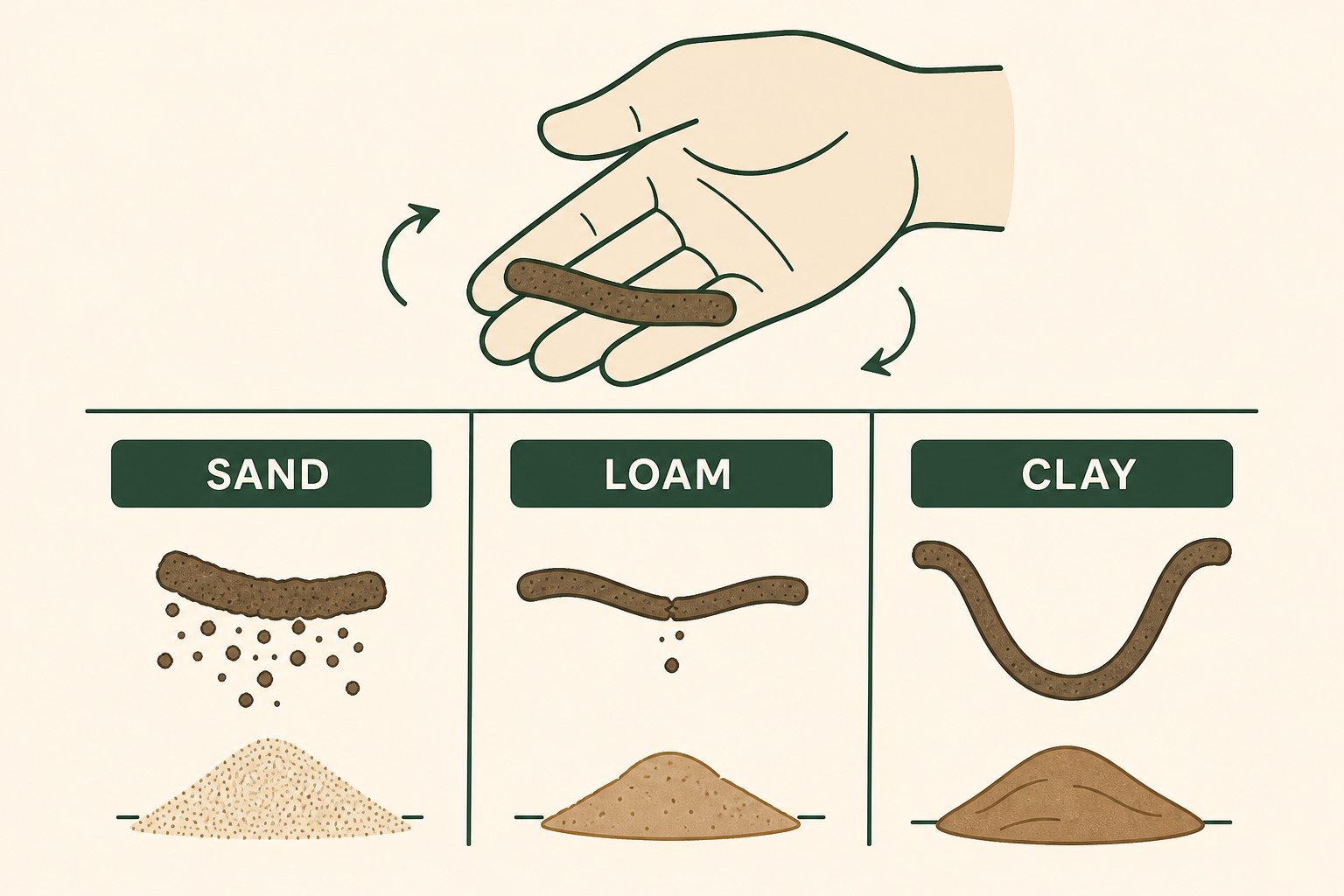
Do the squeeze-and-ribbon test
Moisten a small handful until it molds without dripping. Gritty soil that barely holds a cast is sandier; sticky soil that forms a strong, longer ribbon contains more clay.
UC MG.
-
Read pH and nutrients in context
Most vegetables perform well in slightly acidic to near-neutral soil, but do not chase one number with aggressive amendments. Ask the lab for crop-specific interpretation, especially when irrigation-water salts or urban fill may affect the result.
UC MG.
-
Improve structure with finished compost
Spread finished compost and mix it into the vegetable root zone when preparing an annual bed. Never till clay while it is wet enough to smear.
UC ANR.
-
Mulch the surface and observe drainage
After planting, cover bare soil with organic mulch while leaving stems clear. Use a trowel after irrigation to see how deeply moisture moved.
UC MG.
Want a San Diego vegetable bed tested and improved? Gardens of Gold plants and tends vegetable beds in San Diego County. Get a quote.