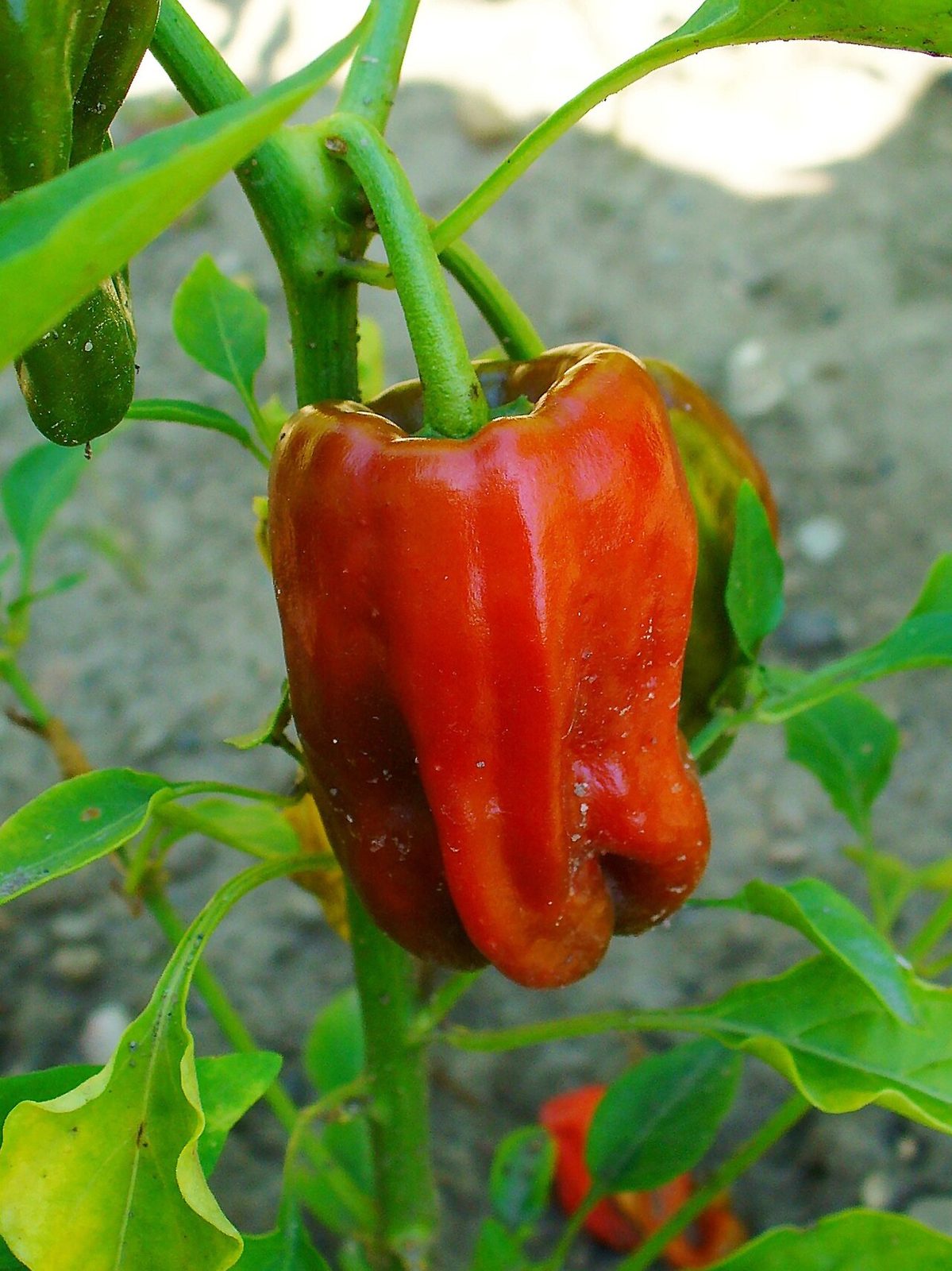
Late August is harvest, not a new transplant date.
Keep a leaf canopy so fruit does not sunburn.
Water evenly with drip; pick at the color you want.
Kit
- Pepper transplants already in the bed (this is a harvest How-To)
- Drip irrigation or furrow on a raised bed (not sprinklers)
- Organic mulch to keep soil cool and even
- Shade cloth or row-cover on a frame for inland afternoon sun
- Cone-shaped wire tomato cages for large-fruit types
- Next spring: stocky transplants, floating row cover, compost, and the fertilizer the UC IPM or Gemmell page actually names
Do this
-
Two heat bands, two sources
UC IPM: peppers do best with days 75° to 85°F and nights 55° to 65°F; temperatures above 100°F reduce pollination, fruit set, and yield. Gemmell: blossoms drop when nights are just below 60°F or above 75°F, and days above 90°F cause excessive blossom and fruit drop.
UC IPM.
-
Keep a leaf canopy. Inland fruit needs afternoon shade.
UC IPM sunburn: fruit exposed to hot sun can turn brown and leathery, including after leaves wilt. Gemmell: inland valleys do better with a little afternoon shade; plant in blocks so foliage shades the ground, and use cone-shaped wire tomato cages on large-fruit types so branches do not open and expose fruit.
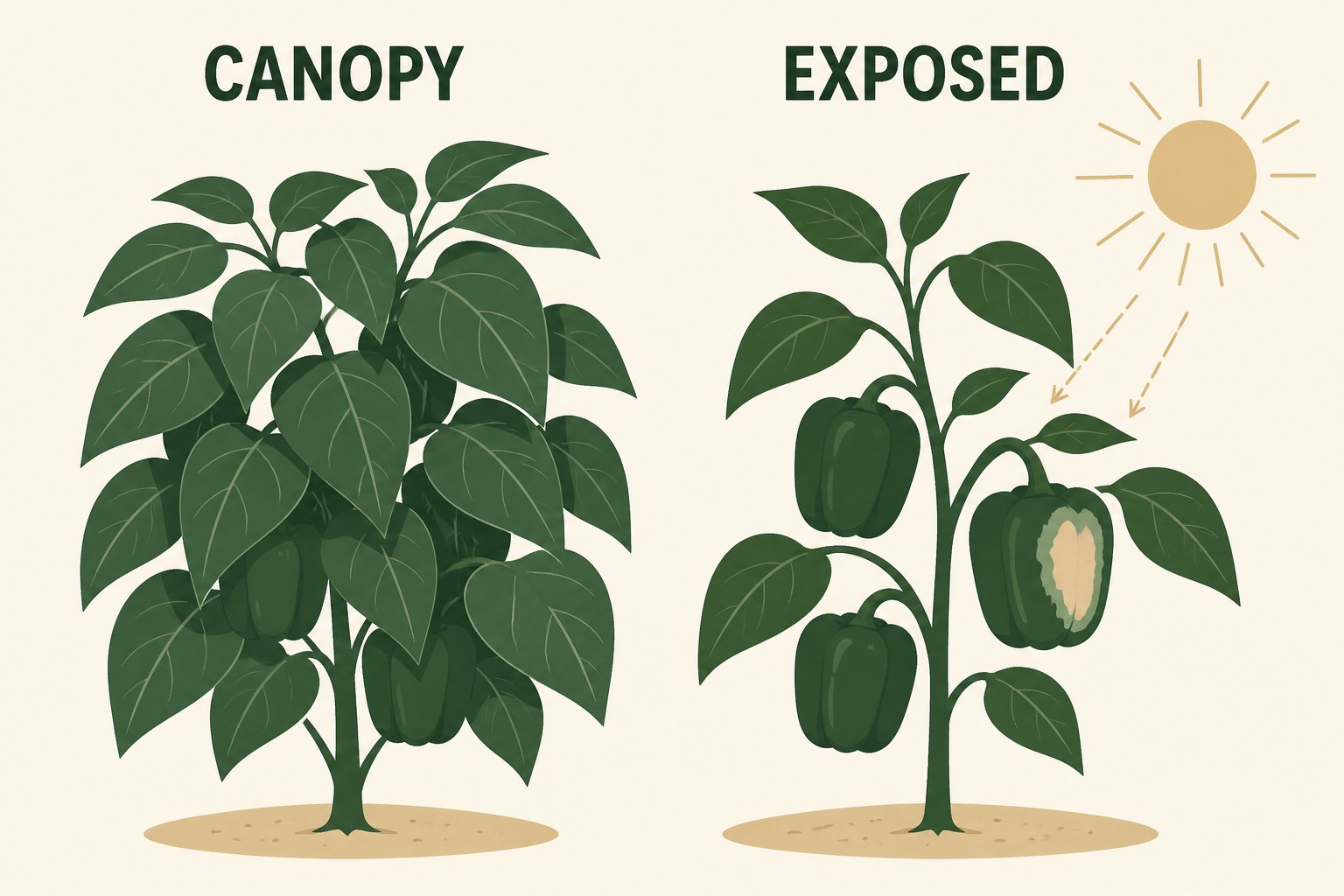
Illustration: leaf canopy vs exposed fruit. Not a photograph. UC IPM.
-
Keep the root zone evenly moist with drip
UC IPM: keep the root zone moist all season; peppers root about 2 feet deep. Prefer drip or furrow on raised beds, not sprinklers; Gemmell: even moisture and mulch cut blossom drop and blossom-end rot.
UC IPM.
-
Bell vs chili is the same warm-season crop. No Scoville numbers.
UC IPM: peppers are either sweet (bell and banana) or hot chile; bells are blocky and harvested green, red, or yellow. Chiles tend to be smaller, longer, and more tapered; Gemmell: hot weather and stress can make chiles hotter.
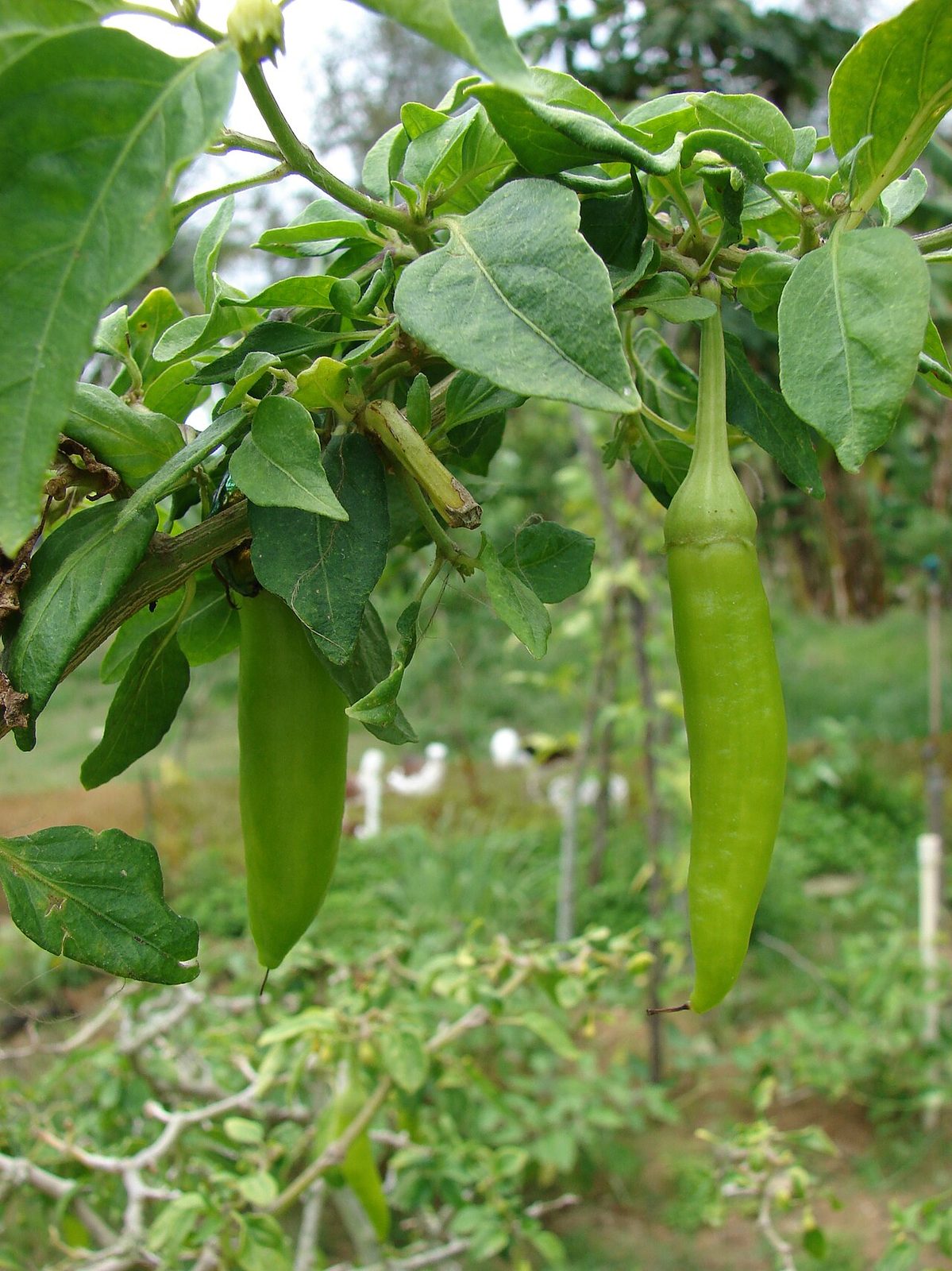
Green chili-type Capsicum annuum fruit still on the plant (Forest & Kim Starr, CC BY 3.0 US). Horn/chili shape, not a bell. Photographed at Sand Island, Midway Atoll — not a San Diego bed. UC IPM.
-
Harvest at the color you want, then keep picking
UC IPM: harvest any time after the fruit has the full color you want. Keep peppers picked or they stop flowering (Gemmell).
UC IPM.
-
Store at 45–55°F, away from apples and bananas
UC IPM and Lazaneo: peppers keep best at 45°–55°F. Do not store them with apples or bananas; ethylene injures them.
UC IPM.
-
Next spring: transplant after warm soil, on Lazaneo’s months
Do not set new pepper plants in late August. For next year, Lazaneo: Pepper (plants) coastal April–July, inland April–June; UC IPM: bury the stem as far as the first leaf.
Lazaneo.
Need peppers planted or tended in a San Diego bed? Gardens of Gold plants and tends vegetable beds in San Diego County. Get a quote.