The San Diego Pest Calendar: Seasonal Focus
San Diego's mild climate means we don't get a hard winter freeze that kills off pest populations. Instead, our pest and disease cycles shift seasonally and you need a year-round awareness. Here's when to focus on what:

Winter (December–February)
- Snails & slugs: Our rainy season wakes them up. Set out iron phosphate bait before each rain event. Full snail guide here.
- Scale insects: Dormant oil spray on deciduous fruit trees in January–February smothers overwintering scale and mite eggs. Do this before bud break.
- Powdery mildew on dormant roses: Prune out infected canes and apply sulfur fungicide at pruning time (Valentine's Day is the traditional San Diego rose pruning date).
- Citrus leafminer: Watch for the characteristic squiggling tunnels in new citrus growth as temperatures warm in late February.
Spring (March–May)
- Aphids: Population explosion as new plant growth emerges. Begin weekly plant inspections. Release ladybugs in the evening on wet foliage. Full aphid guide.
- Caterpillars: Cabbage loopers arrive with brassica planting. Pre-treat with Bt spray when you set out transplants.
- Whiteflies on tomatoes: Set yellow sticky traps at planting time before populations build.
- Powdery mildew on cucurbits: Begin preventive sulfur or potassium bicarbonate sprays when squash vines are 6–8 inches long.
Summer (June–September)
- Spider mites: Peak season July–September in hot inland areas. Check weekly — they double in population every 7 days in extreme heat. Full spider mite guide.
- Tomato hornworms: Scout daily during peak season (July–August). Battle plan here.
- Drought stress: The silent killer. Check irrigation systems monthly and inspect plants for stress signs. 5 drought stress signs.
- Root rot in overwatered containers: Summer heat + overwatering = rapid Phytophthora root rot. Reduce container watering frequency during heat spikes.
Fall (October–November)
- Pre-rain snail prep: Apply iron phosphate bait and reduce debris piles before the first rains arrive.
- Cleanup as pest prevention: Remove spent summer vegetables, cut back dead perennials, and haul out leaf piles to destroy overwintering pest habitat.
- Whitefly on cool-season crops: Cabbage, broccoli, and kale are magnets. Row cover fabric at planting prevents establishment.
- Citrus harvesting and feeding: Feed citrus after harvest to set up next year's crop. Watch for Asian citrus psyllid (lumpy new growth) — report suspected sightings to the county.
Monthly Checklist
- Inspect weekly: Walk every bed and check undersides of leaves on susceptible plants (tomatoes, roses, citrus, squash).
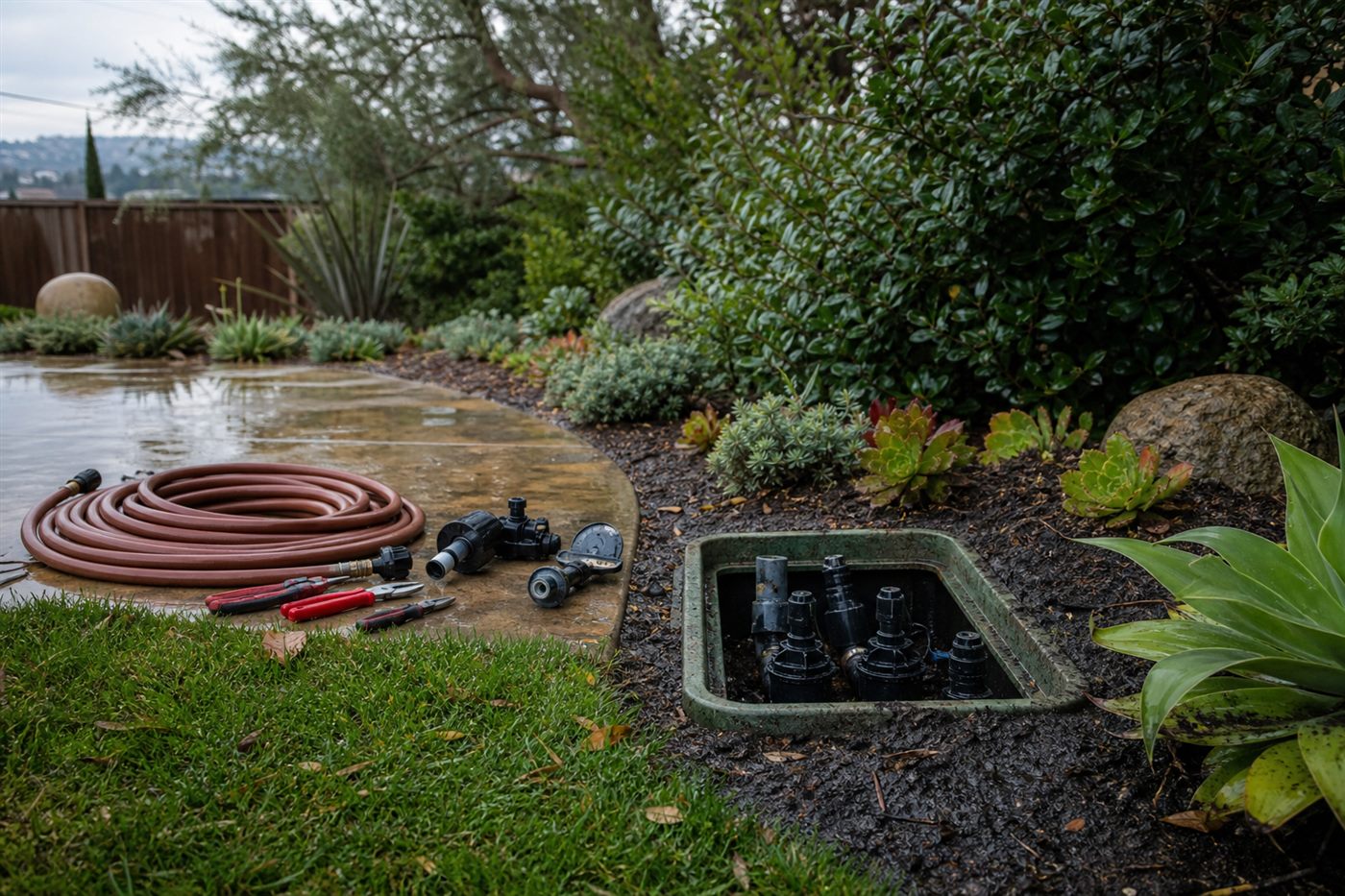
- Check irrigation: Run each zone manually and verify all emitters are firing correctly. Replace clogged drip emitters immediately.
- Remove debris: Rake out leaf litter from under trees and shrubs monthly — this is #1 for snail and scale control.
- Refresh mulch: Keep 3–4 inches of mulch over all beds; reapply when it thins below 2 inches.
- Feed appropriately: Fertilize growing season plants monthly. Stop feeding most plants in November to avoid pushing tender growth before cool weather.
- Pull weeds early: Weeds host pest populations and compete for water. Pull before they flower and set seed.
Landscape Upgrades That Build Resilience
Individual pest treatments address symptoms. Long-term resilience comes from landscape design decisions that reduce vulnerability in the first place:
- Drip irrigation over overhead: Wet foliage is the primary trigger for powdery mildew, botrytis, and rust. Drip systems eliminate this.
- Raised beds with quality soil: Removes the alkaline native soil problem that causes chronic nutrient deficiencies.
- Diverse plantings: Monocultures are pest and disease magnets. Intermixing plant families and including flowering companions supports beneficial insect populations.
- Right plant, right place: A Mediterranean plant in shade + overwatering is a disease setup. Matching plants to their actual needs is the most impactful change most homeowners can make.
Building a resilient San Diego garden takes planning and the right infrastructure. Gardens of Gold offers full landscape design, raised bed installation, and smart irrigation systems that make pest and disease management dramatically easier. Start with a free consultation.
Whether you're dealing with a specific pest today or want to build long-term garden resilience, we're here to help. Hablamos Español — reach out any time.